A comprehensive reference for the terminology used in lichen identification, biology, and ecology.
Terms are organized alphabetically.
- Apothecia
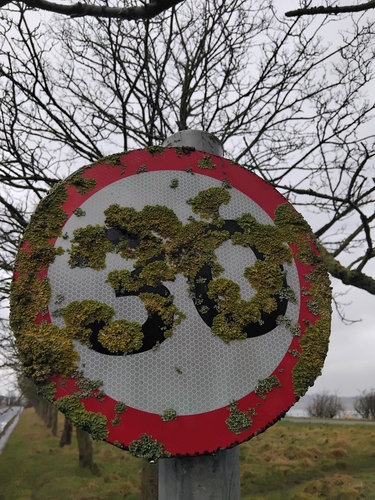 Open, cup- or disc-shaped sexual fruiting bodies that produce spores. Singular: apothecium.
- Areoles
- Small, defined patches on a crustose lichen surface, separated by cracks.
- Ascospore
- Spore produced sexually inside an ascus.
- Ascus
- Sac-like structure inside apothecia where spores form. Plural: asci.
- Basidiomycete yeasts
- Yeasts discovered in 2016 living in the cortex of many macrolichens; potential third symbiotic partner.
- Byssoid
- Cotton-like or wispy growth form.
- Cephalodia
- Specialized structures containing cyanobacteria in lichens that also have green algae as primary photobiont (e.g., Lobaria pulmonaria).
- Cilia
- Hair-like projections from the margin of lichen lobes.
- Coralloid
- Branching like coral; describes a type of isidium.
- Cortex
- Dense, protective outer layer of fungal tissue on the lichen surface.
- Corticolous
- Growing on bark.
- Crustose
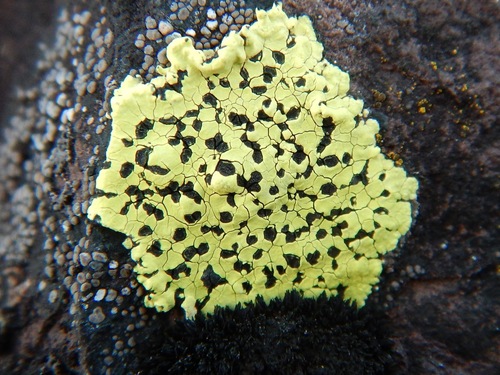 Growth form adhering tightly to substrate like a crust; cannot be removed without damaging the substrate.
- Cyphellae
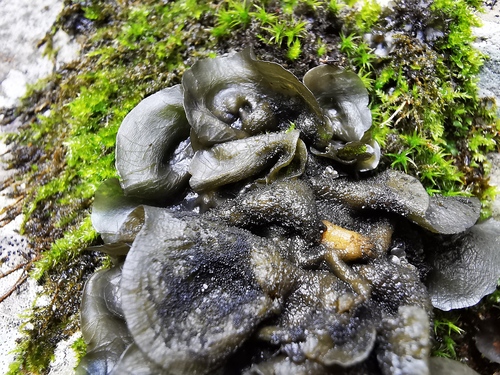 Small, cup-shaped pores on the underside, found in Sticta.
- Dichotomous
- Branching into two equal parts; a common pattern in fruticose lichens.
- Doctrine of Signatures
- Historical belief that organisms resemble the body part they can heal.
- Epiphytic
- Growing on the surface of plants, but not parasitic.
- Esorediate
- Lacking soredia.
- Filamentous
- Thread-like growth form.
- Foliose
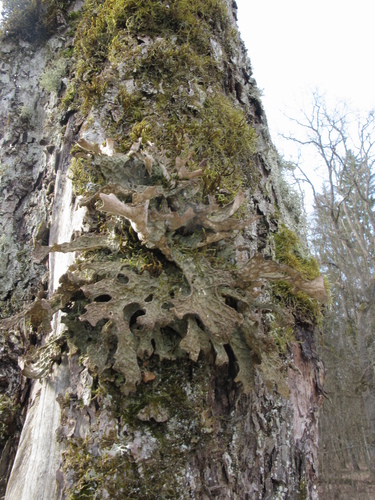 Leafy growth form with distinct upper and lower surfaces.
- Fruticose
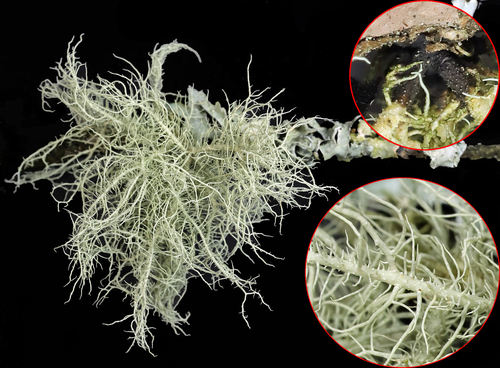 Shrubby or hair-like three-dimensional growth form.
- Gelatinous
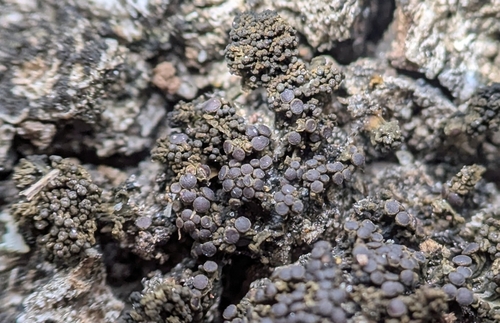 Jelly-like growth form that swells when wet; characteristic of cyanobacterial lichens.
- Gyrophoric acid
- A lichen compound that gives a C+ red or pink reaction in the spot test.
- Holdfast
- Simple attachment structure used by fruticose lichens to anchor to the substrate.
- Hymenium
- Spore-producing layer inside apothecia.
- Isidia
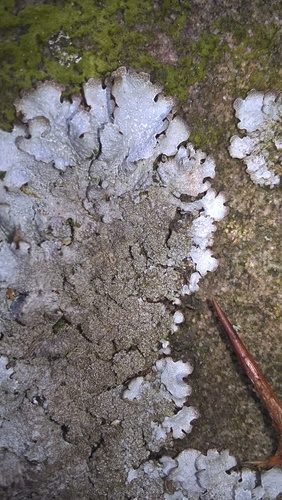 Corticated, finger-like outgrowths for asexual reproduction. They have their own cortex, unlike soredia. Singular: isidium.
- Isidiate
- Bearing isidia.
- K test
- Chemical spot test using 10% potassium hydroxide (KOH) solution; the most commonly used lichen spot test.
- Laminal
- On the surface of the thallus, as opposed to marginal (on the edge).
- Lecanorine
- Apothecia with a rim that contains algae and matches the thallus color.
- Lecideine
- Apothecia with a dark rim lacking algae.
- Leprose
- Powdery growth form lacking a cortex entirely.
- Lichenometry
- Dating rock surfaces by measuring lichen size and applying known growth rates.
- Lignicolous
- Growing on wood.
- Lirellae
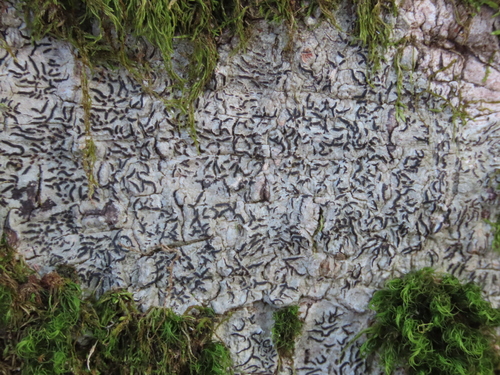 Elongated, line-like fruiting bodies found in genera such as Graphis.
- Lobules
- Small, lobe-like outgrowths used in asexual reproduction.
- Macrolichen
- Lichen large enough to see detail with the naked eye, typically foliose or fruticose.
- Marginal
- On the edge or margin of the thallus or lobes.
- Medulla
- Loosely woven inner layer of fungal hyphae; the cottony center of the lichen body.
- Mycobiont
- The fungal partner in a lichen symbiosis.
- Nitrophile
- Organism that thrives in nitrogen-rich conditions.
- Nostoc
- A genus of cyanobacteria commonly found as the photobiont in gelatinous lichens.
- Oligotroph
- Organism adapted to nutrient-poor conditions.
- Ostiole
- Small opening in a perithecium through which spores escape.
- P test
- Chemical spot test using paraphenylenediamine; detects fumarprotocetraric and protocetraric acids.
- Papillae
- Small bumps on the thallus surface.
- Perithecia
- Flask-shaped, enclosed fruiting bodies embedded in the thallus.
- Photobiont
- The photosynthetic partner (alga or cyanobacterium) in a lichen.
- Podetium
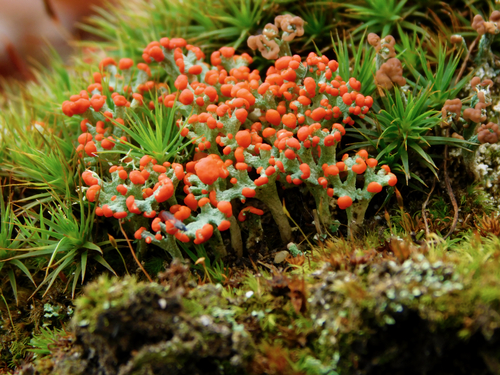 Stalked, vertical reproductive structure characteristic of Cladonia. Plural: podetia.
- Pruinose
- Having a frosty or powdery surface coating.
- Pseudocyphellae
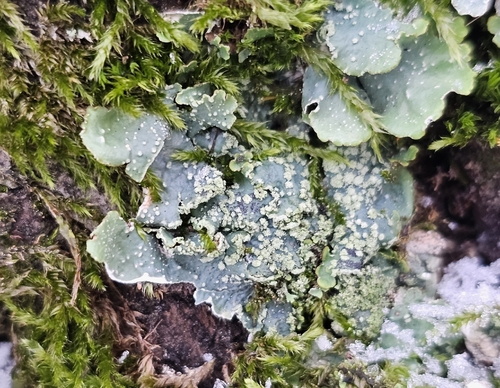 Pores in the cortex allowing gas exchange; appear as white spots or lines on the surface.
- Rhizines
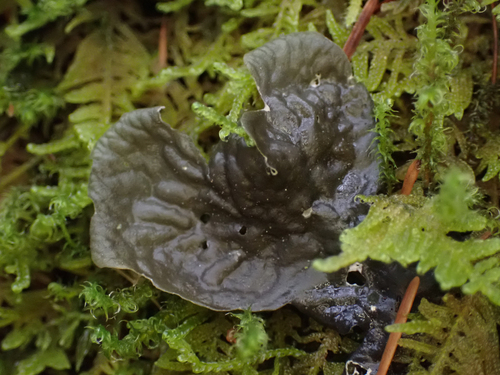 Root-like bundles of hyphae for attachment, characteristic of foliose lichens.
- Rhizomorphs
- Cord-like structures made of compacted hyphae.
- Saxicolous
- Growing on rock.
- Soralia
- Areas where soredia are produced, appearing as breaks in the cortex. Singular: soralium.
- Soredia
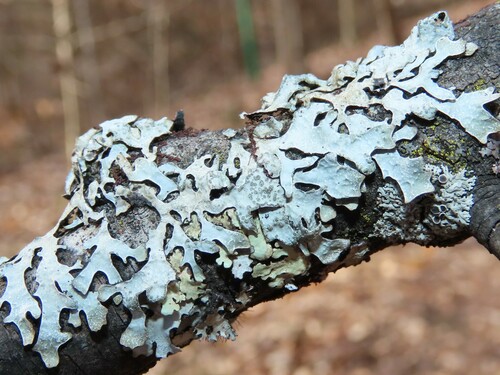 Powdery asexual propagules containing algal cells wrapped in fungal hyphae, lacking a cortex. Singular: soredium.
- Sorediate
- Bearing soredia.
- Squamulose
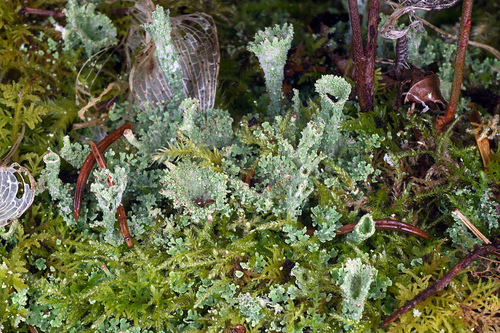 Growth form with small, overlapping, scale-like lobes.
- Substrate
- The surface on which a lichen grows (bark, rock, soil, wood, etc.).
- Terricolous
- Growing on soil.
- Thallus
- The entire body of a lichen. Plural: thalli.
- TLC
- Thin-Layer Chromatography: the gold-standard lab technique for identifying lichen secondary compounds.
- Tomentose
- Covered with tomentum (a fuzzy, felt-like covering).
- Tomentum
- Fuzzy, felt-like covering of fine hairs on the lichen surface.
- Trebouxia
- The most common genus of green algal photobiont in lichens worldwide.
- Umbilicate
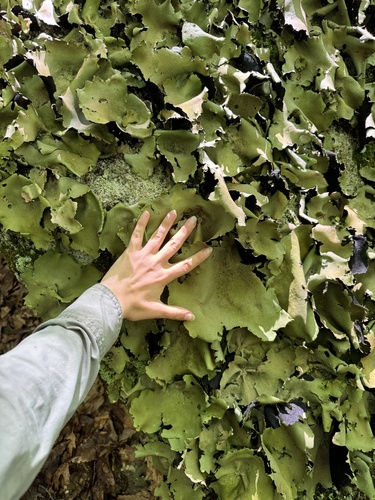 Attached to the substrate by a single central point, like an umbilical cord (e.g., rock tripe).
- Usnic acid
- Antibiotic compound produced by Usnea and some other lichen genera.
- Veins
- Raised ridges on the underside of some lichens, notably Peltigera.