Chapter Four

Uses & Amazing Facts

From haute couture to emergency survival food — lichens have shaped human culture, sustained entire ecosystems, and shattered our assumptions about what life can endure.

Humanity's Hidden Partner

Humans have relied on lichens for millennia, grinding them into dyes that colored royal robes, boiling them into bread during famine, extracting antibiotics long before germ theory, and distilling their essence into the world's finest perfumes. Most people walk past lichens without a second glance. History tells a very different story.

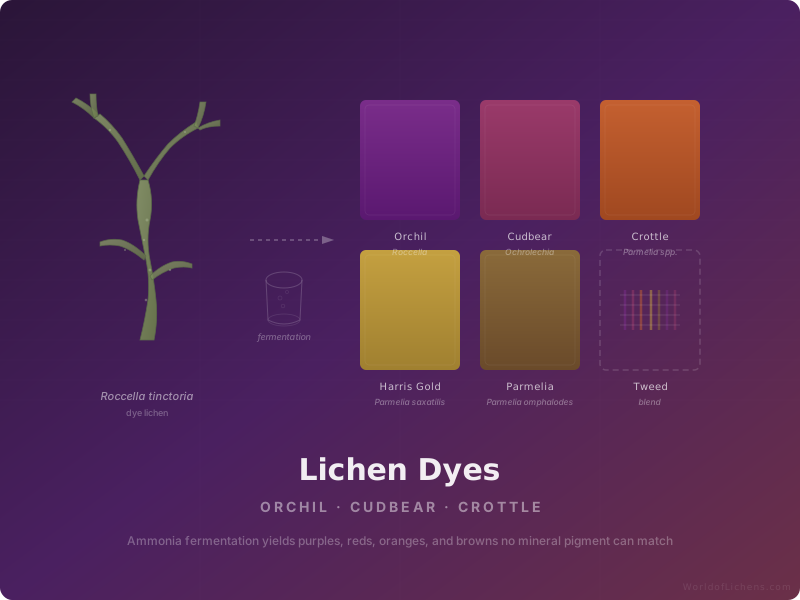
Lichen dye colour palette showing orchil purple, cudbear rose, crottle orange, Harris gold, and Parmelia brown swatches alongside a Roccella tinctoria specimen

Dyes & Textiles

The Phoenicians prized orchil, a vivid purple extracted from Roccella and Ochrolechia lichens, worth more than gold in medieval Europe. The ammonia fermentation process takes weeks, yielding purples, reds, oranges, and browns no mineral pigment could match.

Harris Tweed, the iconic Scottish fabric protected by an Act of Parliament, gets its traditional palette from lichen dyes. Parmelia and Ochrolechia species produce the earthy heather tones that define the cloth. In 1758, Cuthbert Gordon patented cudbear, the first commercial lichen dye, named (immodestly) after himself.
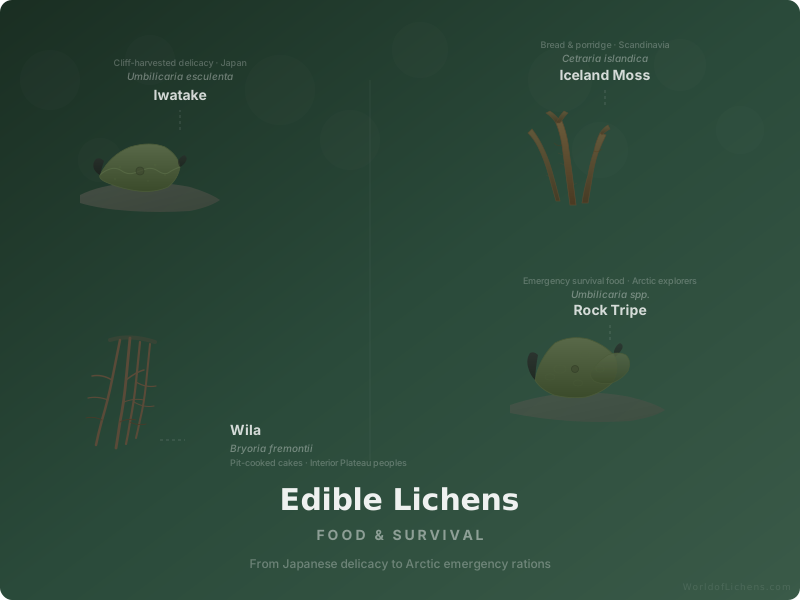
Four edible lichen species: iwatake (Umbilicaria esculenta), Iceland moss (Cetraria islandica), wila (Bryoria fremontii), and rock tripe (Umbilicaria spp.)

Food & Survival

In Japan, iwatake (Umbilicaria esculenta) is a prized delicacy harvested from cliff faces at considerable personal risk. In Scandinavia, Iceland moss (Cetraria islandica) was boiled into bread and porridge for centuries; bitter acids were washed out first by soaking.

The Indigenous peoples of British Columbia's Interior Plateau relied on wila (Bryoria fremontii) as a major food source, pit-cooking it into dense cakes and trading it across vast networks. Rock tripe (Umbilicaria spp.) served as emergency food for Arctic explorers, saving the lives of stranded expeditions.

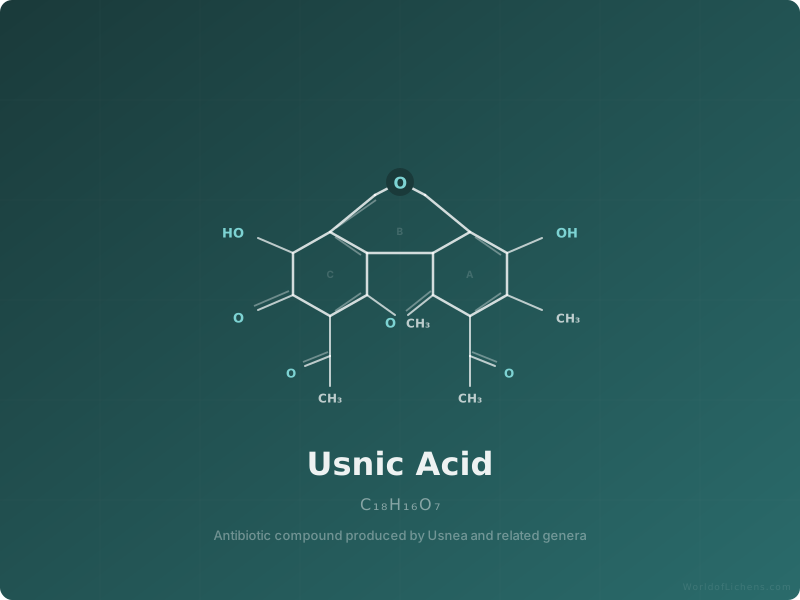
Usnic acid molecular structure showing the dibenzofuranone tricyclic core with hydroxyl, methyl, and acetyl substituents

Medicine & Antibiotics

Usnic acid, produced by Usnea species, is a potent antibiotic effective against Gram-positive bacteria including Staphylococcus and Streptococcus. Cultures worldwide used Usnea for wound treatment long before germ theory, and commercial wound dressings containing usnic acid are sold today.

The medieval Doctrine of Signatures held that God shaped medicinal plants to resemble the organs they could heal. Lobaria pulmonaria, with tissue strikingly like lung alveoli, was prescribed for respiratory illness. Peltigera, liver-shaped, was used for liver complaints. Quaint reasoning, but modern research has vindicated some of these uses, investigating lichen compounds for anti-cancer, anti-viral, and anti-inflammatory properties.

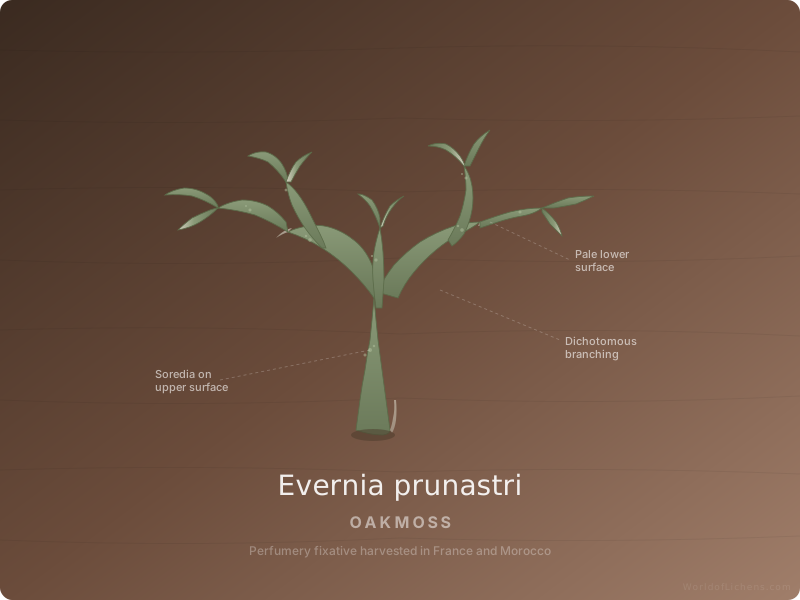
Evernia prunastri oakmoss illustration showing dichotomous branching, soredia, and pale lower surface

Perfumery & Oakmoss

Oakmoss (Evernia prunastri) is one of perfumery's most prized ingredients, a fixative that makes other scents last longer on the skin. Harvested commercially in France and Morocco, it provides the earthy, woody base notes in many classic Chanel and Guerlain fragrances.

Tree moss (Pseudevernia furfuracea) adds a similar depth. Together, these lichen extracts form the foundation of the "chypre" family of perfumes, an entire genre of fragrance built on a symbiotic organism most people never notice.

More Surprising Uses

Litmus Paper

Probably the most widely used lichen product in history sits in every chemistry lab on Earth. Litmus, the classic acid/base indicator, was originally derived from Roccella and Ochrolechia lichens. The same organisms that gave us royal purple dye also gave us one of science's most fundamental tools.

Lichenometry — Dating with Lichens

Because crustose lichens grow at remarkably predictable rates, often less than 0.5mm per year, scientists use them as biological clocks. Lichenometry measures the diameter of lichen thalli on rock surfaces to estimate when that surface was exposed: glacial moraines, landslide debris, old stone buildings. It is an especially valuable technique for dating surfaces between 100 and 10,000 years old, filling a gap where radiocarbon dating loses precision.

Baby Diapers

Indigenous peoples in North America and Scandinavia discovered a remarkably practical use for Bryoria lichens: their absorbent, cushioning structure made them ideal diaper material for infants. Soft, readily available, and naturally antimicrobial thanks to lichen acids, it was an elegant low-tech solution.

Ancient Egyptian Embalming

Lichens have been found packed into the body cavities of Egyptian mummies. Their antimicrobial compounds and absorbent properties made them useful in the mummification process, a practice that connects lichen use to some of humanity's oldest documented rituals, stretching back thousands of years.

Decorative & Model Making

Fruticose lichens, especially Cladonia species, are widely harvested for model railroad scenery, architectural models, Christmas decorations, and floral arrangements. Their miniature, tree-like forms create convincing scale landscapes. This commercial harvesting, however, raises conservation concerns given lichens' extremely slow regrowth rates.

“Litmus paper, Harris Tweed, Chanel No. 5, mummy wrappings, Arctic survival food, baby diapers. All from an organism most people cannot name.”

Animals That Depend on Lichens

Lichens are not just useful to humans. For caribou they are survival itself, for birds they are architecture, and for insects they are armor. Entire food webs in boreal and Arctic ecosystems pivot on lichen availability.

Caribou & Reindeer

90% of winter diet is lichen

Cladonia rangiferina and related species make up the overwhelming majority of caribou and reindeer winter nutrition. They dig through snow to reach ground-growing lichens in a behavior called "cratering." Without lichen, herds cannot survive the Arctic winter. The slow regrowth of lichen (decades to recover from overgrazing) makes herd management critical.

Nesting Birds

50+ bird species use lichen in nests

Hummingbirds decorate their tiny nests with lichen fragments, creating near-perfect camouflage against bark and branches. Vireos weave lichens directly into the nest structure for both strength and concealment. Over fifty documented bird species incorporate lichens into nest construction, relying on them for structural support and predator evasion.

Insect Camouflage

Lacewing larvae cover themselves in lichen fragments as portable camouflage, becoming nearly invisible on bark. Several moth and caterpillar species have evolved body patterns that precisely match lichen-covered surfaces. Some insects have gone further still, evolving body shapes and textures that make them indistinguishable from lichens even at close range.

Tardigrades & Microhabitats

Tardigrades (water bears), Earth's toughest animals, are commonly found living in moist lichen cushions. Lichen mats host extraordinary microcosms: thousands of mite species, springtails, rotifers, and other invertebrates inhabit the crevices and moisture pockets of lichen thalli. A single tree branch's lichen community is an ecosystem in miniature.

Other lichen grazers include deer and elk (browsing arboreal Usnea and Bryoria), flying squirrels, slugs, snails, mites, springtails, and specialized moth larvae. From megafauna to the microscopic, lichens are embedded in food webs at every scale.

Record Breakers

Lichens hold records that sound impossible — until you remember they have had 400 million years of practice.

8,600 Years — Oldest Specimen
14.6 Days Surviving in Space
7,000m Altitude in the Himalayas
800+ Unique Chemical Compounds

Extreme Survival

In 2005, the European Space Agency sent Rhizocarpon geographicum and Xanthoria elegans to the International Space Station. They survived 14.6 days of vacuum, cosmic radiation, and unfiltered UV — then resumed photosynthesis back on Earth.

Temperature Extremes

−196°C Liquid Nitrogen
+70°C Desert Rock Surface

Lichens survive being plunged into liquid nitrogen and baked on sun-scorched rock surfaces. This 266-degree range exceeds that of virtually any other multicellular organism. The secret: desiccation tolerance. They can lose nearly all their water, entering a state of suspended animation, then resume photosynthesis within minutes of rewetting.

More Records

  • Altitude: Found from sea level to over 7,000m in the Himalayas, among the highest-altitude organisms on Earth
  • Radiation resistance: Some lichens thrive at Chernobyl and other high-radiation sites
  • Desiccation: Can lose nearly all body water and fully recover, a feat matched by very few organisms
  • Slowest growth: Crustose species grow less than 0.5mm per year; 25 years to grow one inch
  • Longest: Usnea longissima (old man's beard) can grow several meters long
  • Largest: Lobaria oregana thalli can exceed 1 metre in old-growth forests

Emergent Chemistry

Lichens produce over 800 unique secondary compounds, more unique chemistry per species than any other group of organisms. But here is what makes it truly extraordinary: these compounds are an emergent property of the symbiosis. Neither the fungus nor the alga produces them alone. They exist only because of the partnership.

These substances include antibiotics (usnic acid), UV-screening pigments (parietin), metal-chelating agents (oxalic acid), and antioxidants. Many have no equivalent in any other organism. Pharmaceutical researchers are only beginning to explore this chemical library: 800+ compounds, most of which have never been synthesized in a lab.

The chemistry of a lichen is an emergent property: it exists in neither partner alone. It is new matter, created by relationship.

A Timeline of Lichen & Humanity

From ancient embalming to a discovery that rewrote biology textbooks, the human relationship with lichens spans thousands of years.

~3,000 BCE

Ancient Egyptian Embalming

Lichens packed into mummy body cavities for their antimicrobial and absorbent properties.

~1,000 BCE

Phoenician Purple

Orchil dye extracted from Roccella lichens, valued alongside Tyrian purple from sea snails.

Medieval Period

Doctrine of Signatures

Lung lichen (Lobaria pulmonaria) prescribed for respiratory illness; dog lichen (Peltigera) for rabies.

1300s–1700s

Litmus Developed

Lichen-derived litmus becomes a standard chemical indicator, still used universally in chemistry today.

1758

Cudbear Patented

Cuthbert Gordon patents the first commercial lichen dye, naming it after himself.

1867

Schwendener's Dual Hypothesis

Simon Schwendener proposes that lichens are a symbiosis of fungus and alga. Ridiculed for decades before vindication.

1950s–1970s

Biomonitoring Begins

Scientists begin systematically using lichens as bioindicators of air quality, mapping pollution across cities and nations.

2005

Space Survival

ESA's BIOPAN experiment: lichens survive 14.6 days of direct space exposure on the ISS, then resume photosynthesis.

2016

Yeast Discovery

Researchers discover basidiomycete yeasts as a third symbiotic partner in many lichens, rewriting textbooks on a 150-year-old paradigm.

Things That Sound Made Up

Not plant, not animal, not exactly fungus — lichens are a symbiotic partnership that creates something genuinely new. Taxonomically, they are classified as fungi, but a lichen is really a composite organism: a tiny ecosystem.

Same algae, different lichens. The same Trebouxia algae species can partner with hundreds of different fungi to produce completely different-looking organisms. The fungal partner determines the form.

Controlled parasitism. Some scientists describe the lichen relationship not as mutualism, but as a fungus "farming" algae, taking food without killing. The algal partner can survive independently; the fungus typically cannot.

20% of all known fungi form lichen partnerships, over 17,000 fungal species. Lichens represent 8% of Earth's land surface and produce more unique secondary chemistry per species than any other organism group.

British soldiers, dead man's fingers, pixie cups, devil's matchsticks, old man's beard. Lichens have some of the most evocative common names in all of biology, and some glow under UV light.

By the Numbers

~20,000 Species Worldwide
5,561+ Species in North America
17,000+ Fungi That Form Lichens
8% of Earth's Land Surface
Next Chapter

Identification Guide →

Visual ID steps, chemical spot tests, a dichotomous approach, and a full glossary.