Overview
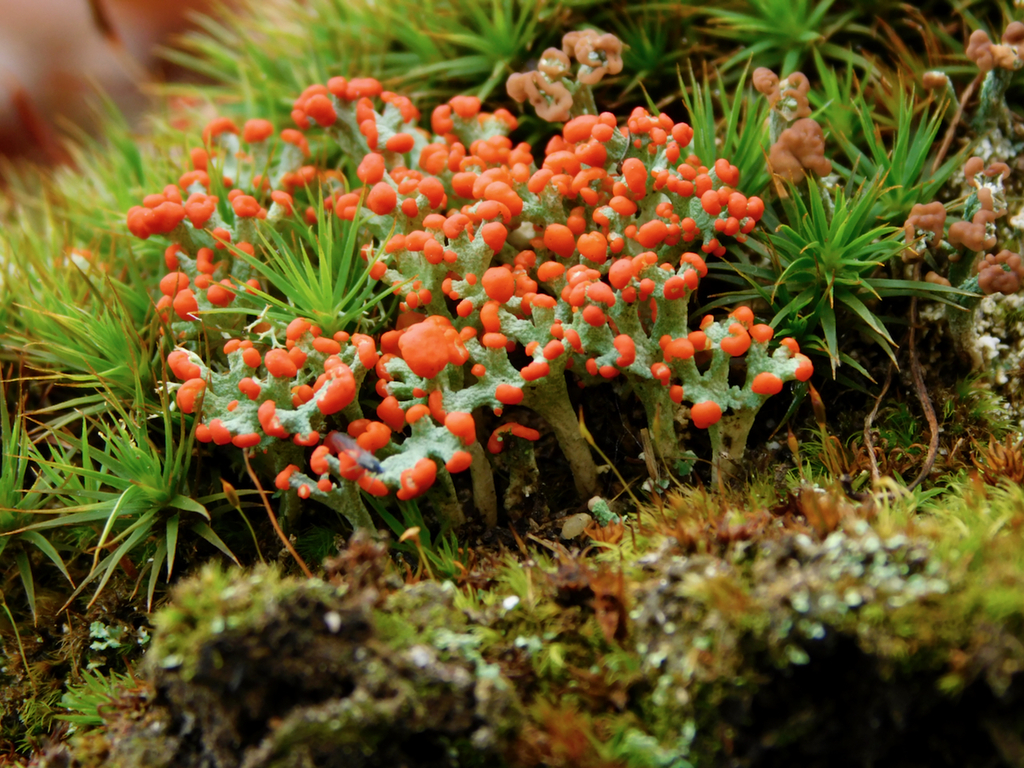
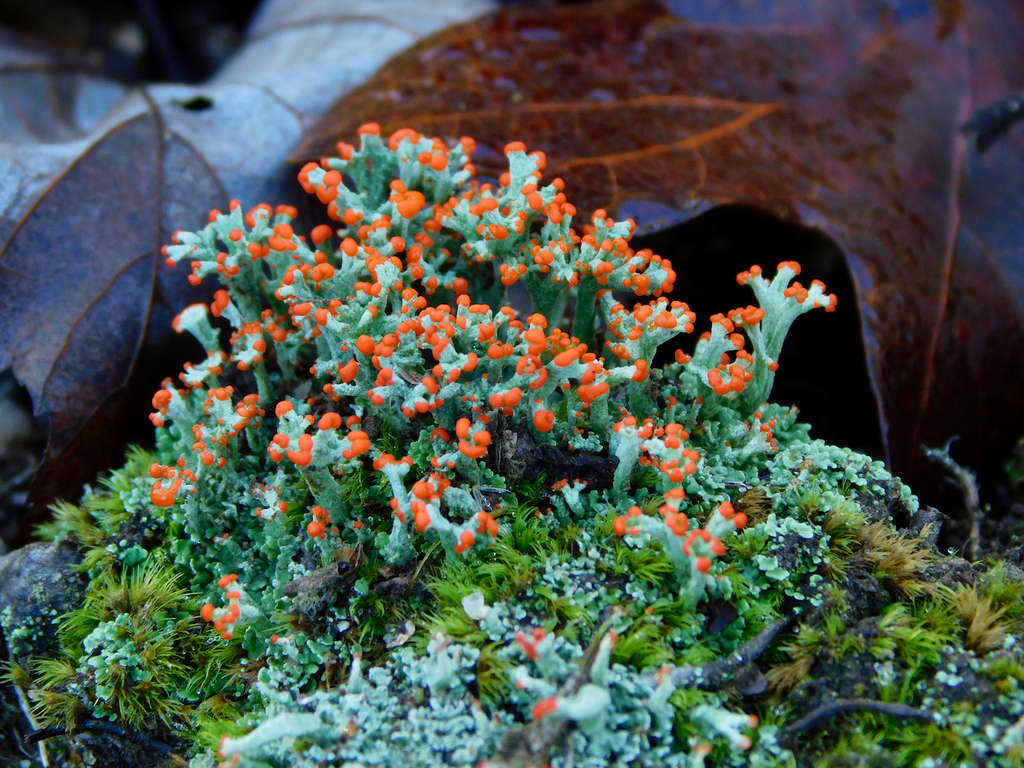
Gray-green squamules topped by short podetia bearing scarlet red caps, Cladonia cristatella is one of the most recognizable and beloved lichens in North America. The bright red apothecia are impossible to miss against the dull greens of rotting wood and stumps where it grows.
Named for the red-coated British soldiers of the American Revolution, it is often the first lichen that sparks a lifelong interest in lichenology. The red pigment is rhodocladonic acid.
Identification
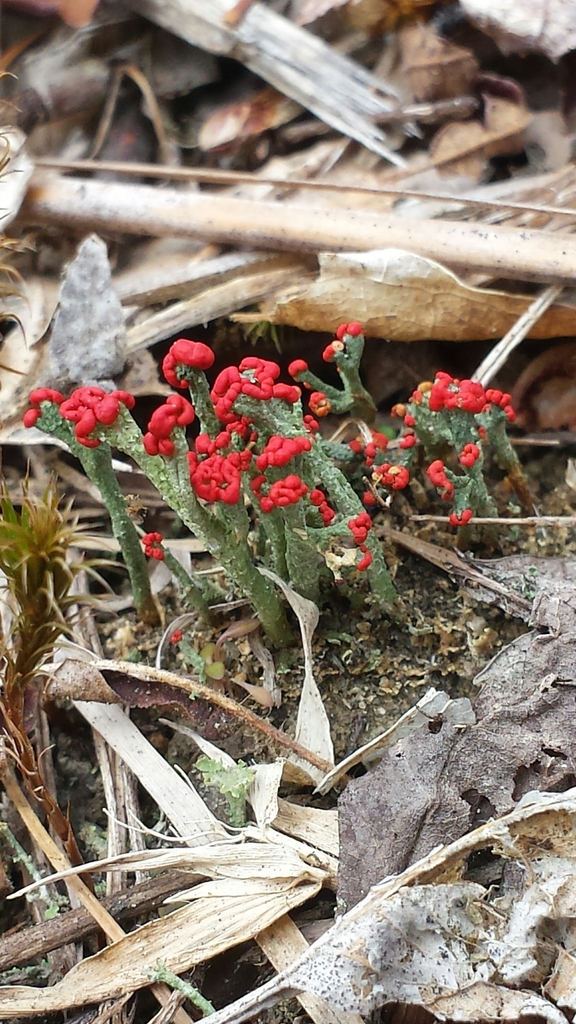
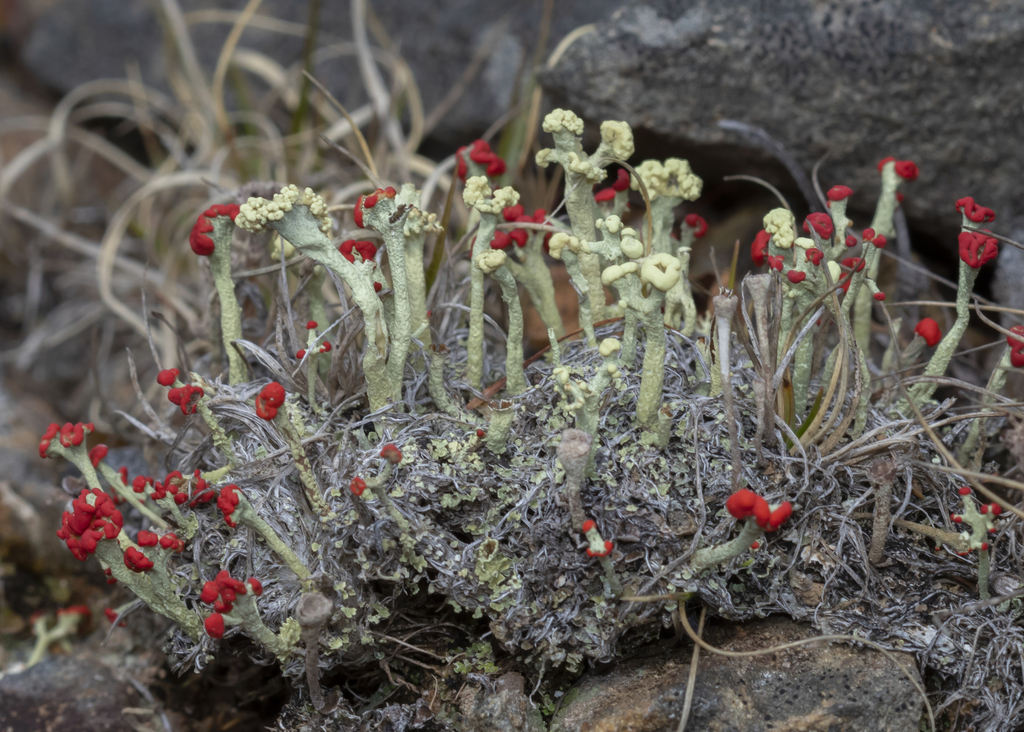
- Unmistakable: gray-green squamules with short stalks (podetia) topped by bright SCARLET RED apothecia.
- Podetia are 1–2 cm tall, unbranched, with a granular, squamulose surface.
- No cups: the red caps sit directly on the podetia tips.
- Squamules at the base are small, green, and leaf-like.
- The red pigment is rhodocladonic acid, unique to this and a few related species.
Ecology & Habitat
Grows on rotting wood, old stumps, and acidic soil. A pioneer species that colonizes decaying wood. Its bright red apothecia attract mites and other invertebrates that may help disperse its spores.
Fun Facts
Named after the red coats worn by British soldiers during the American . The bright red caps on green stalks resemble tiny soldiers standing in formation.
It is often the very first lichen that children and amateur naturalists learn to identify, thanks to its vivid colour and charming appearance.
The bright red pigment (rhodocladonic acid) may serve to attract arthropods that help , a form of animal-assisted reproduction unusual in lichens.
Despite looking like tiny mushrooms, it is definitively a lichen. The red "caps" are actually apothecia (spore-producing structures), not mushroom caps.
A favourite subject for macro photographers, it has graced the covers of numerous nature magazines and field guides.
Distribution
Eastern North America, from Canada to the southeastern United States