Overview
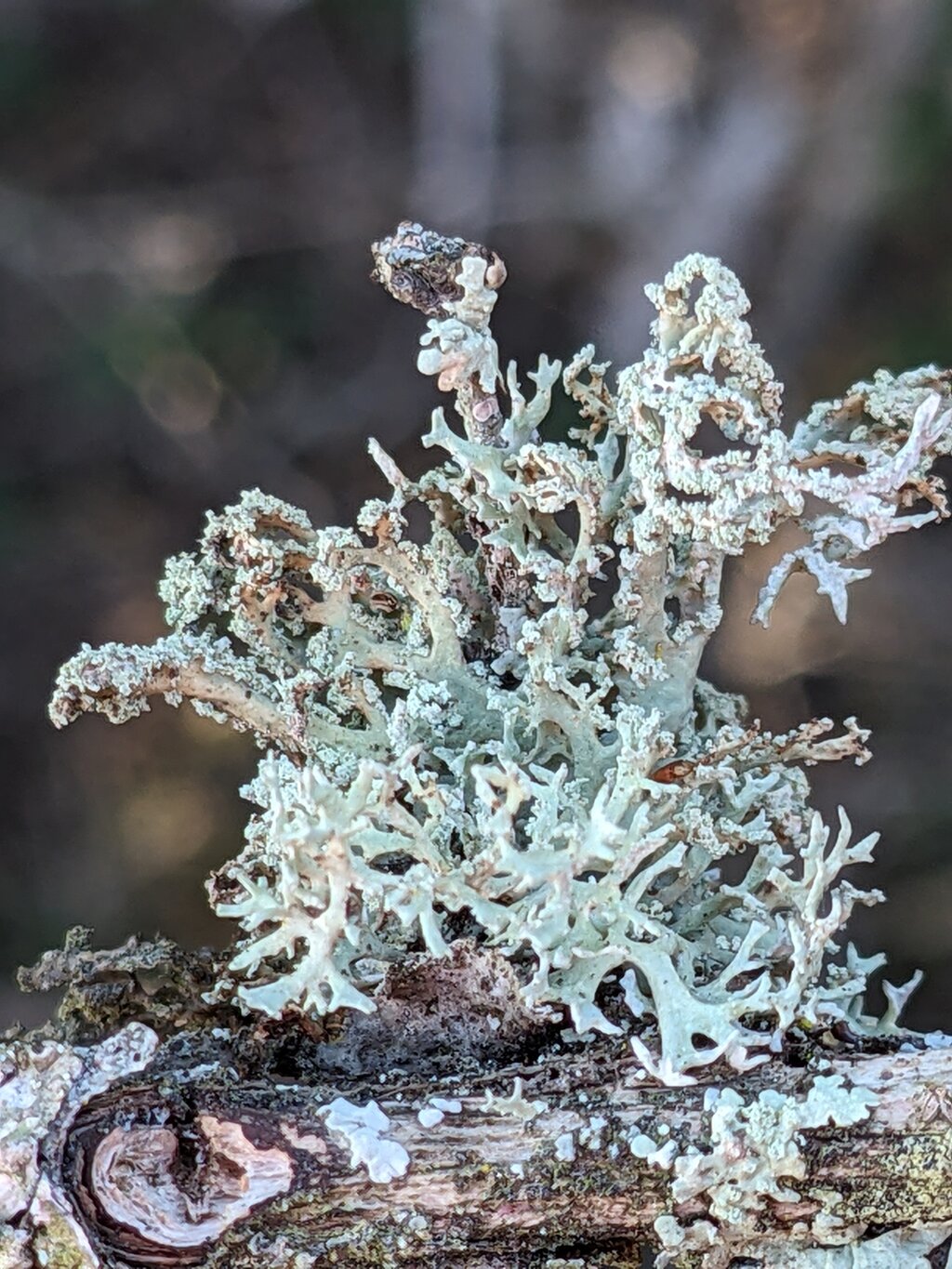
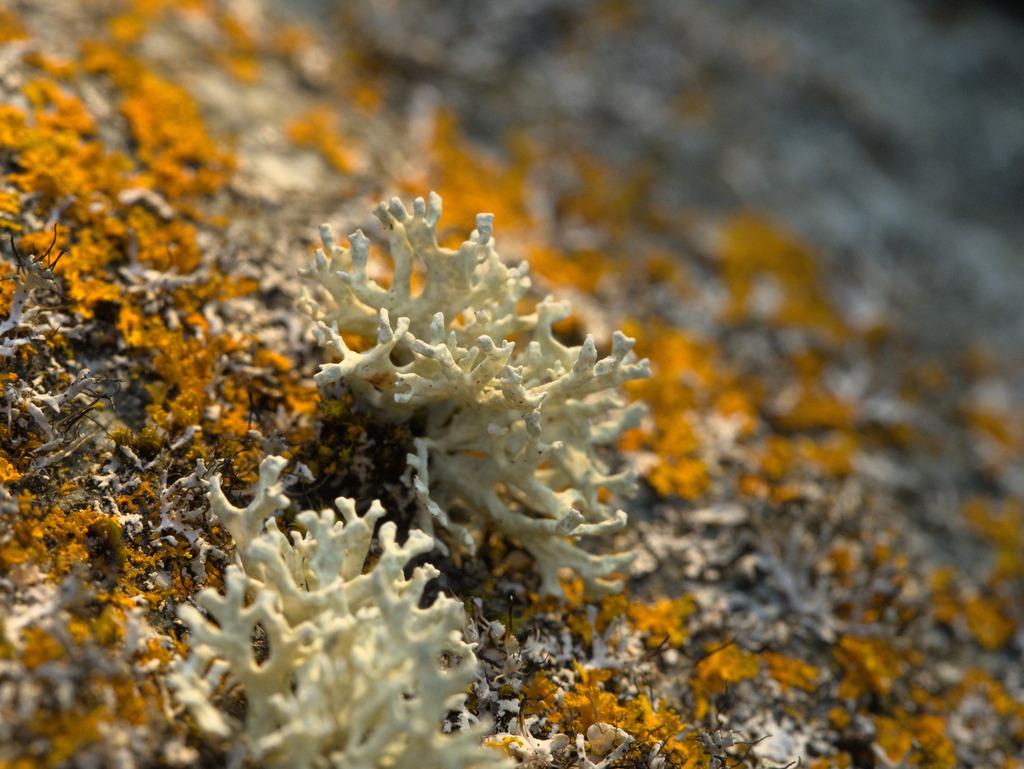
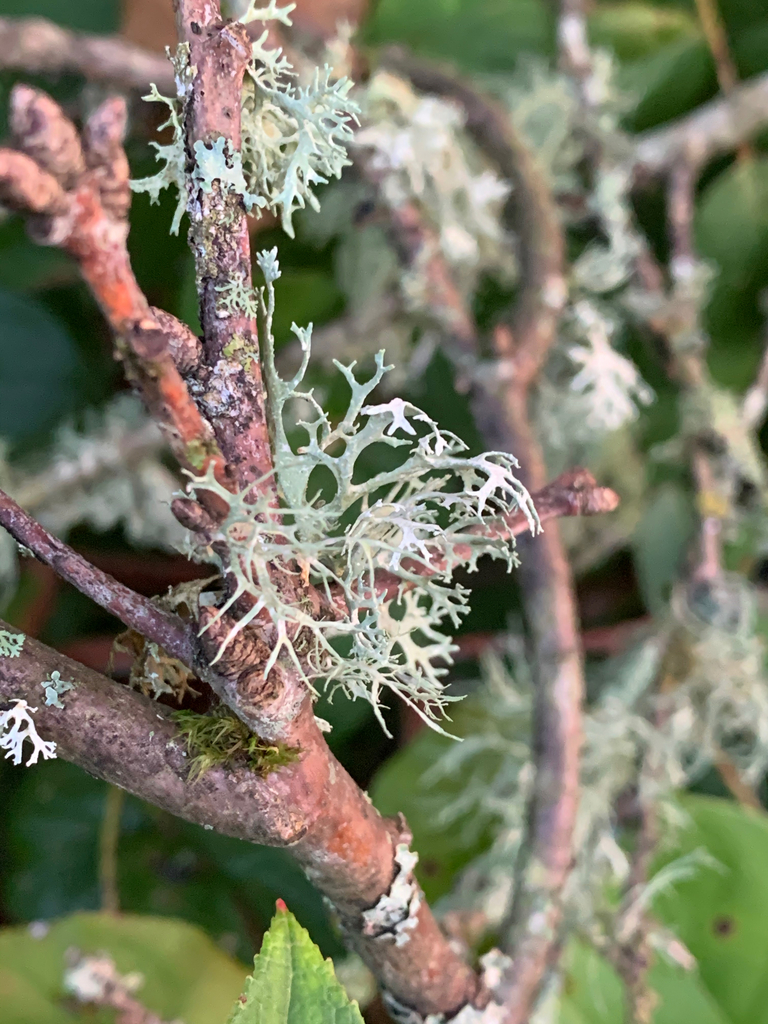
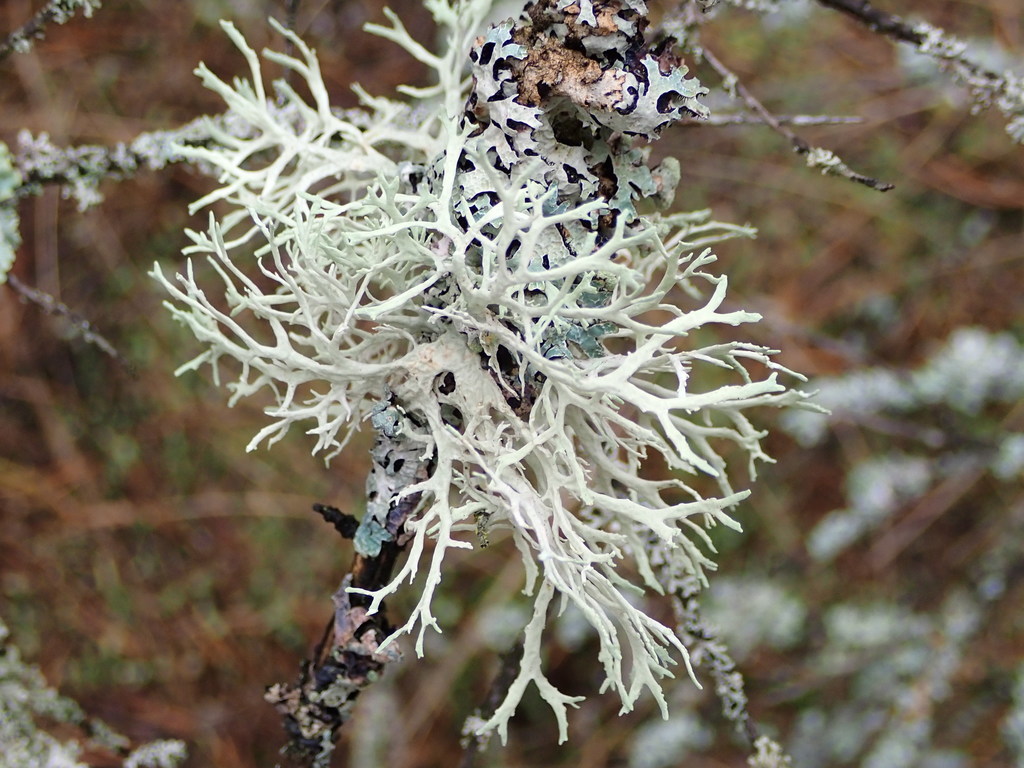
Gray-green above and white below, with flattened, antler-like branching, Evernia prunastri is one of the most economically valuable lichens in the world. Its distinct two-toned colouring (darker on top, pale beneath) distinguishes it from other fruticose species at a glance.
The perfume industry harvests tonnes of oakmoss annually from oak forests in southern France and the Balkans. The extracted compounds provide a deep, earthy base note used in classic perfumes.
Identification
- Flattened, strap-like branches (antler-like) (not round in cross-section).
- Distinctively two-toned: gray-green above, white below.
- Shrubby, erect to pendant growth habit, typically 3–8 cm long.
- Soredia often present on the upper surface.
- Distinctive earthy, woody fragrance when moistened.
Ecology & Habitat
Grows on well-lit bark of deciduous trees, especially oaks. Nitrogen-sensitive and declining in agricultural areas. Its harvesting for the perfume industry has led to over-collection in some regions.
Fun Facts
Oakmoss is one of the most important ingredients in perfumery. It provides the deep, earthy, woody base note in classic fragrances like Chanel No. 5, Miss Dior, and hundreds of other perfumes.
France and the Balkans harvest over 9,000 tonnes of oakmoss annually for the perfume industry, making it the most commercially harvested lichen in the world.
The aromatic compounds (including atranorin and evernic acid) are extracted using solvent extraction to produce an "absolute," one of the most expensive natural perfume ingredients.
EU regulations now restrict oakmoss content in perfumes due to allergenicity concerns, threatening the use of this centuries-old ingredient.
The same compound that gives oakmoss its distinctive scent (evernic acid) also protects the lichen from herbivory; most animals find it unpalatable.
Oakmoss was used in ancient Egypt as a fixative in incense and perfumes, and has been traded as an aromatic since antiquity.
Distribution
Widespread across Europe, North America, and parts of North Africa