Photos
Photos by tanner-lichens-shrooms, cchapman-lam, mjpapay, lproulx via iNaturalist (CC licensed)
Overview
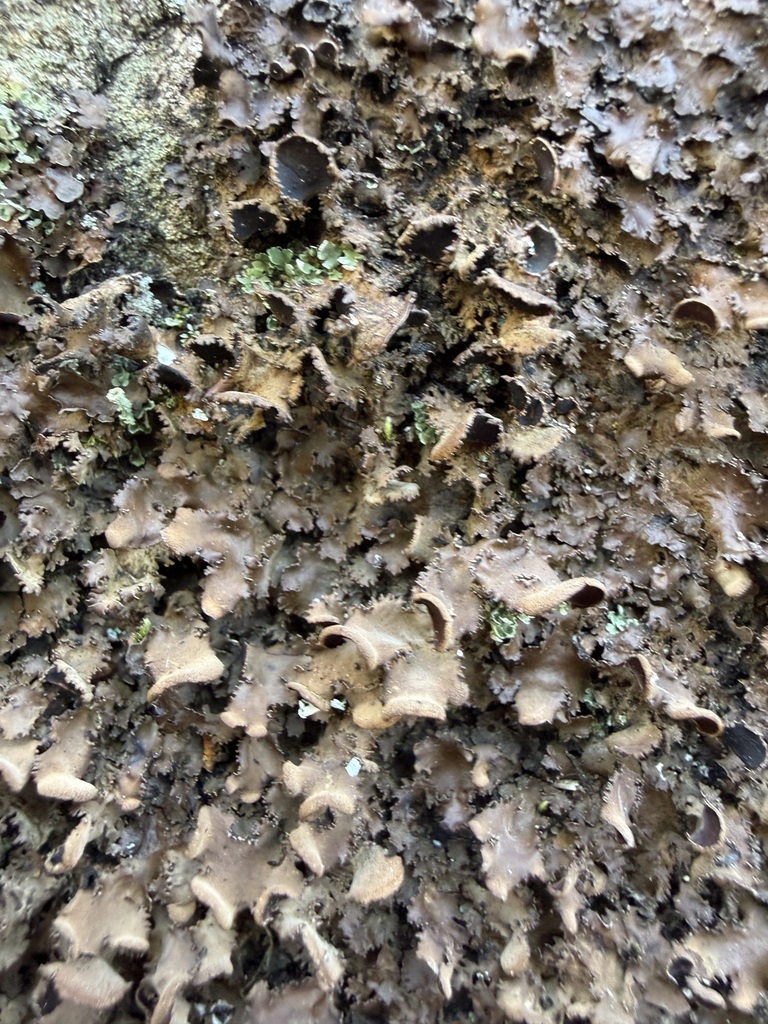
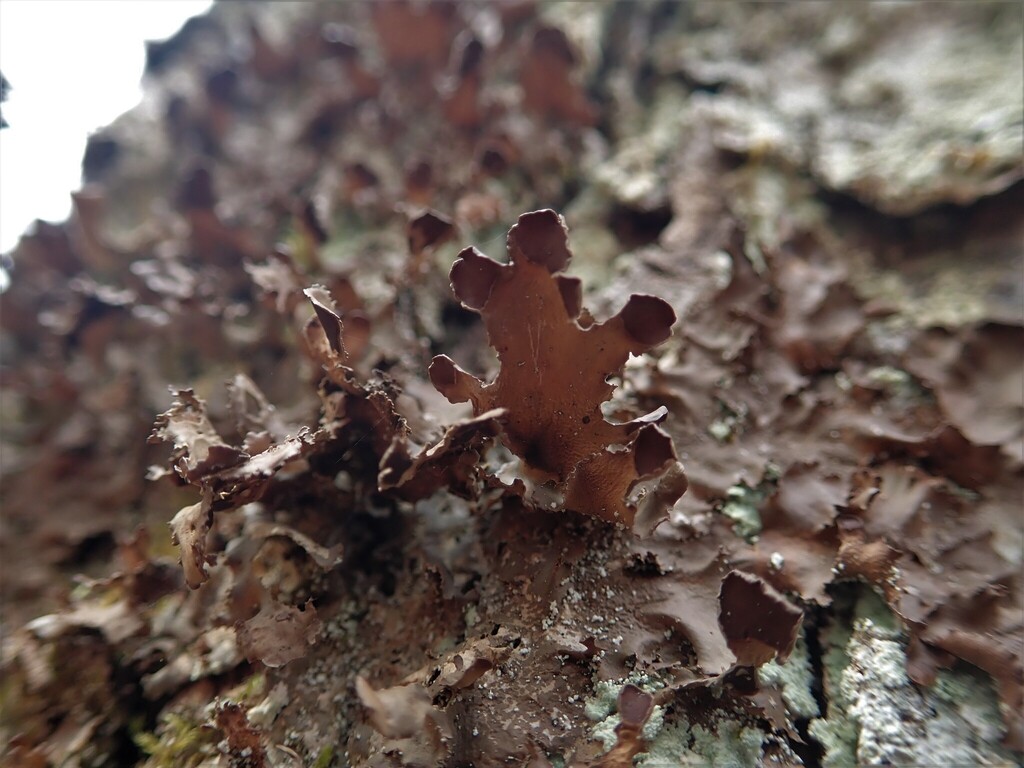
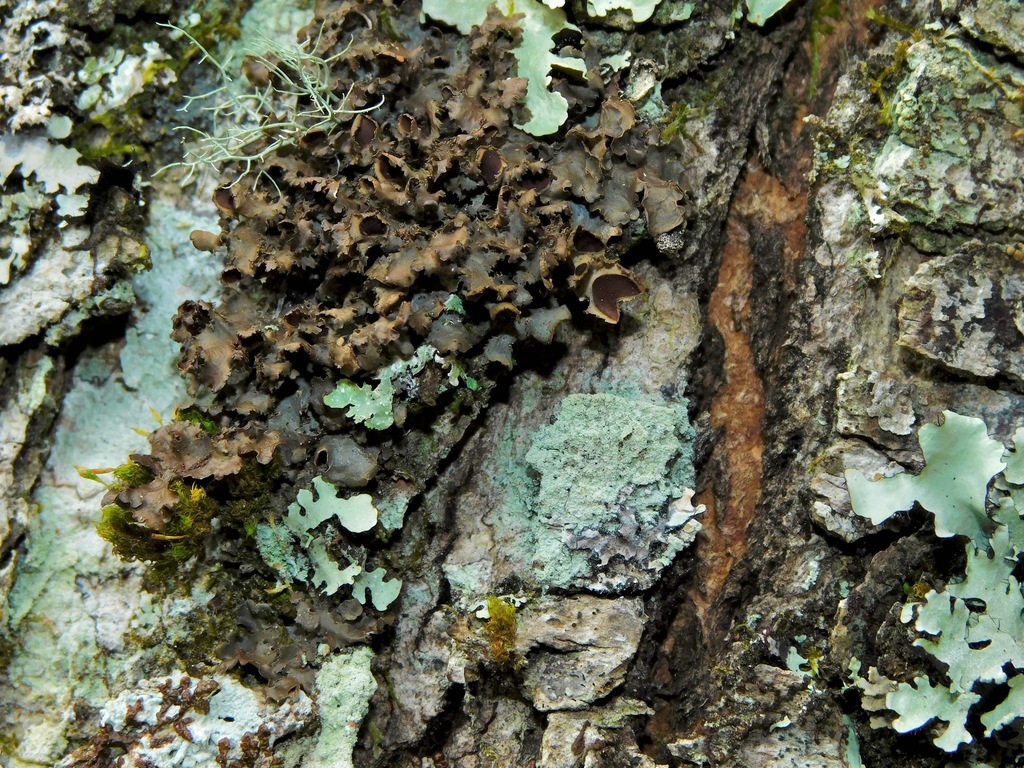
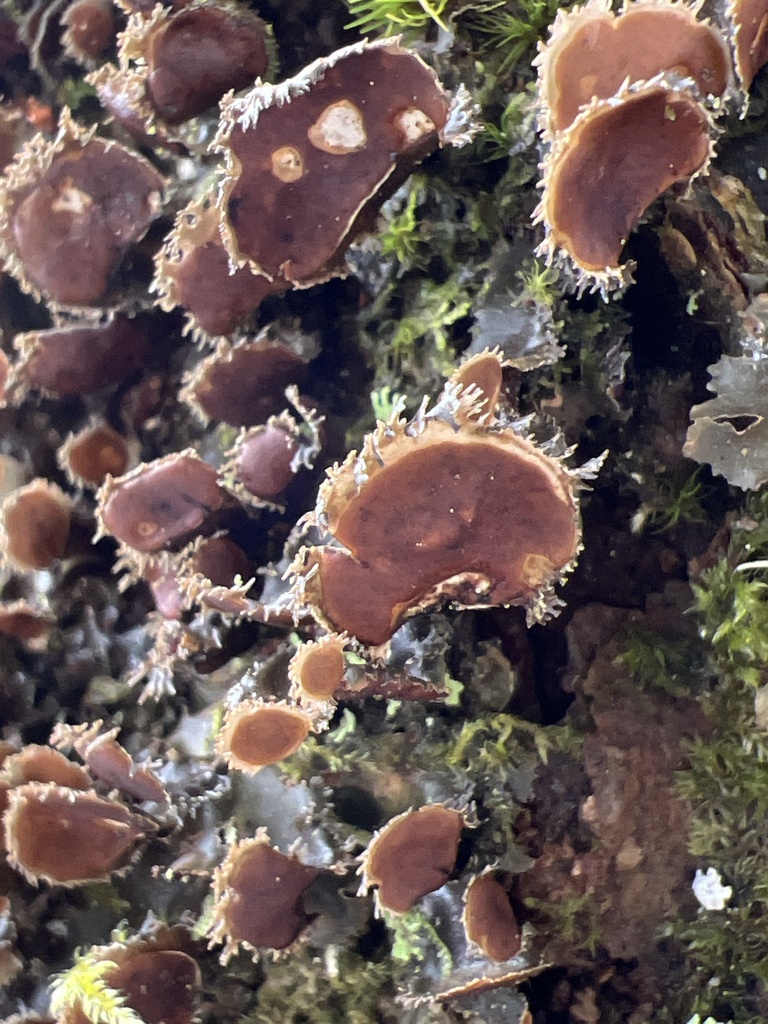
Brownish-green to bluish-brown, Nephroma helveticum is a low-growing lichen with smooth lobes decorated by many marginal and laminal lobules. Its most unusual feature is the placement of its orange-brown apothecia: they appear on the underside of the lobe tips, visible only when the lobes curl upward.
Found on the bark of shrubs and hardwoods, often over moss, it is an indicator of moist, mature forest conditions.
Identification
- Brownish-green to bluish-brown lobes with smooth upper surface.
- Abundant small lobules along margins and on the surface.
- Apothecia on the UNDERSIDE of lobe tips (unique and diagnostic for the genus).
- Apothecia are kidney-shaped and orange-brown (the genus name means "kidney form").
- Underside is pale to brownish with fine tomentum.
Ecology & Habitat
Associated with moist, mature forests with good air quality. Often grows over moss on branches and trunks. Like Lobaria, its presence suggests long ecological continuity.
Fun Facts
The genus name Nephroma comes from the Greek "nephros" (kidney), because the apothecia are kidney-shaped . They grow on the underside of the lobe tips, making this one of the few lichens where you need to look underneath to see the fruiting bodies.
The species was first described from Switzerland ("helveticum" means Swiss), though it is found across the Northern Hemisphere.
Its upside-down apothecia are thought to be an adaptation to dispersing spores in rain splash . Drops hitting the ground below launch spores from the exposed undersurface.
In the Pacific Northwest, it is one of the "Lobarion" community lichens , a group of sensitive species whose combined presence defines the highest-quality old-growth forests.
Distribution
Western North America, Europe, East Asia