
Overview
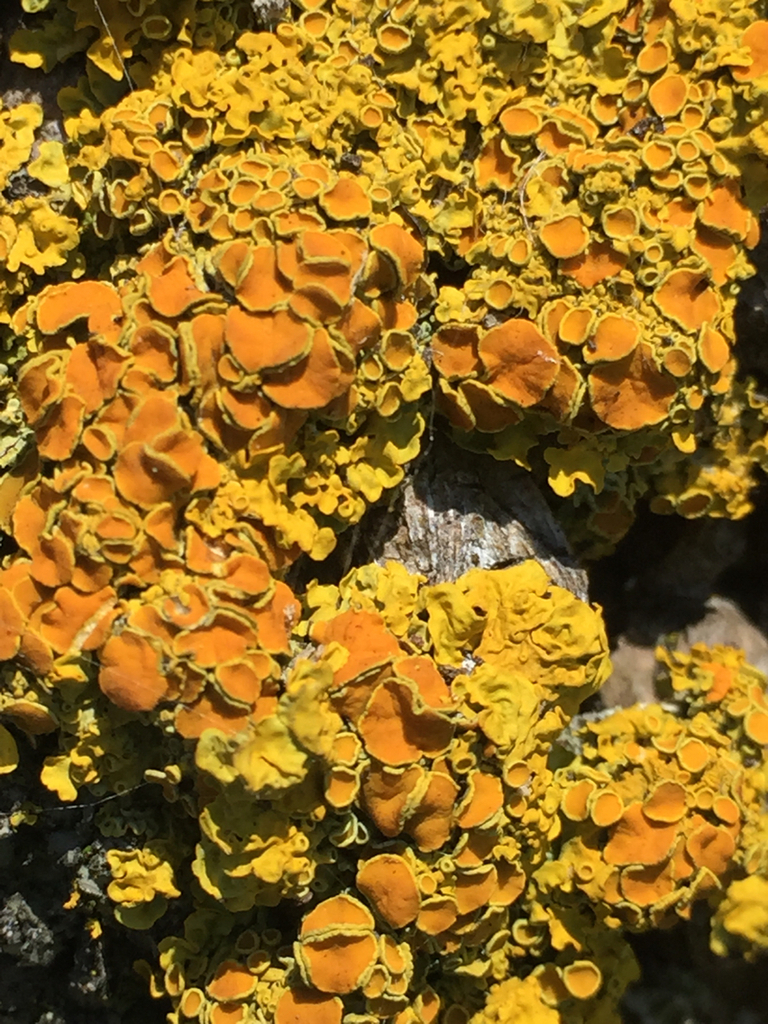
Bright orange to yellow-orange and impossible to overlook, Xanthoria parietina produces abundant orange apothecia and gets its vivid colour from anthraquinone pigments that act as a sunscreen.
Unlike most lichens that decline with pollution, X. parietina is a nitrogen-loving species that actually increases in enriched and polluted areas. It tolerates maritime salt spray and is often the dominant lichen on coastal structures and farm buildings.
It thrives on bark, rock, and concrete , especially near coasts and farms where nitrogen enrichment is high. Its bright orange colour makes it one of the most instantly recognizable lichens in the world.
Identification
- Bright orange to yellow-orange colour is unmistakable ; few other lichens share this vivid hue.
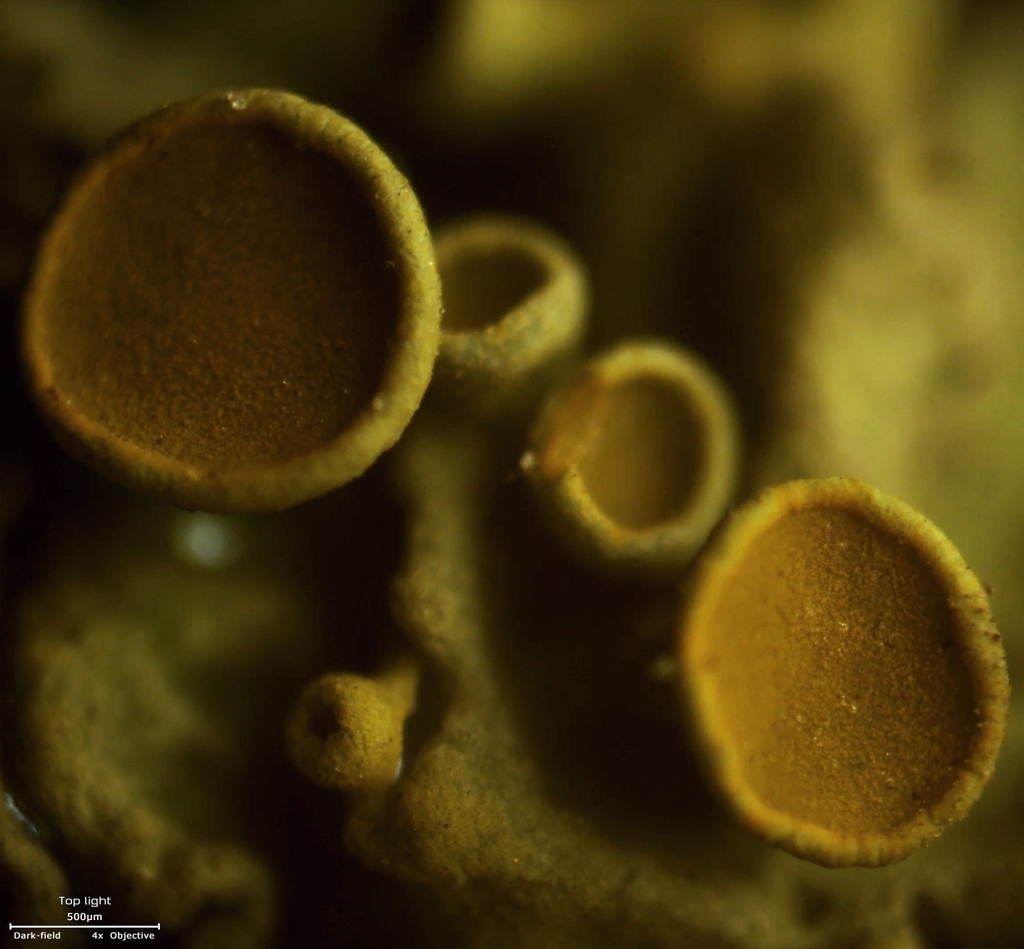
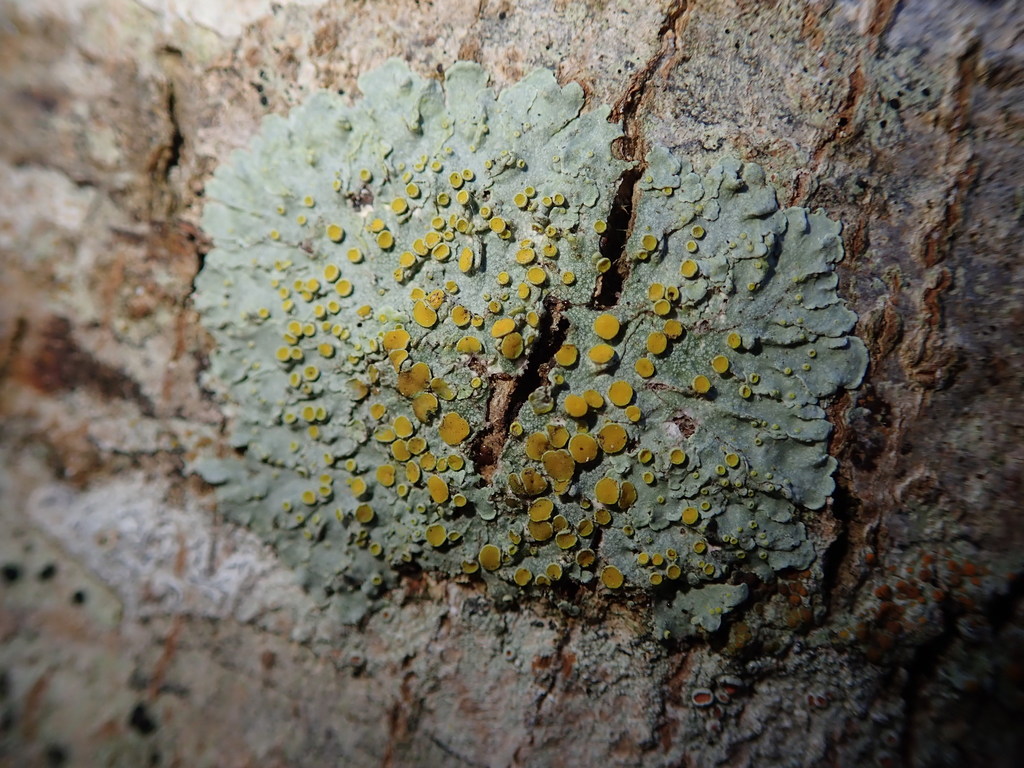
- Produces abundant orange apothecia (disc-shaped fruiting bodies) at the center of the thallus.
- Lobes are small (1–4 mm wide) and neatly arranged in rosettes.
- K+ purple reaction on the cortex (anthraquinone pigments).
- In shade, the colour may fade to greenish-gray , but the K+ purple test confirms identity.
Ecology & Habitat
A nitrophile that thrives where other lichens cannot: farmyards, bird perches, coastal concrete, and urban walls. Its abundance near bird perches is due to the nitrogen in droppings. One of the few lichens whose population has increased with human activity.
Fun Facts
It was one of the first organisms sent into space . In 2005, ESA exposed it to the vacuum and radiation of space for 14 days on the International Space Station, and it survived with full photosynthetic function.
Its bright orange colour comes from parietin, an anthraquinone pigment that acts as a natural sunscreen, protecting the algal partner from UV damage.
Birds deliberately seek it out . Its bright colour near a nest may signal a territory with good nitrogen (food) supply. Some researchers call it the "bird perch lichen."
It can grow on bone, and has been found colonizing whale bones on Arctic beaches and even human skulls in old ossuaries.
Medieval herbalists used it to treat jaundice because of its yellow colour , another example of the Doctrine of Signatures.
Distribution
Cosmopolitan; found on every continent except Antarctica