Overview
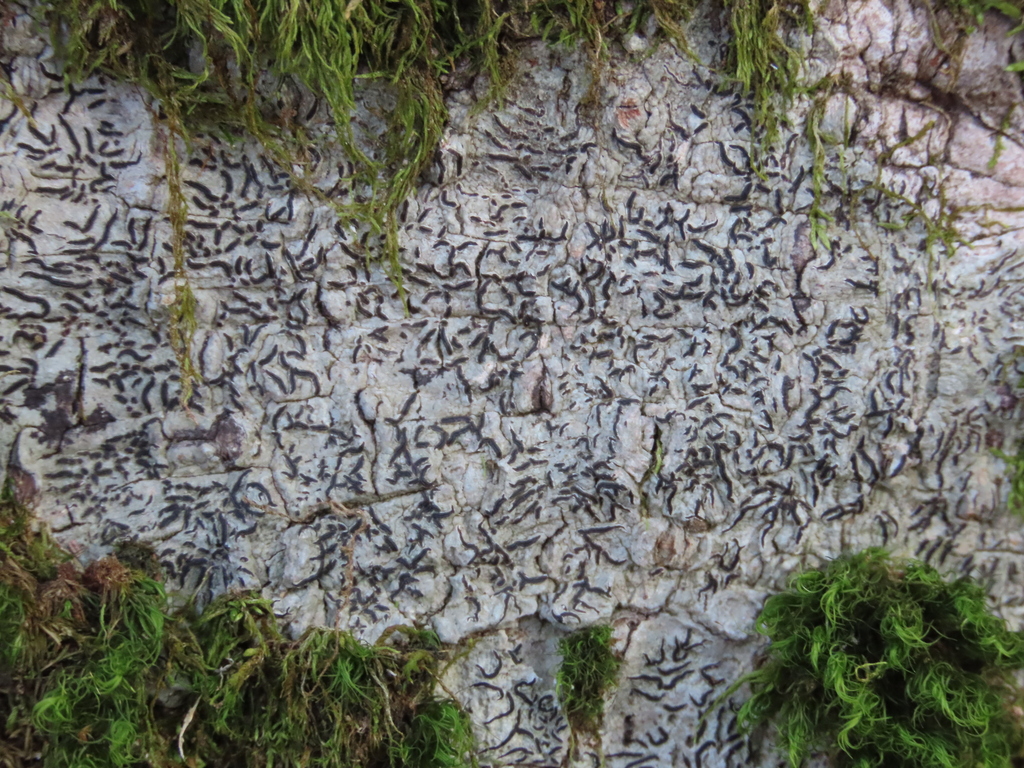
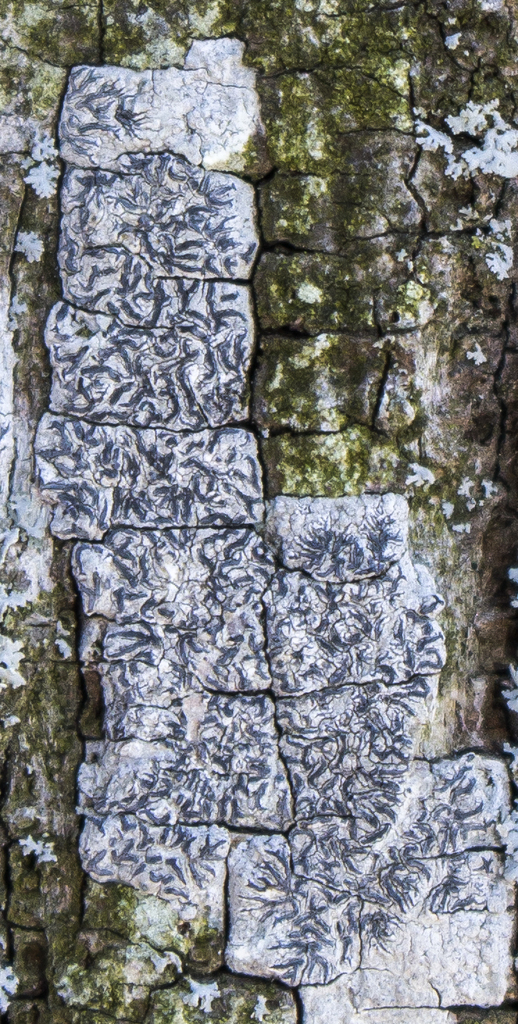
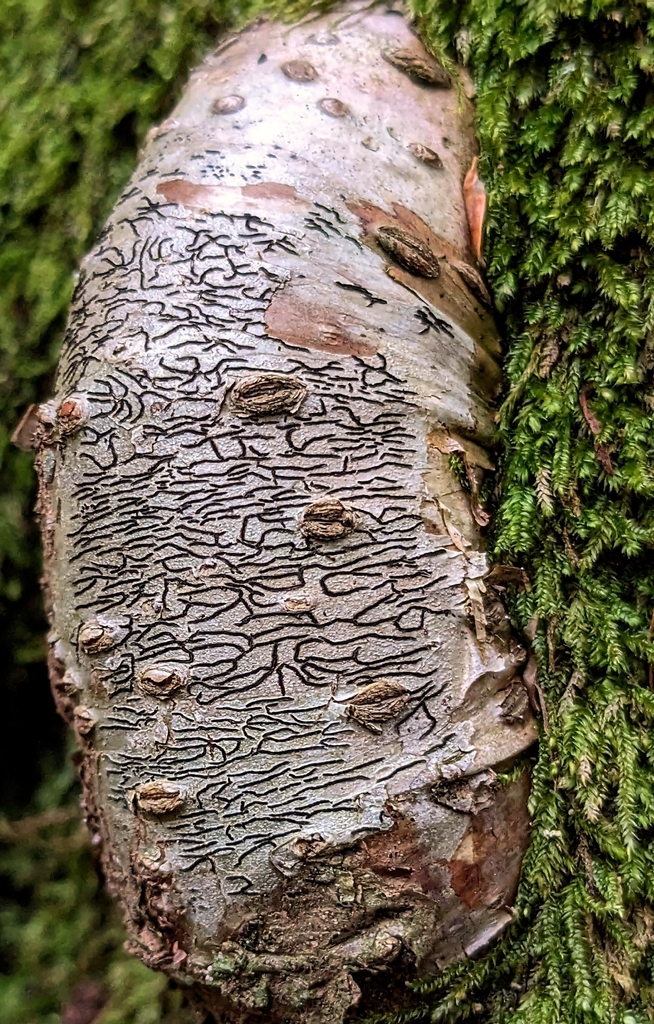
Smooth gray-white with thin, dark, line-like fruiting bodies called lirellae that twist and branch across its surface like cursive handwriting. Graphis scripta looks as though someone has written on the bark in an unknown alphabet; the name itself means "written script."
Found on the smooth bark of young trees, it is a common and widespread crustose species that delights observers once they learn to spot it. Each lirella is an elongated apothecium, a spore-producing structure stretched into a line rather than the usual disc shape.
Identification
- Thin, smooth, gray-white crust on smooth bark.
- Dark, line-like lirellae that twist, branch, , resembling handwriting.
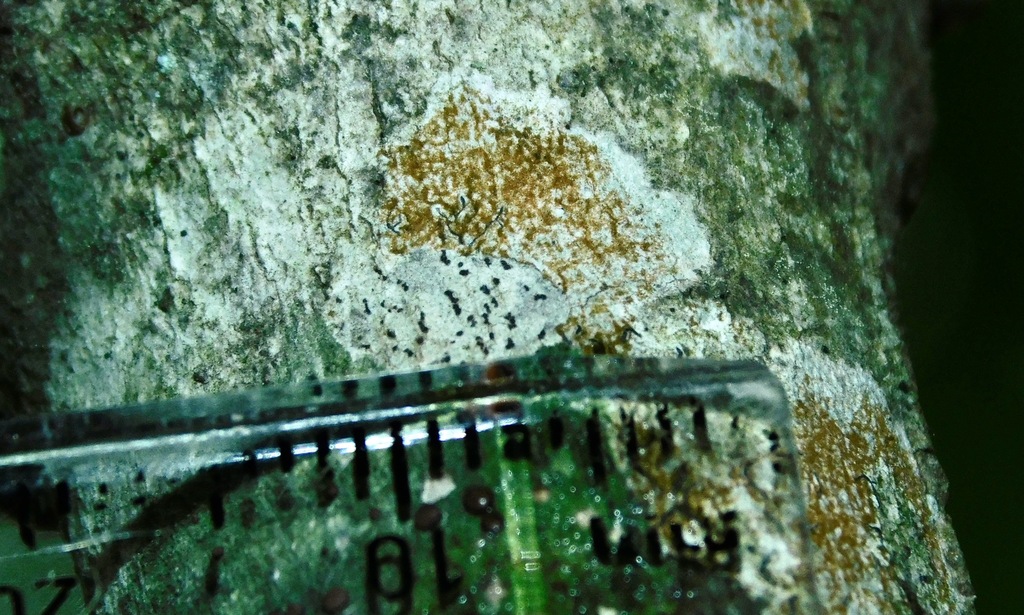
- Lirellae are elongated apothecia, not cracks or damage.
- Found on smooth-barked young trees: beech, birch, holly, hazel.
- The "handwriting" pattern is unique and diagnostic.
Ecology & Habitat
Grows on the smooth bark of young deciduous trees. As trees age and bark becomes rough and furrowed, Graphis scripta is replaced by other species. It is part of the "smooth bark community" of lichens.
Fun Facts
The name says it all: "Graphis" means "writing" and "scripta" means "written." This lichen looks exactly like someone wrote on the bark in an unknown cursive alphabet.
In European folklore, the mysterious "writing" on birch bark was sometimes attributed to fairies or forest spirits leaving messages for those who could read them.
The elongated fruiting bodies (lirellae) are . By stretching the spore-producing surface into a line, the lichen maximizes the area of spore release.
It is one of the first lichens that people notice once they know . After that, they see it everywhere on smooth-barked trees.
The Graphidaceae family (to which it belongs) is one of the largest lichen families in the tropics, with , though G. scripta itself is a temperate species.
In Japan, it is called "monji-goke" (character moss), and in Germany "Schriftflechte" . Every culture that encounters it sees the writing.
Distribution
Widespread across temperate regions of North America, Europe, and Asia