Overview
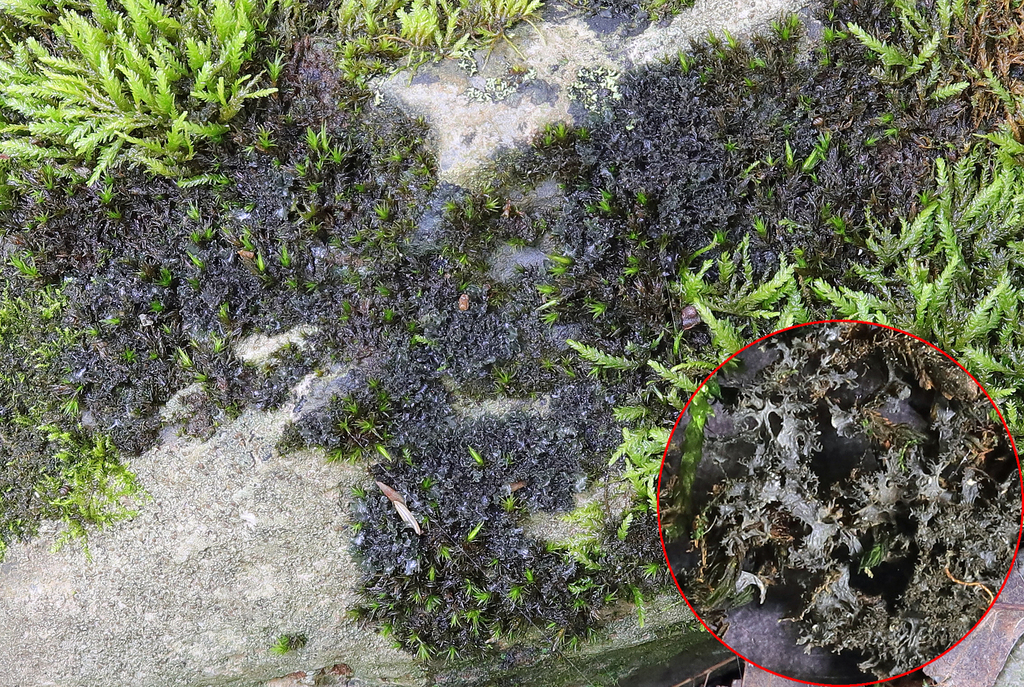
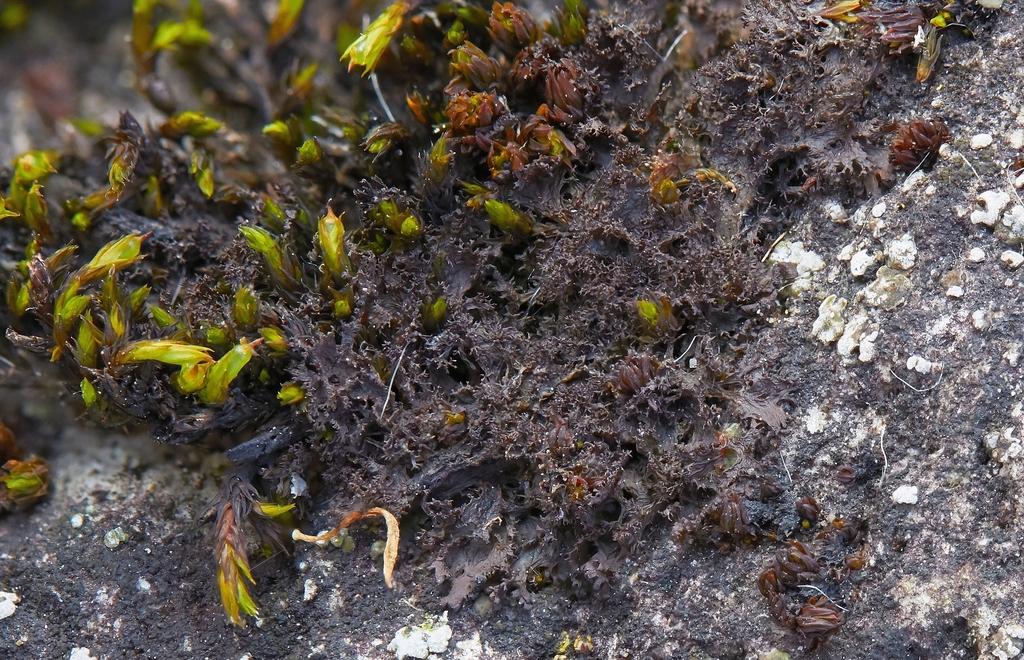
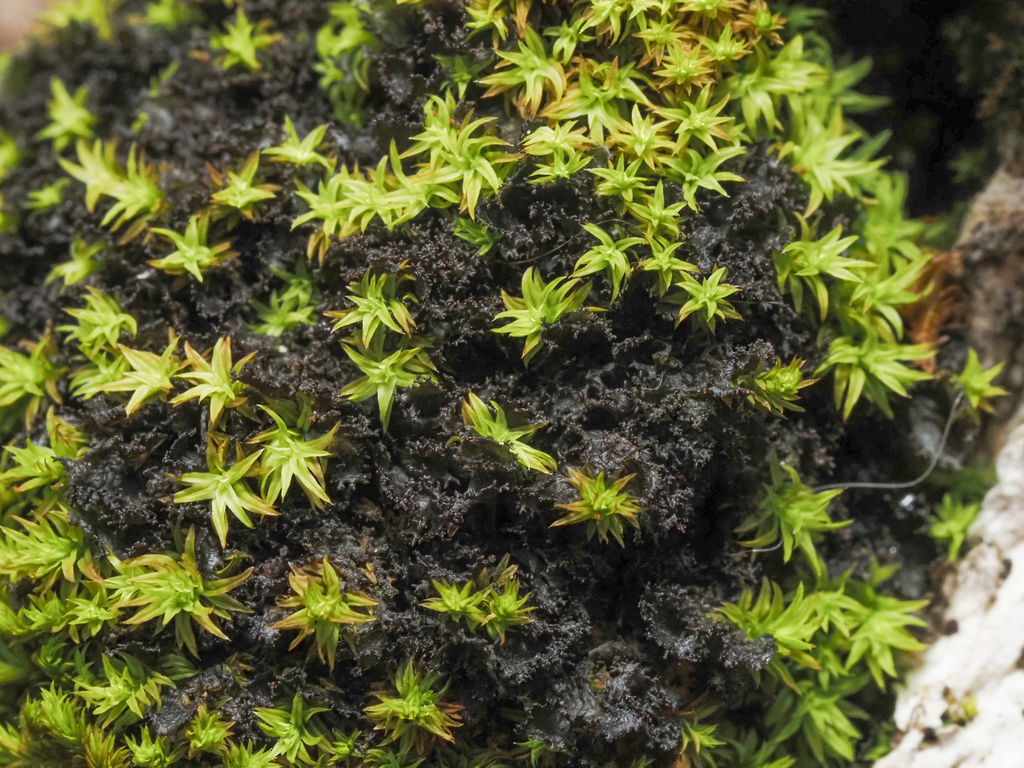
Dark gray-blue to black when dry, Leptogium species swell and become translucent blue-gray when wet, revealing their gelatinous internal structure. The cyanobacterial photobiont Nostoc gives them their dark colouration and nitrogen-fixing ability.
Found on bark and rock in moist environments, they play an important ecological role by contributing fixed nitrogen to forest nutrient cycles. Their dramatic transformation with moisture makes them fascinating to observe after rain.
Identification
- Dark blue-gray to black when dry; swells to translucent blue-gray when wet.
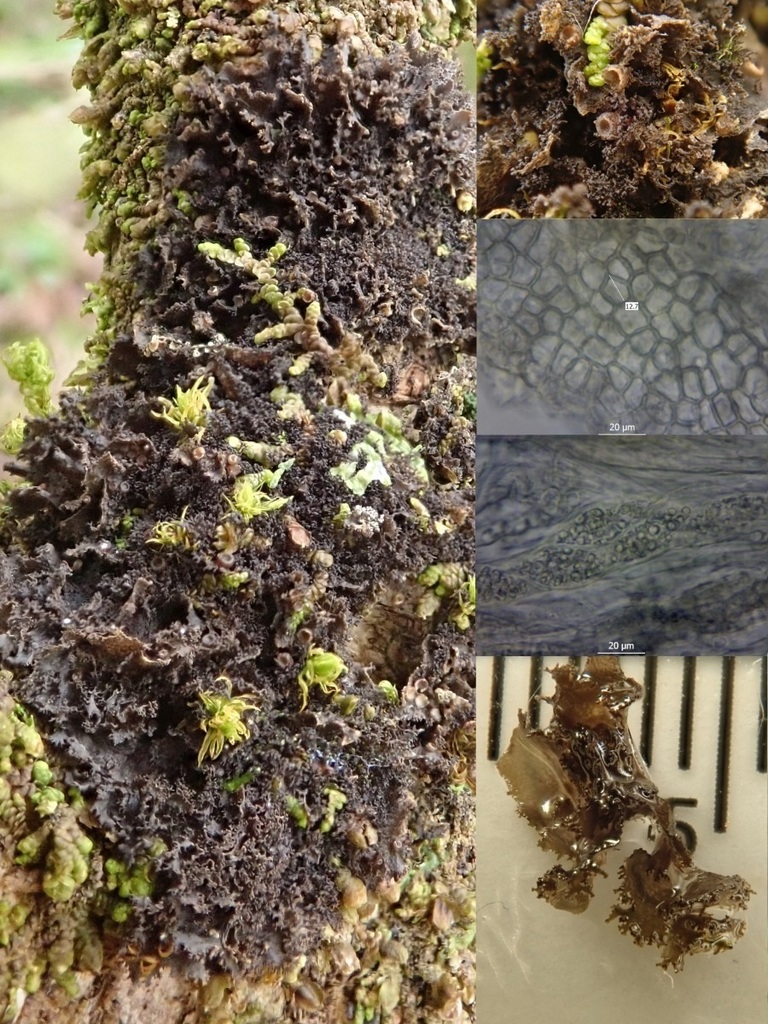
- Has a thin cortex (unlike Collema, which lacks a cortex entirely).
- Lobes are thin and leaf-like, often with wrinkled or ruffled margins.
- Isidia or apothecia may be present depending on species.
- The presence of a cortex (visible as a slightly shiny surface) distinguishes it from Collema.
Ecology & Habitat
An important nitrogen fixer in moist forest ecosystems. The cyanobacterial partner (Nostoc) converts atmospheric nitrogen into forms usable by other organisms, enriching the nutrient budget of the entire forest.
Fun Facts
When dry, gelatinous lichens look like dead, crispy black flakes. Then, just minutes after rain, they swell to 10 times their dry volume and become translucent, jelly-like, and alive with photosynthesis.
The name "Leptogium" comes from the Greek "leptos" (thin) ; despite being gelatinous, its thallus is relatively thin compared to Collema.
All gelatinous lichens fix nitrogen, making them among the most ecologically valuable lichens in any forest. They can contribute 1–5 kg of nitrogen per hectare per year.
The gelatinous texture is caused by the cyanobacterial partner Nostoc, which produces thick mucilaginous sheaths that absorb and hold water like a sponge.
Some Leptogium species can survive complete desiccation for months, then resume full metabolic activity within minutes of rehydration.
Distribution
Cosmopolitan; found worldwide in humid environments