Overview
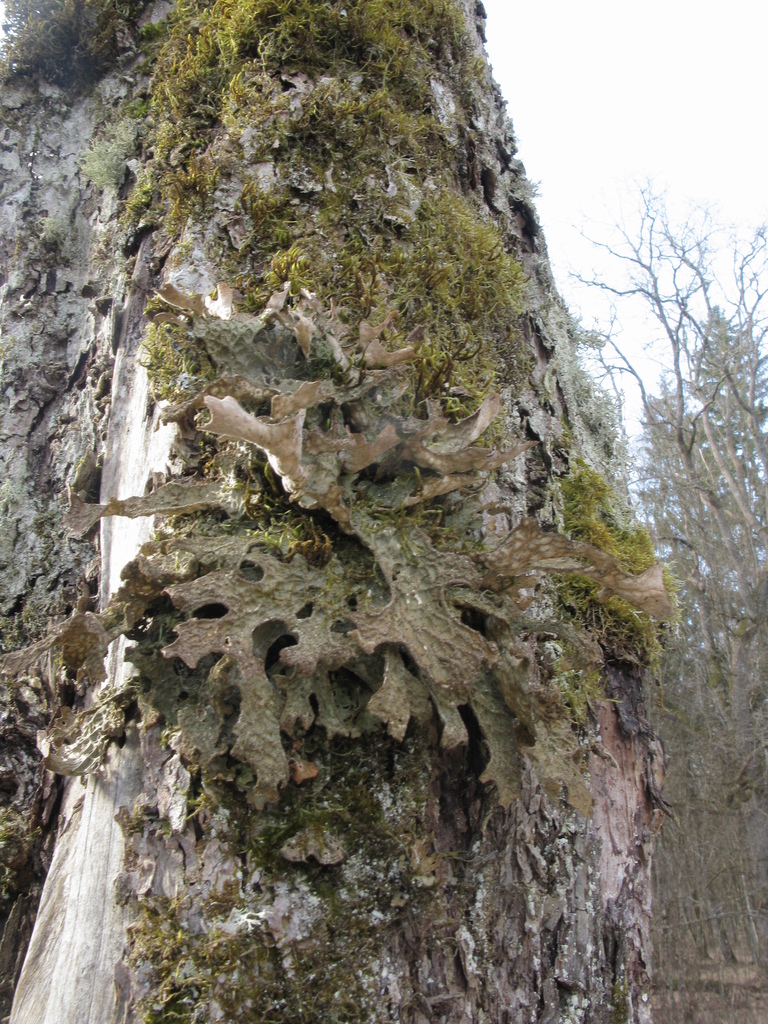
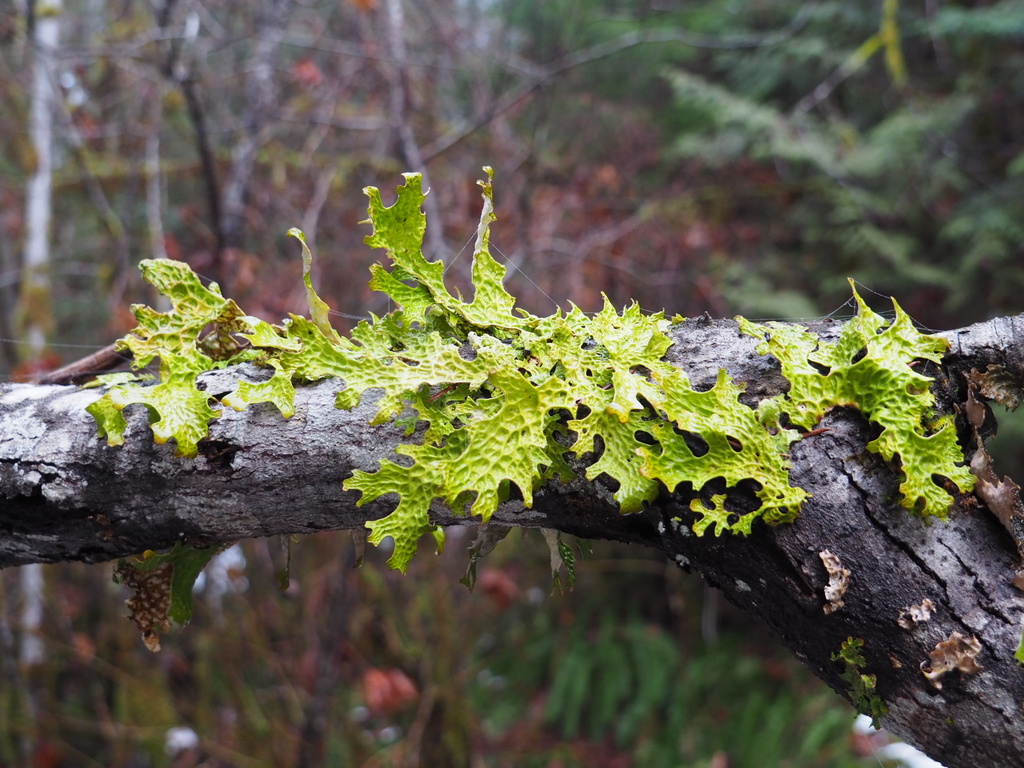
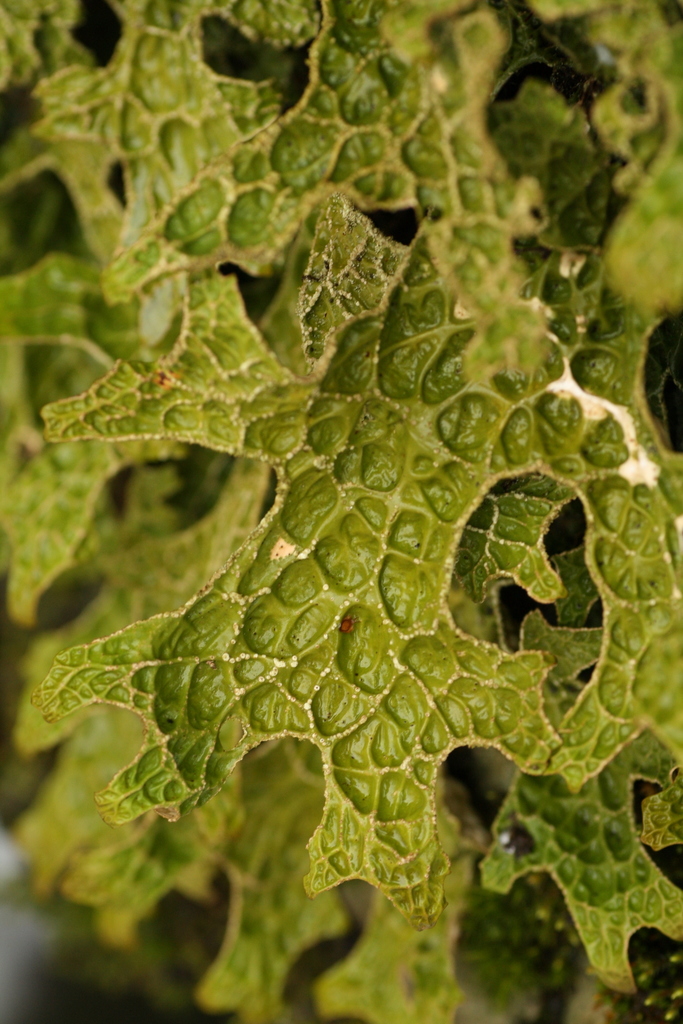
Green when moist and brownish when dry, Lobaria pulmonaria is a large, deeply ridged lichen whose surface texture resembles lung tissue, a resemblance that led medieval herbalists to prescribe it for respiratory ailments under the Doctrine of Signatures.
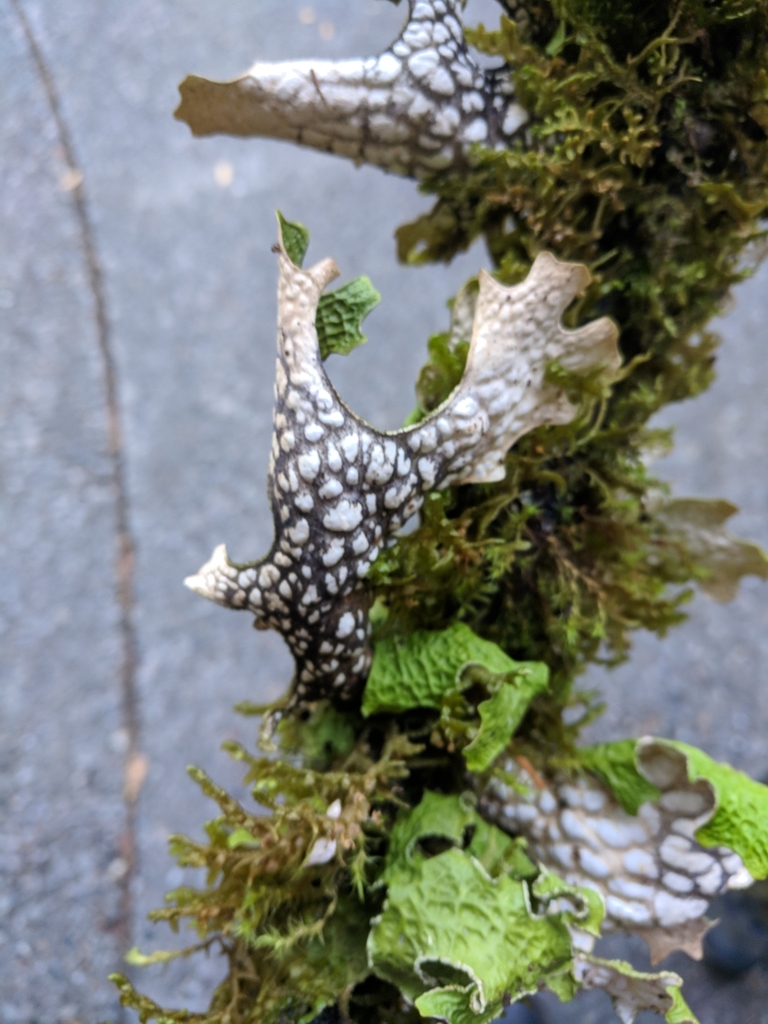
This tripartite lichen (fungus + green alga + cyanobacteria) hosts cephalodia on its lower surface that house nitrogen-fixing cyanobacteria. It is a prized indicator of old-growth forest continuity and clean air.
Declining across much of its range due to habitat loss and air pollution, it is legally protected in several European countries including the UK, where it is a priority species for conservation.
Identification
- Large thallus (often 10–30 cm) with deeply ridged, lung-like surface texture.
- Bright green when moist, turning brown and papery when dry.
- Lower surface has pale tomentum and round cephalodia (dark spots containing cyanobacteria).
- Soredia form along ridges and margins.
- Medulla K+ yellow, C+ red (stictic acid and gyrophoric acid).
Ecology & Habitat
A keystone species in old-growth forests, contributing significant nitrogen to the ecosystem through its cyanobacterial partner. Requires decades of forest continuity to establish. Its presence is used by conservation biologists to identify forests of high ecological value.
Fun Facts
It is a tripartite organism , one of the few lichens with THREE partners: a fungus, a green alga (Dictyochloropsis reticulata), AND cyanobacteria (Nostoc) living in special structures called cephalodia.
In Scandinavia, it was historically boiled to produce a traditional remedy for lung diseases. Modern research has found it contains anti-inflammatory compounds, partially validating the medieval use.
A single large thallus can fix up to 4 kg of nitrogen per hectare per year through its cyanobacterial partner, making it an important nutrient source in old-growth forests.
It is legally protected in the United Kingdom, Switzerland, and several other European countries due to dramatic population declines.
Finding Lobaria pulmonaria in a forest is a sign the woodland has been undisturbed for at least 100–200 years ; it is one of the most reliable indicators of ecological continuity.
Distribution
Circumboreal; declining across Europe, still common in Pacific Northwest and parts of Asia