Overview
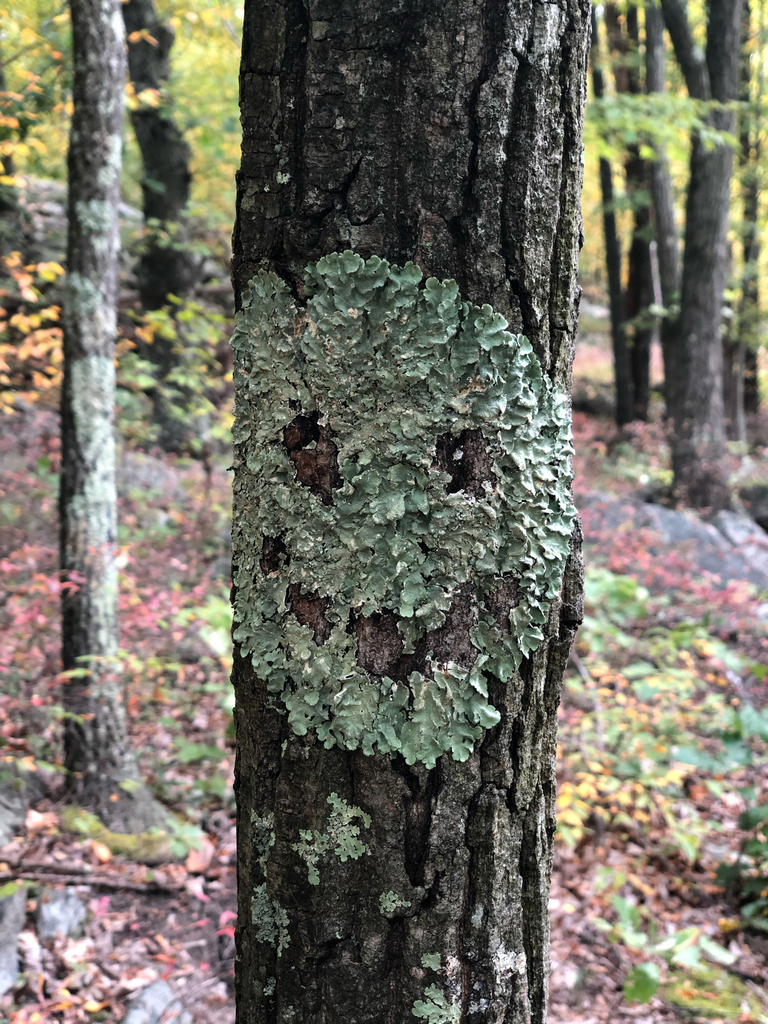
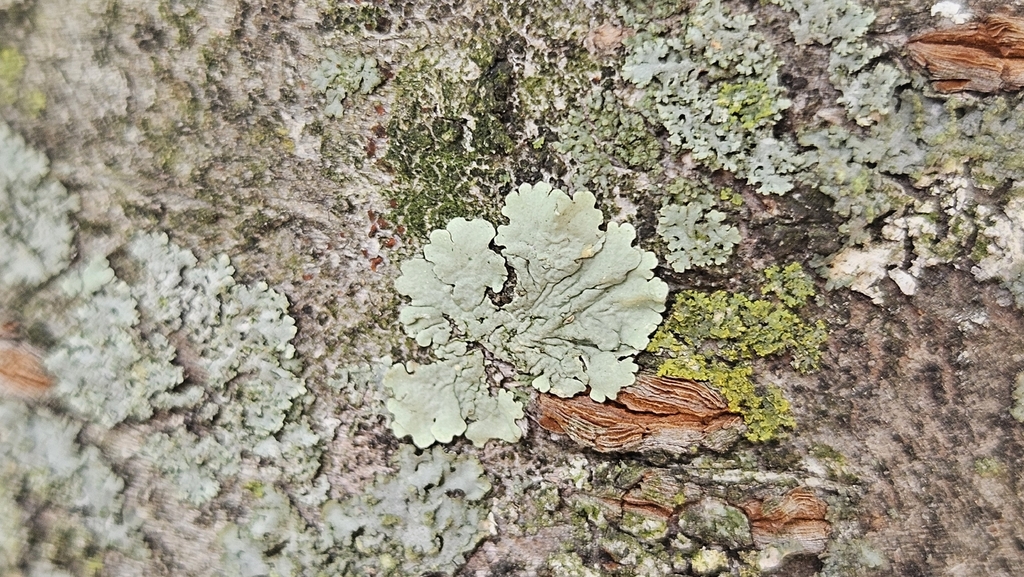
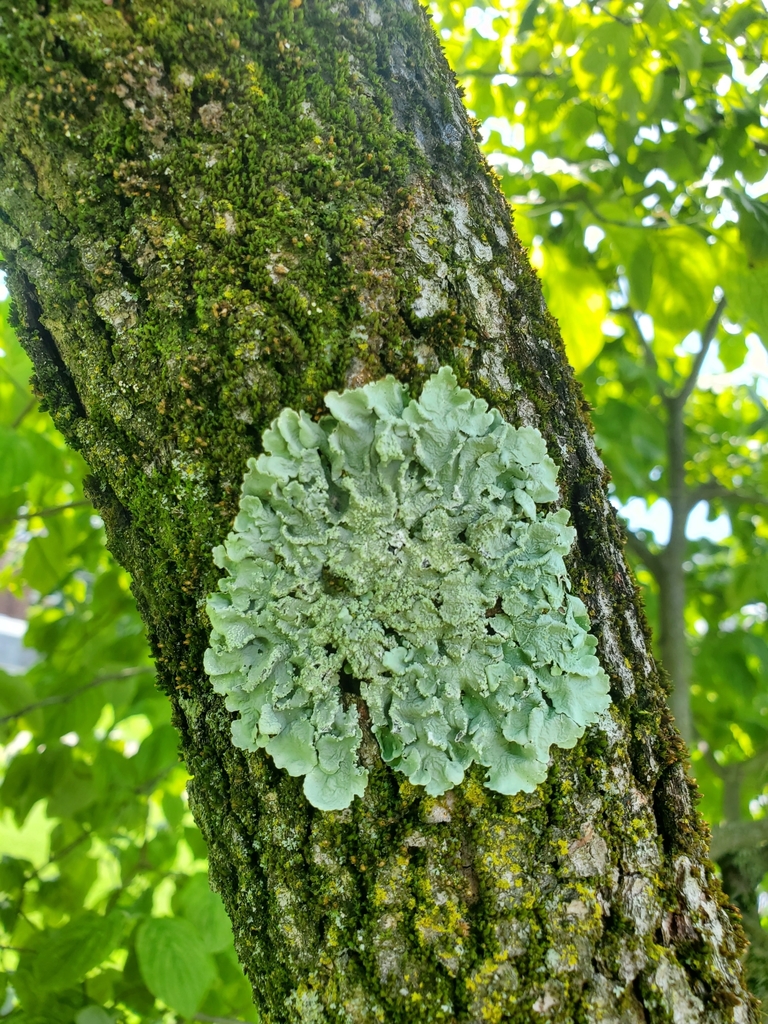
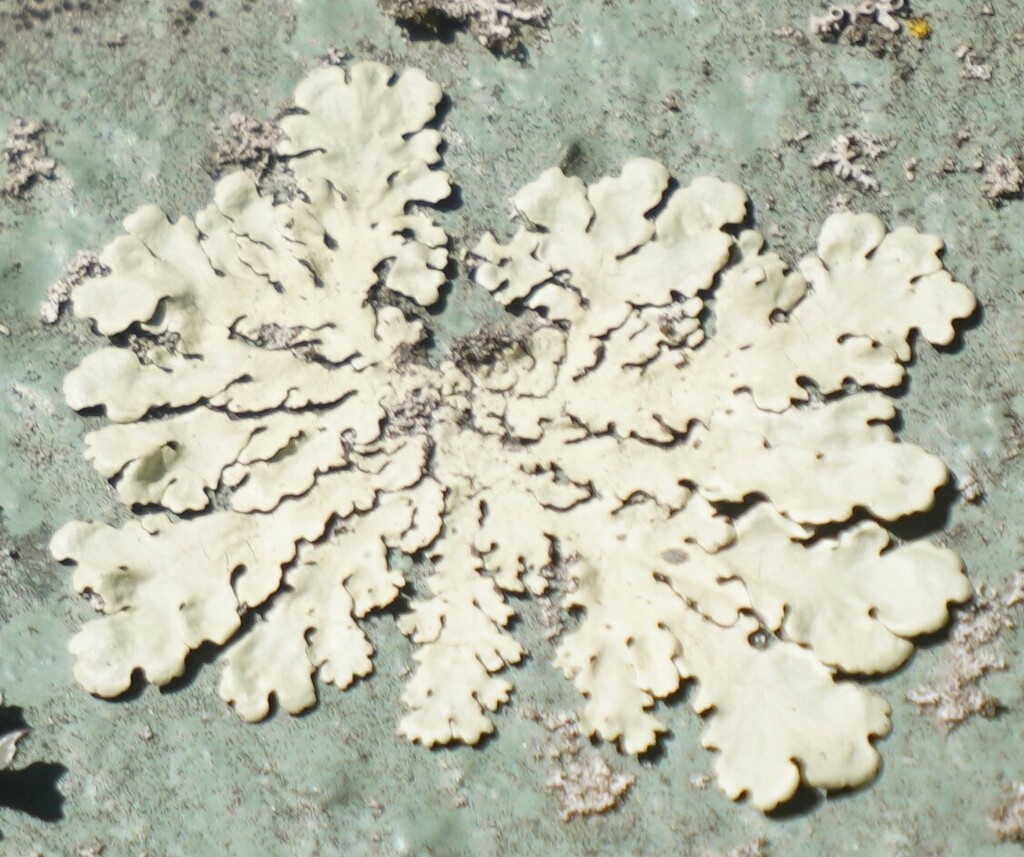
Unmistakable for its distinctive yellow-green colour, Flavoparmelia caperata is one of the most common foliose lichens in eastern North America. The wrinkled upper surface bears granular soredia, giving older specimens a rough, mealy texture.
It grows loosely attached to the bark of deciduous trees, often forming broad rosettes up to 30 cm in diameter. Like Parmelia sulcata, it is an intermediate nitrogen : present in moderately enriched environments but absent from the most polluted sites.
The yellow-green colour comes from usnic acid in the cortex, a compound that also gives the lichen UV protection and antimicrobial properties.
Identification
- The pale yellow-green colour is distinctive and unlike most other bark lichens.
- Surface is wrinkled (rugose) with granular soredia developing on the upper surface.
- Lobes are broad (3–8 mm wide) and loosely attached.
- Underside is black at center, becoming brown toward margins, with simple rhizines.
- Medulla K+ yellow turning red (protocetraric acid).
Ecology & Habitat
Prefers well-lit bark of mature deciduous trees, especially oaks. Common at forest edges, in parks, and along tree-lined roads. Increasing in abundance in many areas as air quality improves, making it a useful recovery indicator.
Fun Facts
The yellow-green colour that makes it so recognizable comes from usnic acid , the same compound that gives it natural antibiotic properties.
It has been expanding its range northward in Europe over the past several decades as sulphur dioxide pollution has decreased, serving as a living record of improving air quality.
Native Americans used related species to create a yellow-green dye for wool and other textiles.
One of the few lichens that recreational hikers and nature walkers regularly learn to identify by sight, thanks to its unmistakable colour.
Distribution
Widespread across eastern North America, Europe, East Asia, and parts of the Southern Hemisphere