Photos
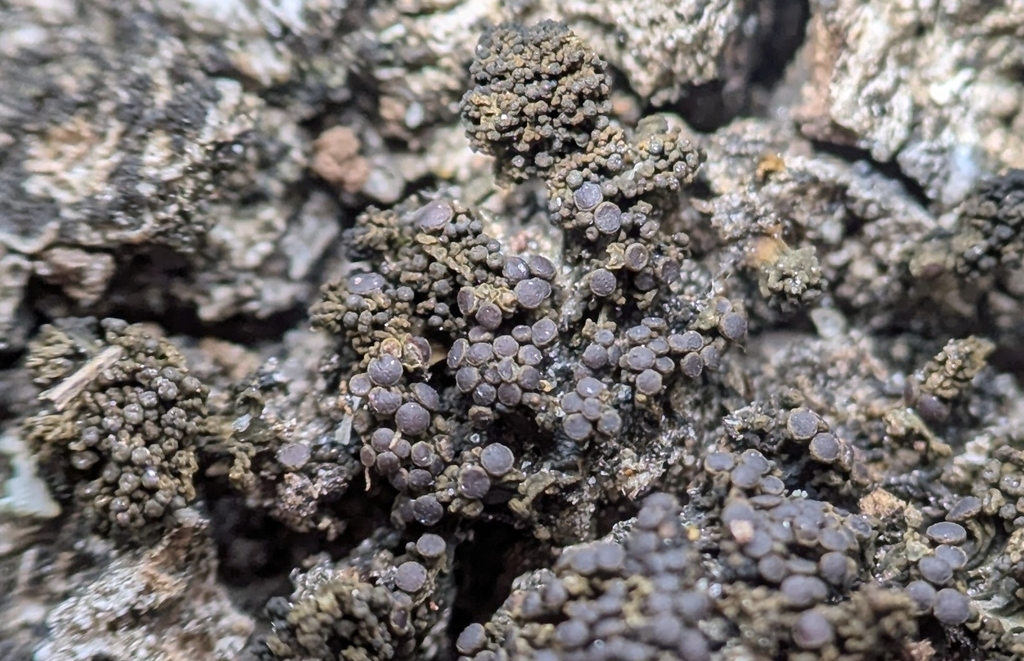
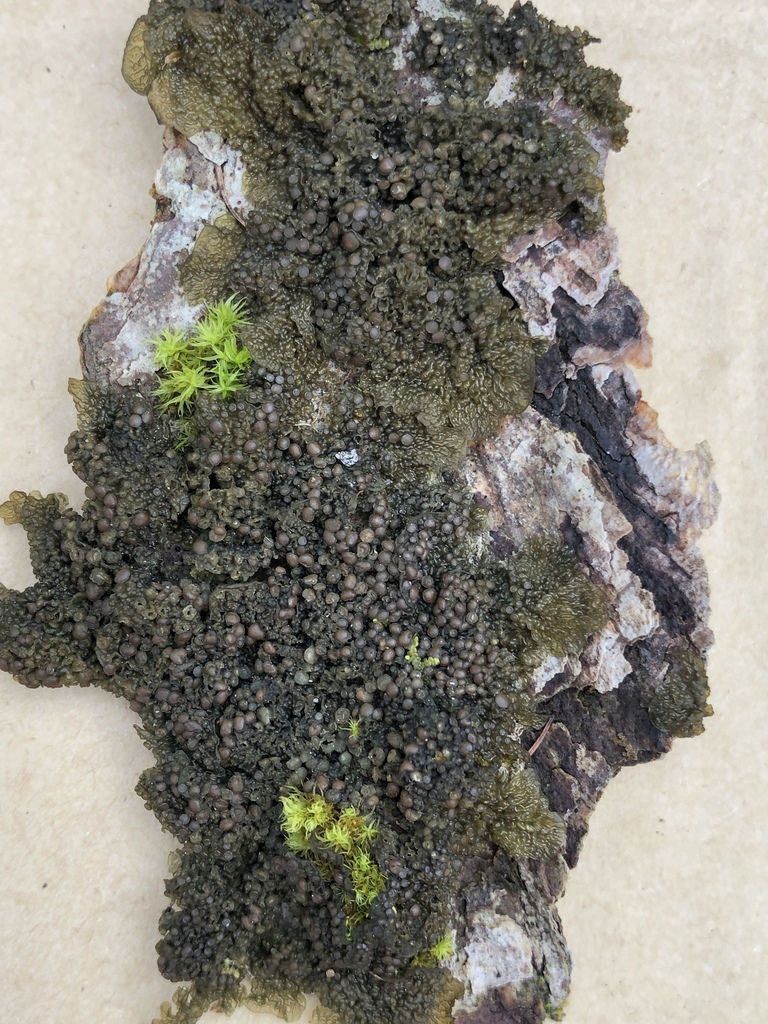
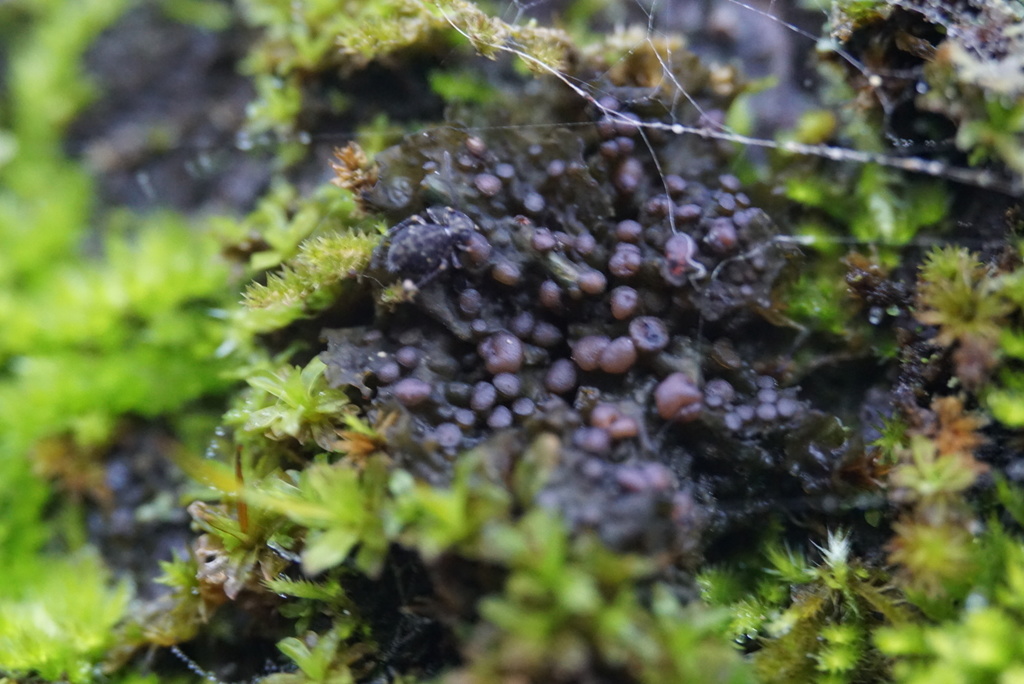
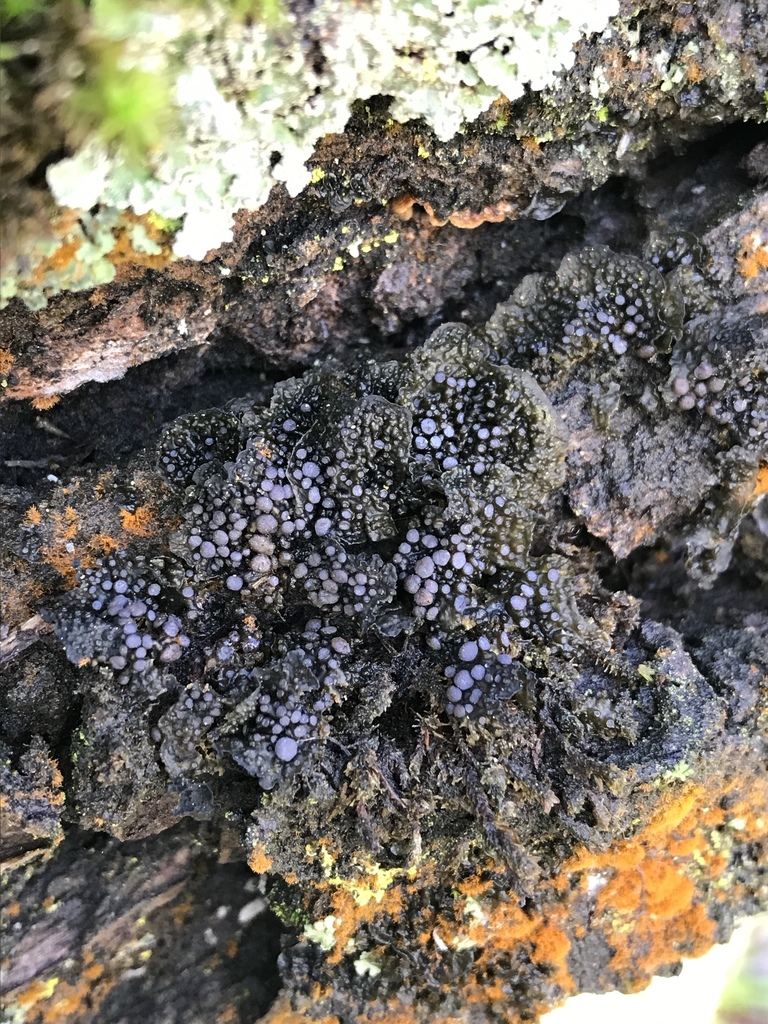
Photos by alinamartin, icbryson-fraxinusenviro, catchang, gyrrlfalcon via iNaturalist (CC licensed)
Overview
Dark olive to black, Collema species are truly gelatinous through and through. They have no internal layering at all. Cyanobacteria are distributed throughout the entire thallus rather than being confined to a photobiont layer, giving the whole body a uniform, jelly-like consistency when wet.
Several species exist, including C. nigrescens, C. furfuraceum, C. subflaccidum, and C. curtisporum, found on both bark and rock.
Identification
- Dark olive to black, truly gelatinous throughout; no layered internal structure.
- Swells dramatically when wet to become translucent and jelly-like.
- NO cortex. This distinguishes it from Leptogium, which has a thin cortex.
- Surface may be smooth, wrinkled, or granular depending on species.
- Lobes are often thick and rounded, especially when hydrated.
Ecology & Habitat
Many species prefer calcareous (limestone) substrates or base-rich bark. Their complete lack of internal layering means the entire thallus is photosynthetically and nitrogen-fixing active, making them highly efficient nutrient cyclers.
Fun Facts
The name "Collema" comes from the Greek "kolla" (glue) . When wet, these lichens feel like warm gelatin or rubber cement.
Unlike most lichens, Collema has absolutely NO internal structure: no cortex, no medulla, no organized layers. The fungal hyphae and cyanobacteria are completely intermixed throughout, like raisins in pudding.
When dry, a Collema thallus can blow away like a leaf. When wet, it swells to many times its dry size and becomes virtually immovable, cemented to its substrate by a gelatinous grip.
Some species prefer growing on mortar between . The calcium in the mortar provides the alkaline conditions they favour.
They are among the most ancient lichen forms. Their simple, undifferentiated structure may represent an early stage in lichen evolution.
Distribution
Cosmopolitan; found worldwide in humid environments, often on limestone