Photos
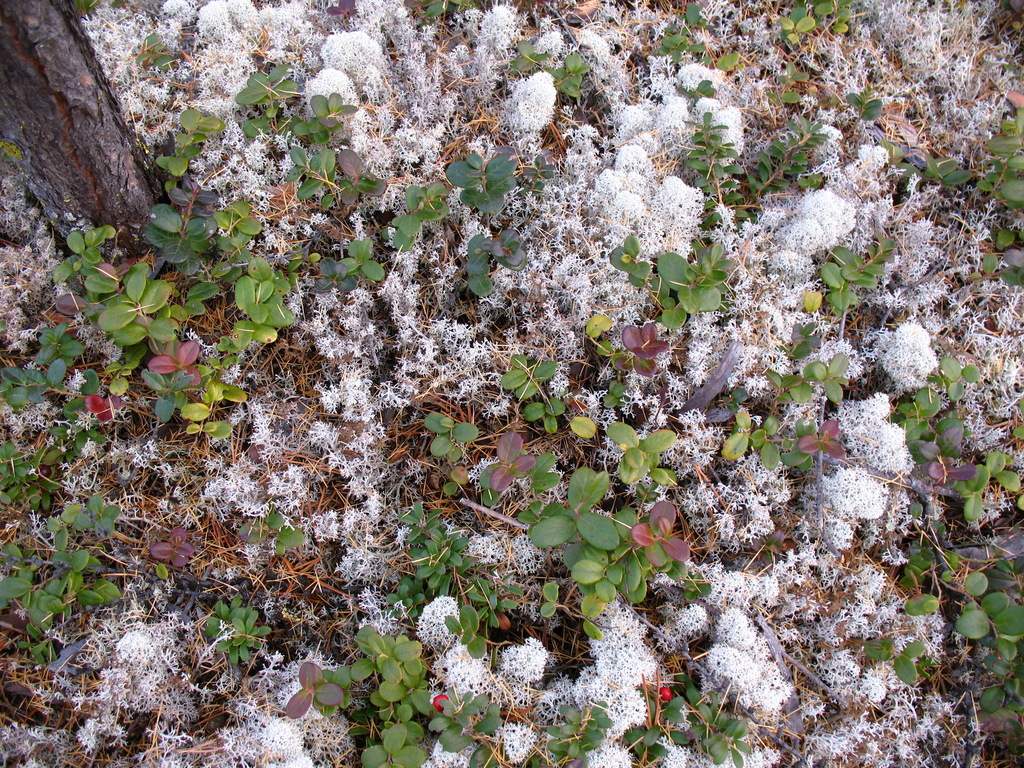
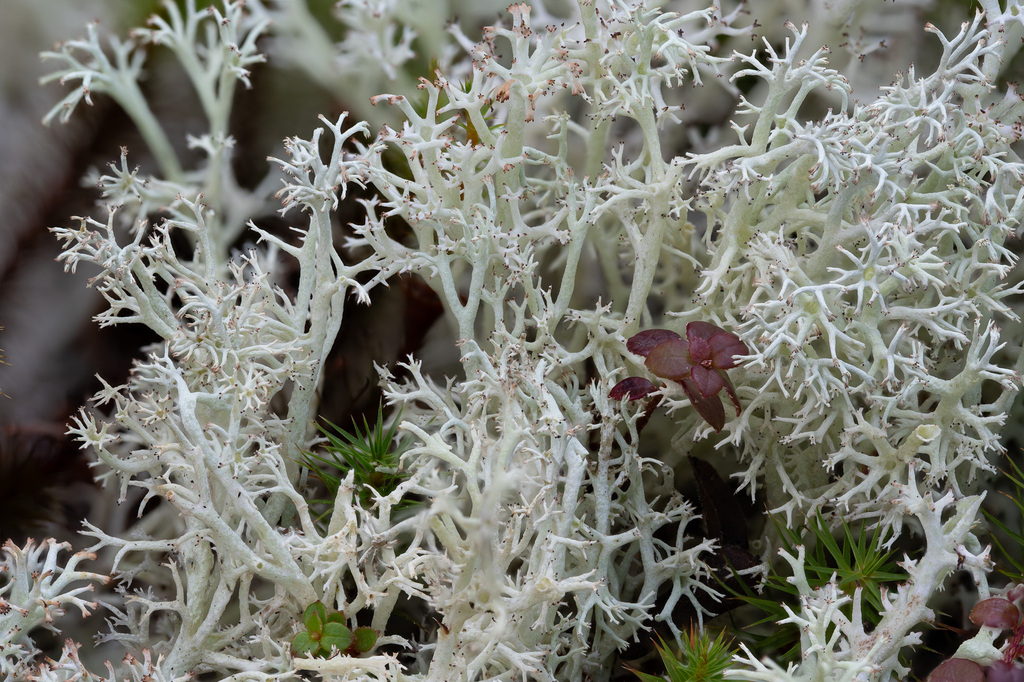
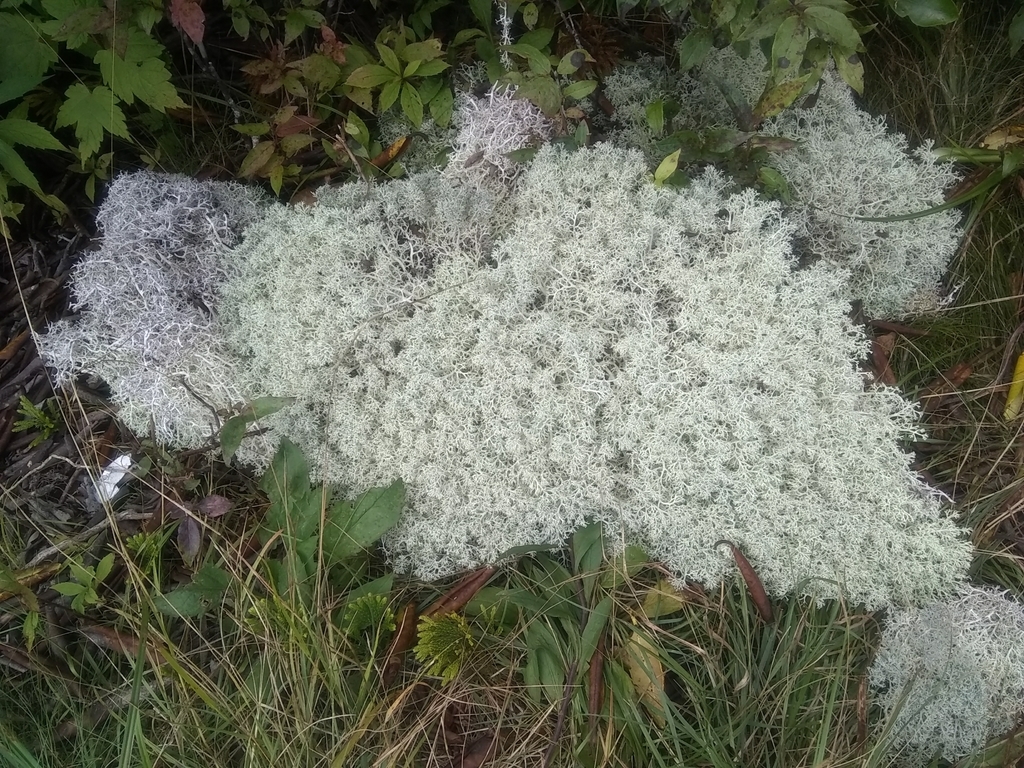
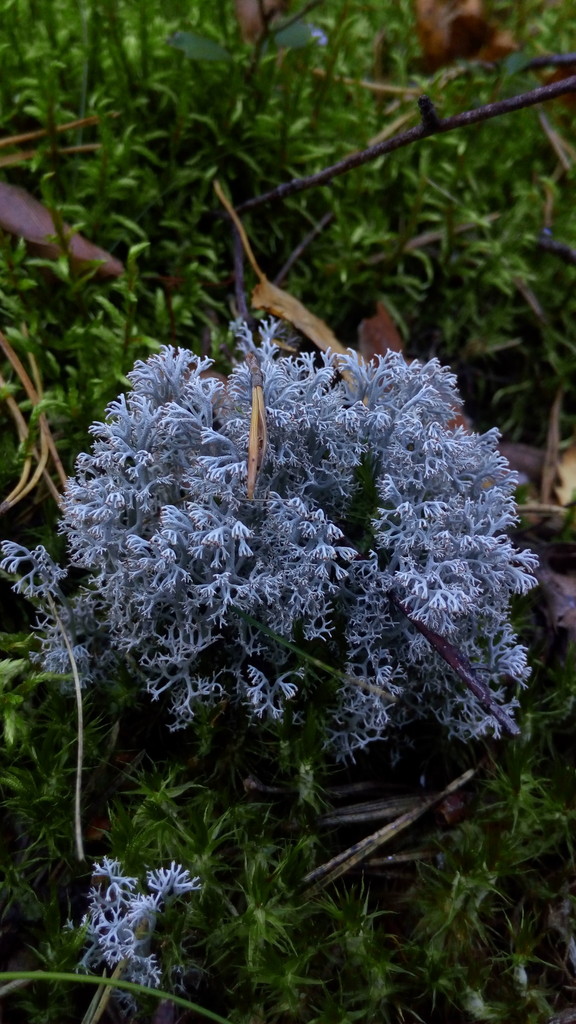
Photos by sergei_kazanovsky, stephen_bucklin, mbrenner131, eglemarija via iNaturalist (CC licensed)
Overview
Silvery gray to gray-green, highly branched and coral-like, Cladonia rangiferina forms dense mats across the ground in boreal and arctic regions. It produces no cups; instead, its branch tips all curve in one direction , a useful identification feature in the field.
This is the primary winter food source for caribou and reindeer, who dig through snow to reach it. A single caribou may consume 2–5 kg per day. Reindeer lichen grows just 3–5 mm per year, meaning overgrazed areas can take decades to recover , a growing concern as climate change alters snow conditions.
Identification
- Silvery gray to gray-green, highly branched like coral or tiny antlers.
- Branch tips all curve in ONE direction (diagnostic feature).
- No cups or flat squamules: entirely three-dimensional branching structure.
- Forms dense mats 5–10 cm tall on the ground.
- Often confused with C. arbuscula and C. stellaris; the one-directional branch tips distinguish C. rangiferina.
Ecology & Habitat
A dominant ground cover species in boreal and arctic ecosystems. Its mats insulate the soil, regulate moisture, and provide critical winter food for caribou and reindeer. Disturbance (fire, overgrazing, trampling) can set back recovery by 50–100 years.
Fun Facts
A single caribou eats 2–5 kg of reindeer lichen per day during winter. It is the primary food source that sustains the vast caribou herds of the North.
It grows at just 3–5 mm per year, meaning a patch the size of your hand may be 20–30 years old. Overgrazed or burned areas can take 50–100 years to fully recover.
Despite the name "reindeer moss," it is not a moss at all. It is a lichen. The misnomer persists in common usage.
Reindeer lichen has been used to make alcohol. Scandinavian peoples traditionally extracted sugar from it through acid treatment, then fermented the result.
It is sold commercially as decorative "preserved moss" for model railroads, architectural models, , often dyed bright green.
Climate change is a growing threat: warmer winters mean more freeze-thaw cycles that create ice layers over the lichen, making it impossible for reindeer to dig through to reach their food.
Distribution
Circumpolar; dominant ground cover in boreal forests and arctic tundra across North America, Europe, and Asia