Photos
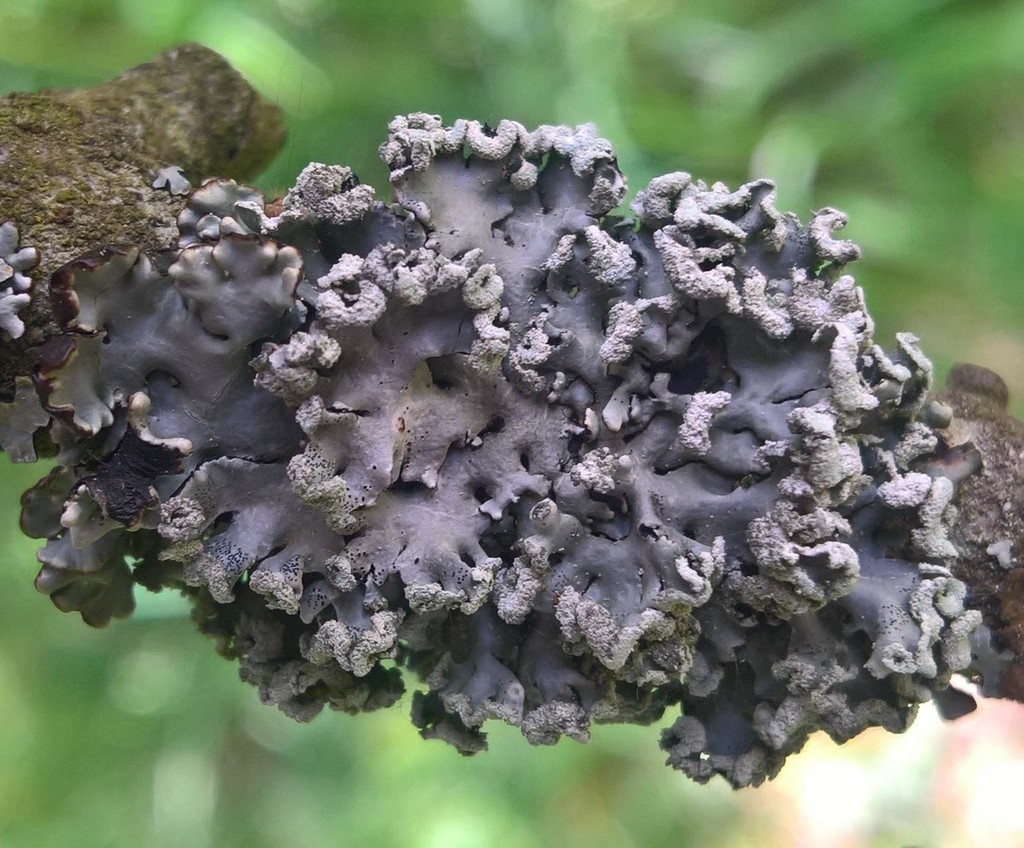
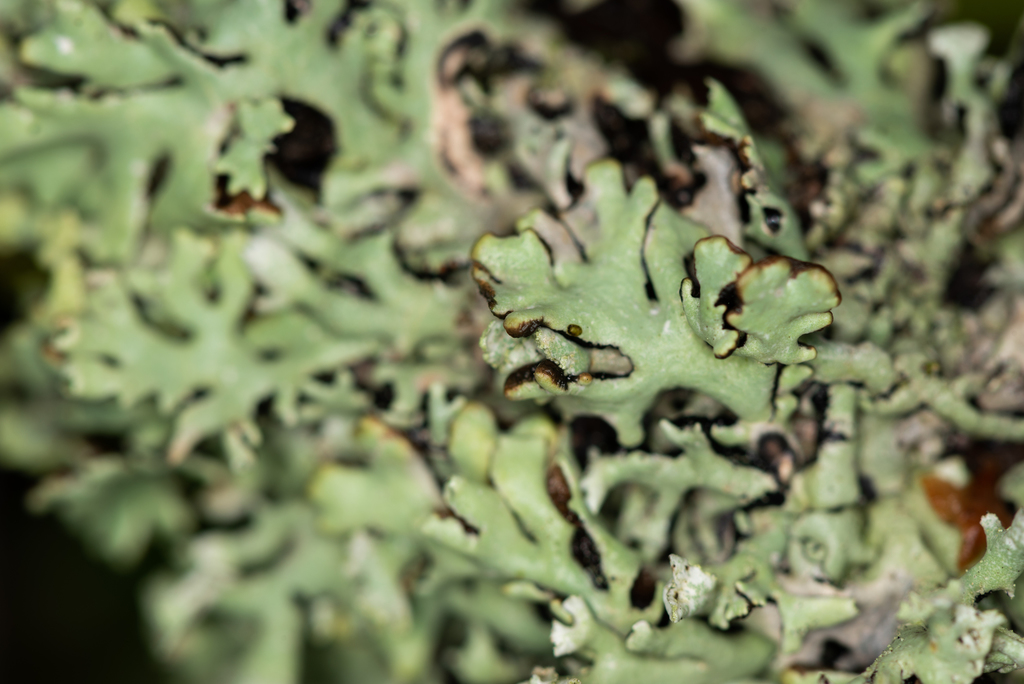
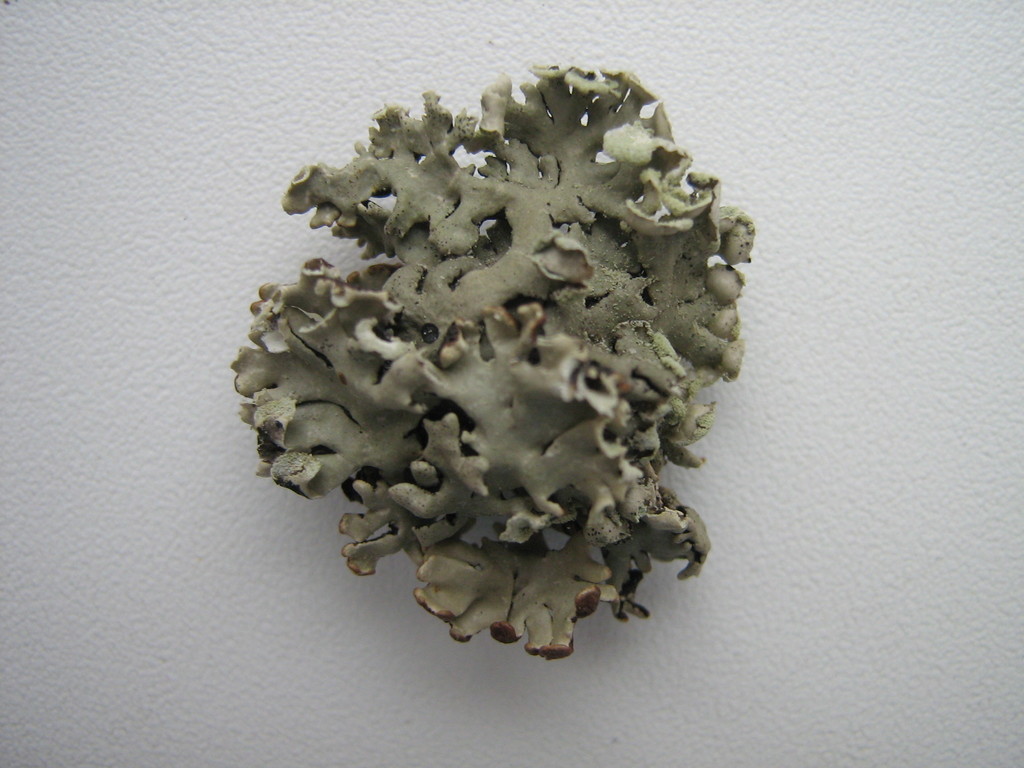
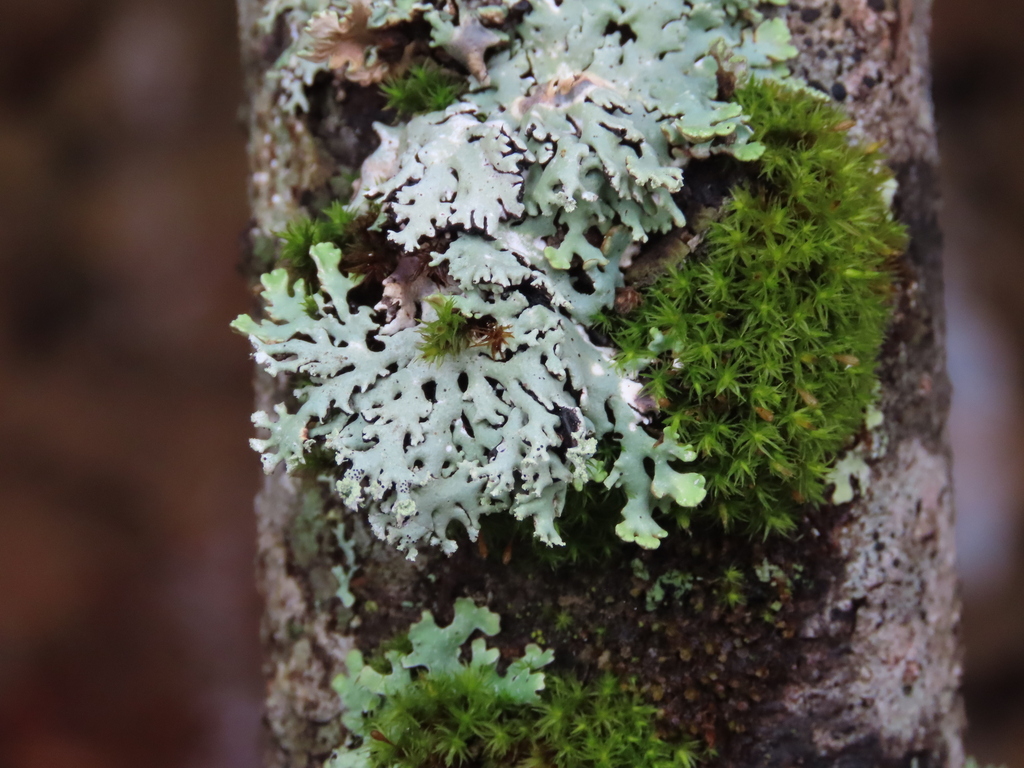
Photos by kai_schablewski, marina_gorbunova, vladimirtravkin, ccantley via iNaturalist (CC licensed)
Overview
Gray-green above with a distinctive black, shiny underside, Hypogymnia physodes has inflated, hollow lobes that burst open at the tips to reveal powdery soredia inside , one of its key identification features.
Unlike most foliose lichens, it lacks rhizines entirely and attaches to its substrate by a holdfast or simply by lying against bark.
Widespread and common across the Northern Hemisphere on tree bark and occasionally on rock, it is one of the most frequently used lichens in air quality biomonitoring studies.
Identification
- Gray-green upper surface with a black, shiny underside.
- Lobes are hollow and inflated (squeeze one gently . It pops).
- Lobe tips burst open to reveal soredia inside (lip-shaped soralia).
- NO rhizines: the underside is completely smooth and black.
- Attached by a central holdfast or simply by resting against the substrate.
Ecology & Habitat
One of the most common lichens in boreal and temperate forests. Intermediate pollution tolerance: used as a "canary" species where its disappearance indicates deteriorating air quality but its continued presence means conditions aren't too bad.
Fun Facts
Its hollow, inflated lobes are unique among common lichens . Gently squeeze one and it pops like a tiny air bladder. No other common lichen has this feature.
It completely lacks rhizines (root-like attachment structures) . Instead, it just lies on the bark surface, held in place by its holdfast and by wedging into bark crevices.
It is likely the single most common lichen species in northern Europe and one of the most common in the world ; a single Scandinavian forest may contain billions of individual thalli.
The species has been so extensively studied for air quality monitoring that its pollution response curve is one of the best-documented of any organism.
Scandinavian farmers historically used it as an indicator for when to plant crops . Its abundance on trees near fields was thought to predict growing conditions.
Distribution
Circumpolar; extremely common across the entire Northern Hemisphere