Overview
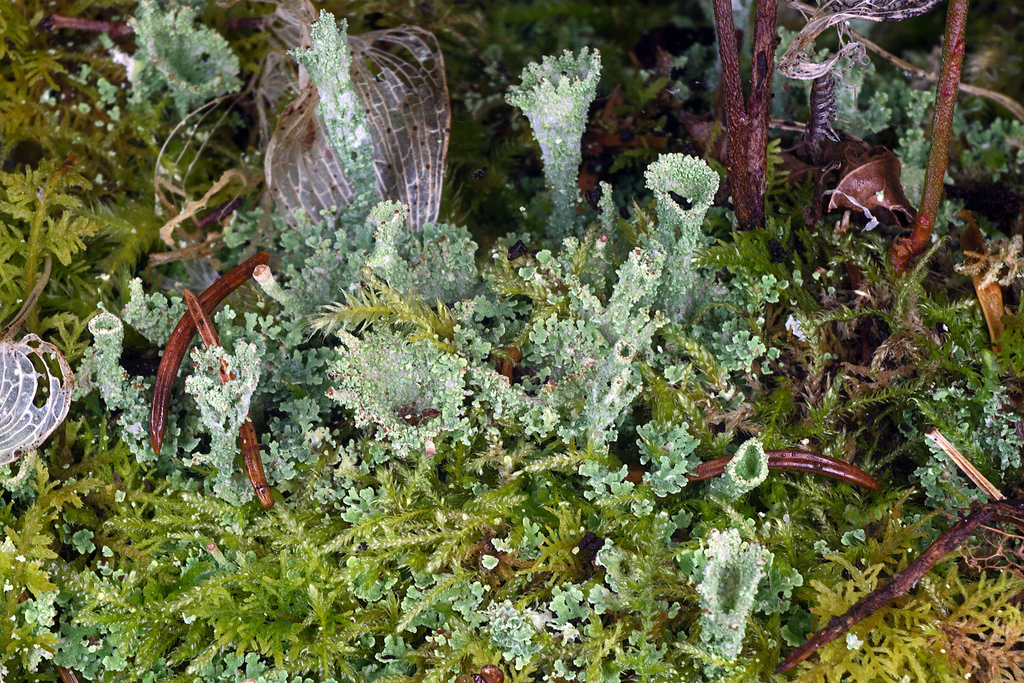
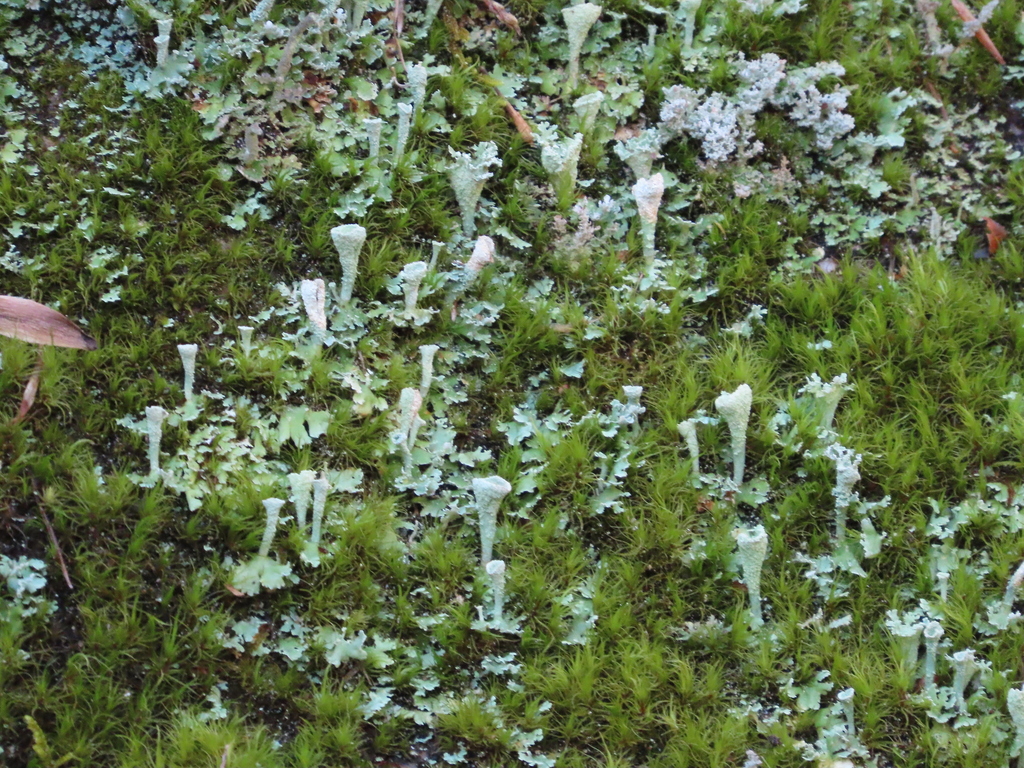
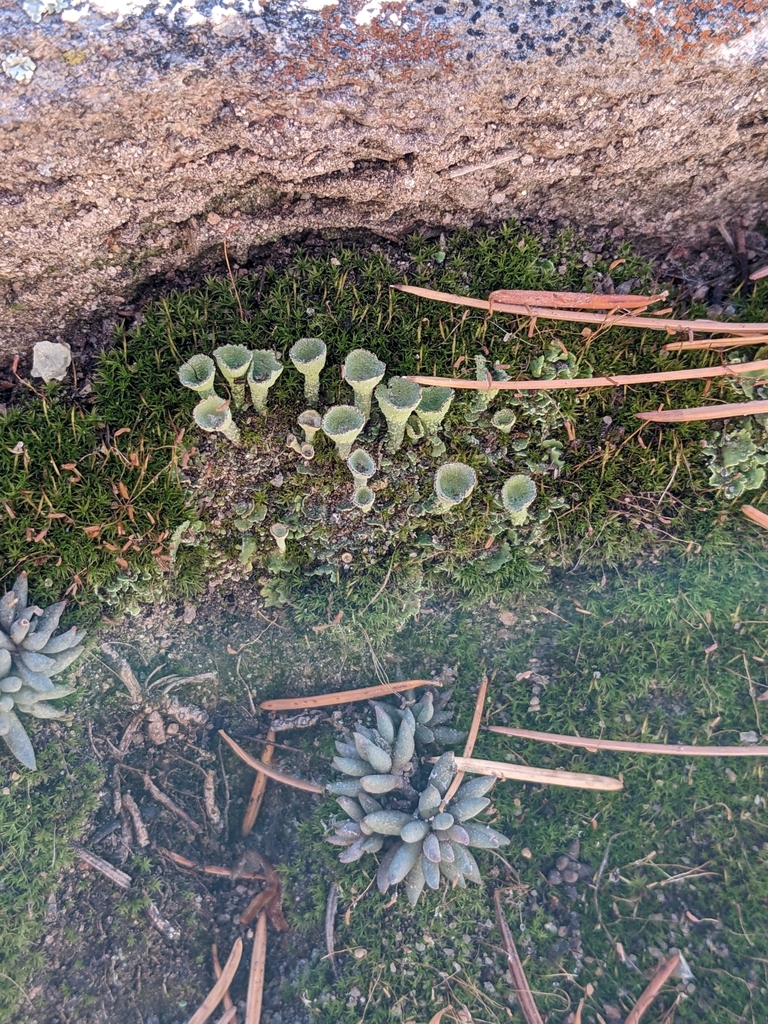
Gray-green with charming , tiny goblets rising from a bed of basal squamules. The scaly cup surfaces of Cladonia pyxidata (pebbled pixie-cup) and the closely related C. chlorophaea (mealy pixie-cup, with soredia lining the cup interior) are a perennial favourite of naturalists and photographers.
Found on soil, rotting wood, and mossy stumps, the cups function as splash dispersal structures: rain drops striking the cup fling soredia outward to colonize new territory.
Identification
- Cup-shaped podetia ("pixie cups") rising 1–3 cm from basal squamules.
- Cup surface is covered in tiny scales (squamules). This is the "pebbled" pixie-cup.
- The closely related C. chlorophaea has soredia lining the cup interior instead of scales.
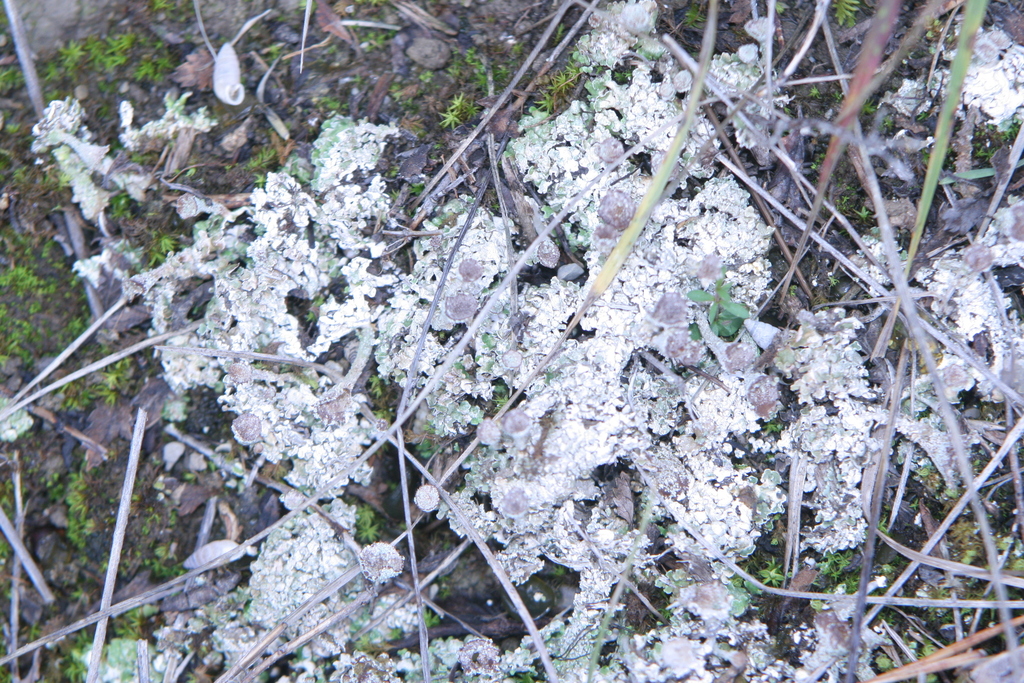
- Basal squamules are small, green, leaf-like.
- Cup margins may bear tiny brown apothecia.
Ecology & Habitat
A common pioneer species on soil and decaying wood. The cup structure is an elegant dispersal mechanism: raindrops splash into the cup and fling reproductive propagules (soredia or squamules) up to 1 metre away.
Fun Facts
The cup-shaped structures are one of nature's most elegant dispersal mechanisms: raindrops splash into the cups and catapult soredia up to 1 metre away, like tiny medieval trebuchets.
The name "pyxidata" comes from "pyxis" , a small, round box used , referring to the cup shape.
Folklore in many cultures associates pixie cups with fairies: they were said to be tiny drinking vessels for woodland sprites. The English common name directly references this fairy connection.
Some pixie cups grow new cups from inside older cups, creating tiered structures that look like tiny wedding cakes.
They are among the first lichens to colonize bare soil after a disturbance, making them important pioneer species in ecological succession.
Distribution
Cosmopolitan; found worldwide in temperate and boreal regions