Photos
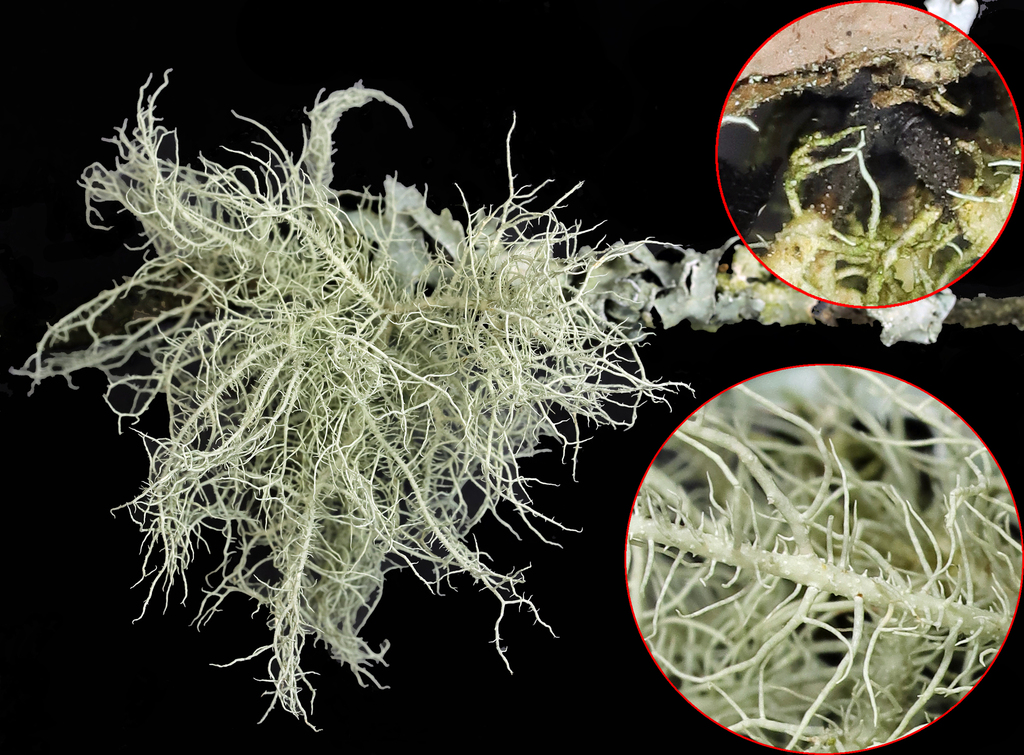
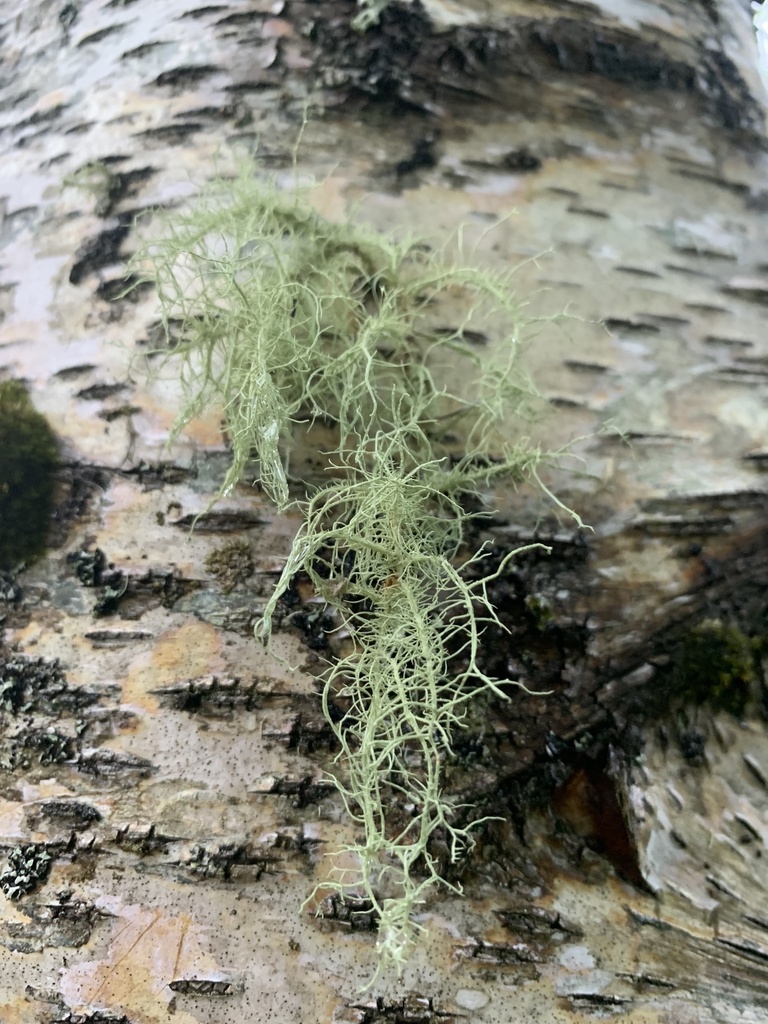
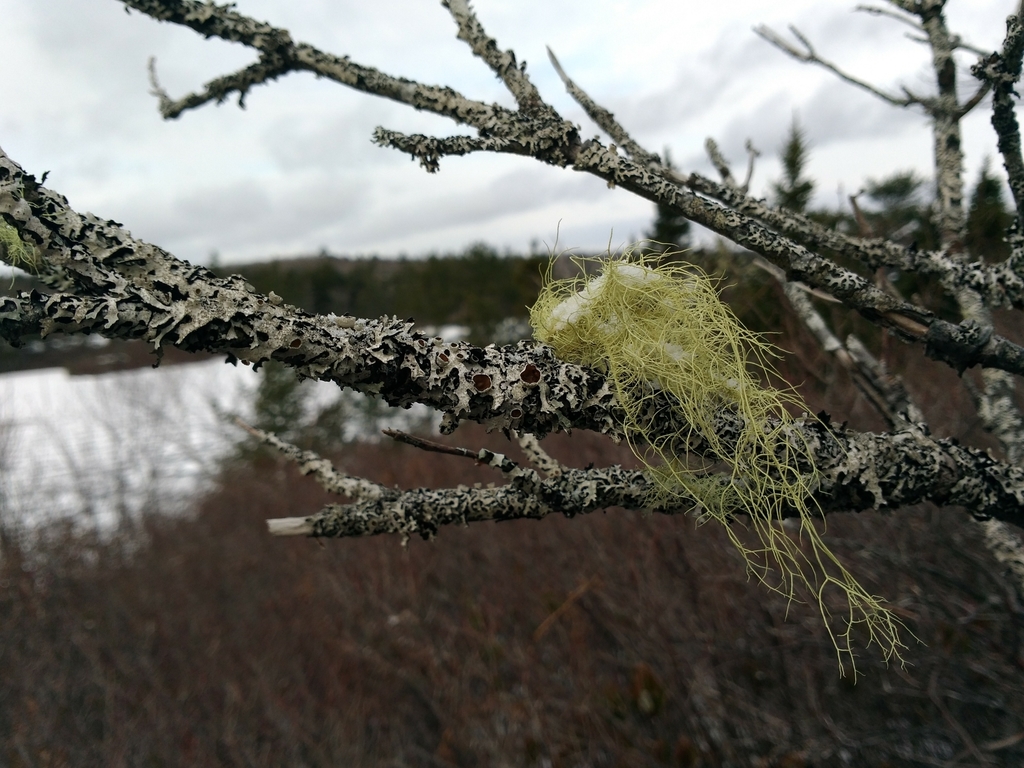
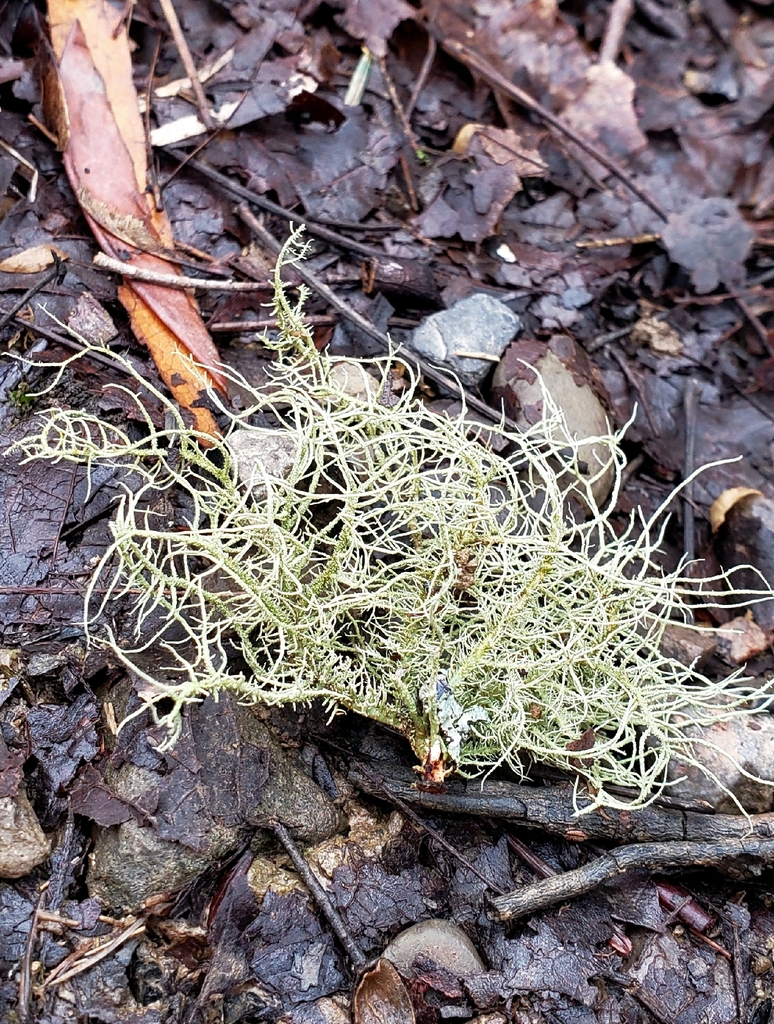
Photos by johnfranklin, dylan_nb2001, benarmstrong, mushroomjenja via iNaturalist (CC licensed)
Overview
Pale green to gray-green and hanging in wispy strands from tree branches, Usnea species are among the most iconic of all lichens. Multiple species exist: U. longissima can reach several feet in length, while U. hirta and U. dasopoga form shorter tufts.
Extremely sensitive to air pollution, Usnea species vanish from areas with elevated sulphur dioxide and are reliable indicators of clean air.
They produce usnic acid, a compound with demonstrated antibiotic properties effective against Gram-positive bacteria.
Identification
- Pale green to gray-green, hanging or shrubby, attached to branches.
- THE diagnostic test: gently pull a strand apart. The outer cortex snaps, revealing a white, elastic CENTRAL CORD that stretches between the halves. No other hanging lichen has this.
- If there is no central cord, you have Bryoria, not Usnea.
- Species vary from long, pendant forms (U. longissima) to short, bushy tufts (U. hirta).
- Round in cross-section (unlike the flat Ramalina).
Ecology & Habitat
Among the most pollution-sensitive lichens. Their presence in a forest is a reliable sign of clean air. They intercept moisture from fog and mist, channeling it to the forest below. In some tropical cloud forests, they contribute more water to the ecosystem than rainfall.
Fun Facts
Usnic acid, the compound that gives Usnea its antibacterial properties, is used in commercial wound creams and throat lozenges in Europe. It is effective against MRSA and other antibiotic-resistant bacteria.
Usnea longissima (Methuselah's beard) can grow over 3 metres long, making it one of the longest lichens in the world. It is now rare and protected in many countries.
Ancient Egyptians used Usnea to pack mummies . Its antimicrobial properties helped preserve the bodies.
In traditional Chinese medicine, Usnea (song luo) has been used for over 2,000 years to treat respiratory and urinary infections.
During World War II, Usnea was used as a field dressing for wounds when conventional antibiotics were unavailable.
In tropical cloud forests, Usnea acts as a "fog catcher," intercepting moisture from clouds and dripping it to the forest floor, contributing up to 30% of the ecosystem's water input.
Distribution
Cosmopolitan; found worldwide but most diverse in humid temperate and tropical montane forests