Overview
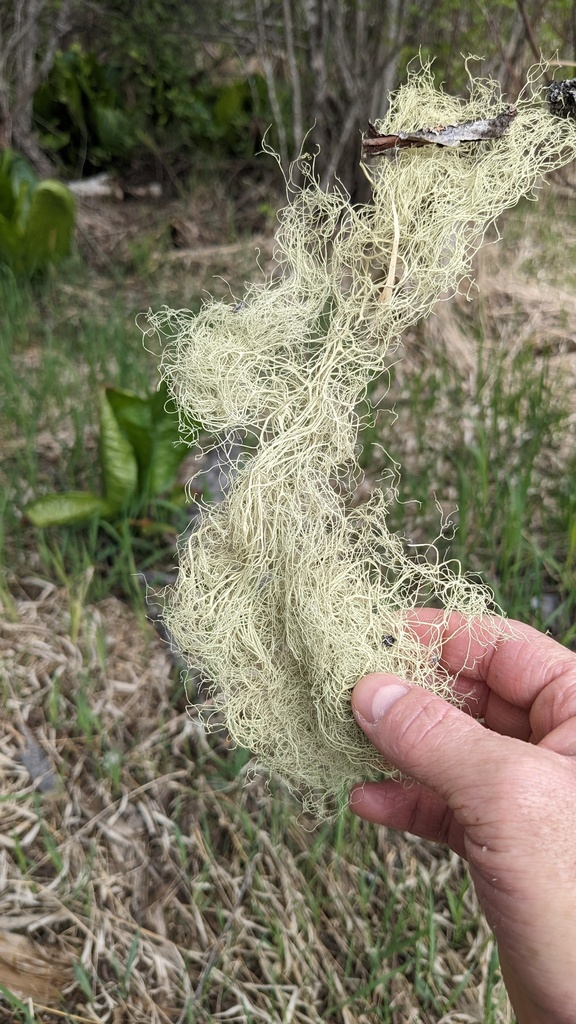
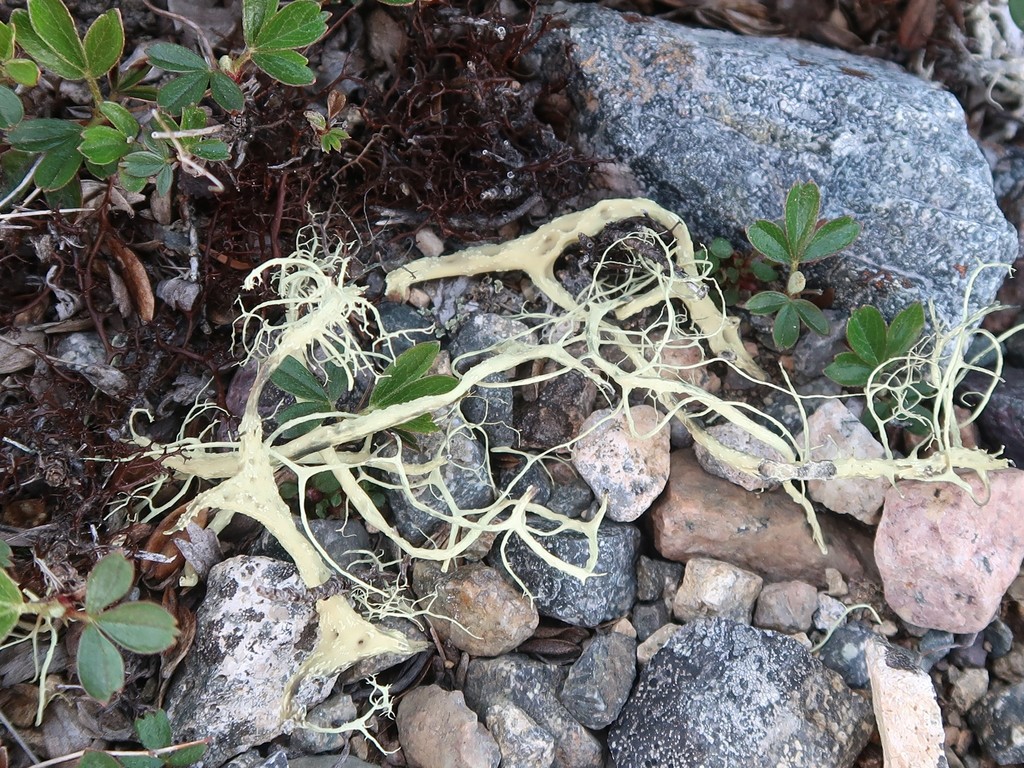
Pale yellow-green, often with blackened segments, Alectoria forms stiff, hanging, hair-like strands whose branches are angular to round in cross-section, never flat. It is usually paler and stiffer than the more fragile, rounder-branched Bryoria.
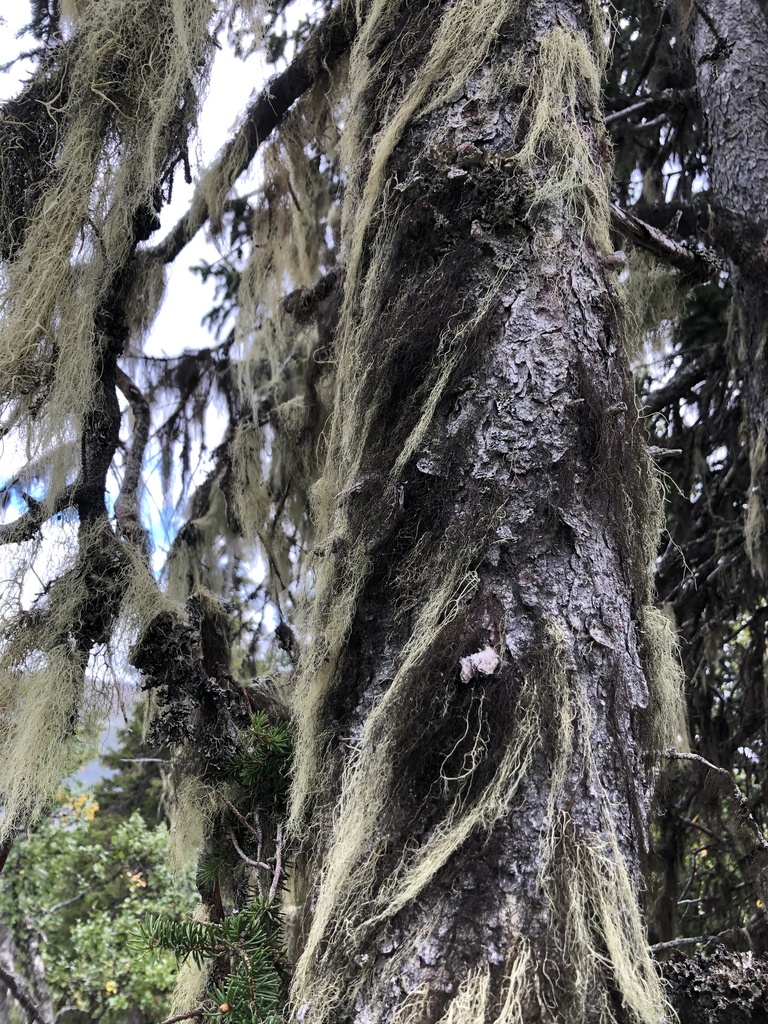
Found mainly on conifer branches in montane and boreal forests, these lichens contribute to the "old forest" look and are eaten in winter by deer and caribou. Species include A. sarmentosa (witch's hair), A. imshaugii and A. vancouverensis, though molecular work (McMullin and colleagues, 2016) found that several of these North American taxa are not clearly separated genetically.
Identification
- Pale yellow-green hair-like strands, often with blackened segments; stiff and hanging.
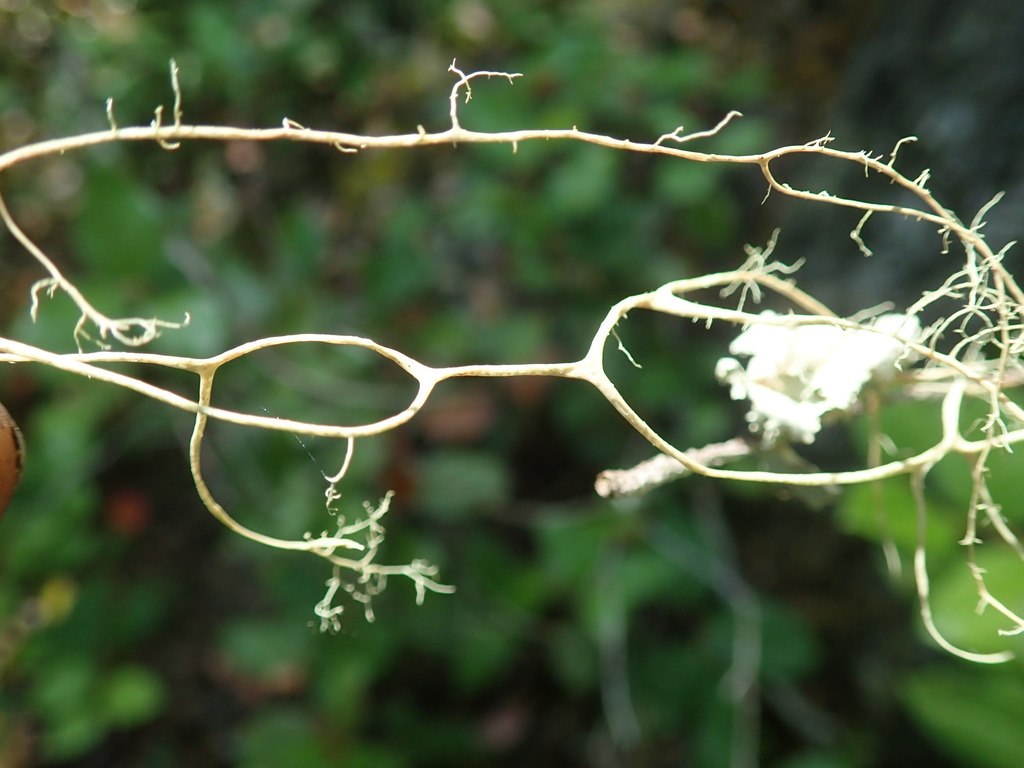
- Branches angular to round in cross-section, not flattened or ribbon-like.
- Thick, dull cortex with obvious linear pseudocyphellae (pale streaks), flat or slightly raised.
- No central cord (unlike Usnea, which has an elastic cord).
- Cortex KC+ yellow (usnic acid). Bryoria is more fragile, with rounder branches, usually brown to black, and never KC+ yellow.
Ecology & Habitat
An important part of old-forest canopy communities, particularly in the Pacific Northwest. A. sarmentosa does best in open, moist stands where light reaches the branches; it can establish in forests around 60 years old but is often treated as an old-growth associate. Deer and caribou eat it in winter, from low branches or after storms bring it down onto the snow, and flying squirrels sometimes eat it.
Fun Facts
Northwest Coast peoples used witch's hair as a fibre for diapers, bandages, dance-mask hair, ponchos and footwear.
Witch's hair blown down from the canopy in winter storms helps black-tailed deer survive when other food is buried under snow.
Its pale yellow-green colour comes from usnic acid, the same compound found in Usnea.
Distribution
Widespread; particularly diverse and abundant in montane, boreal and Arctic North America, including the Pacific Northwest coast