Overview
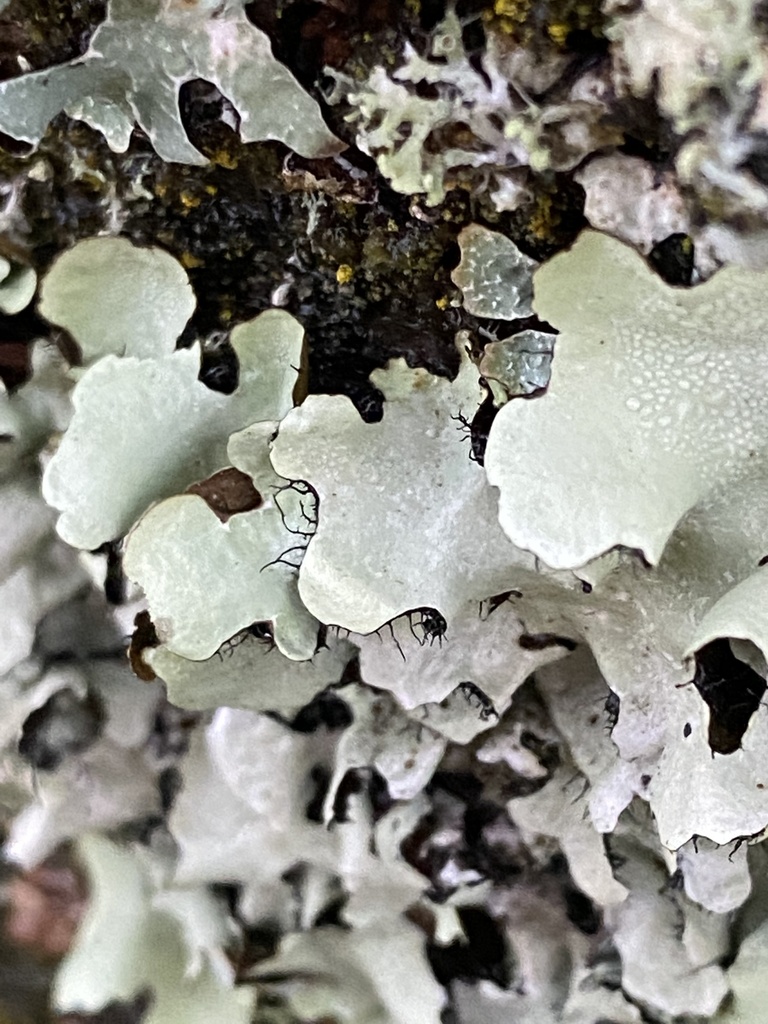
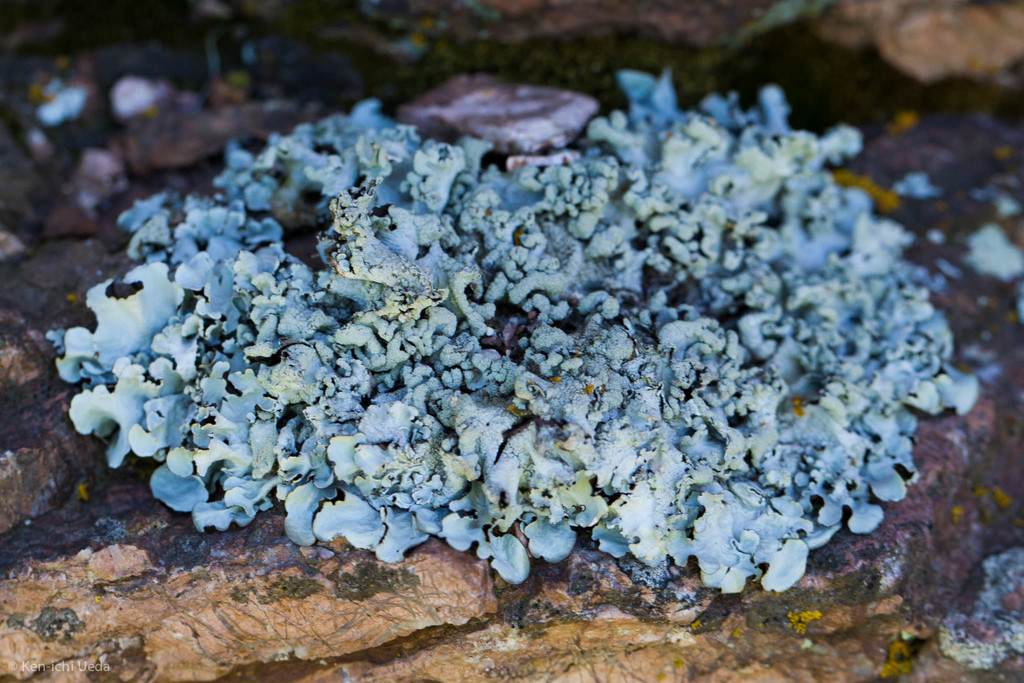
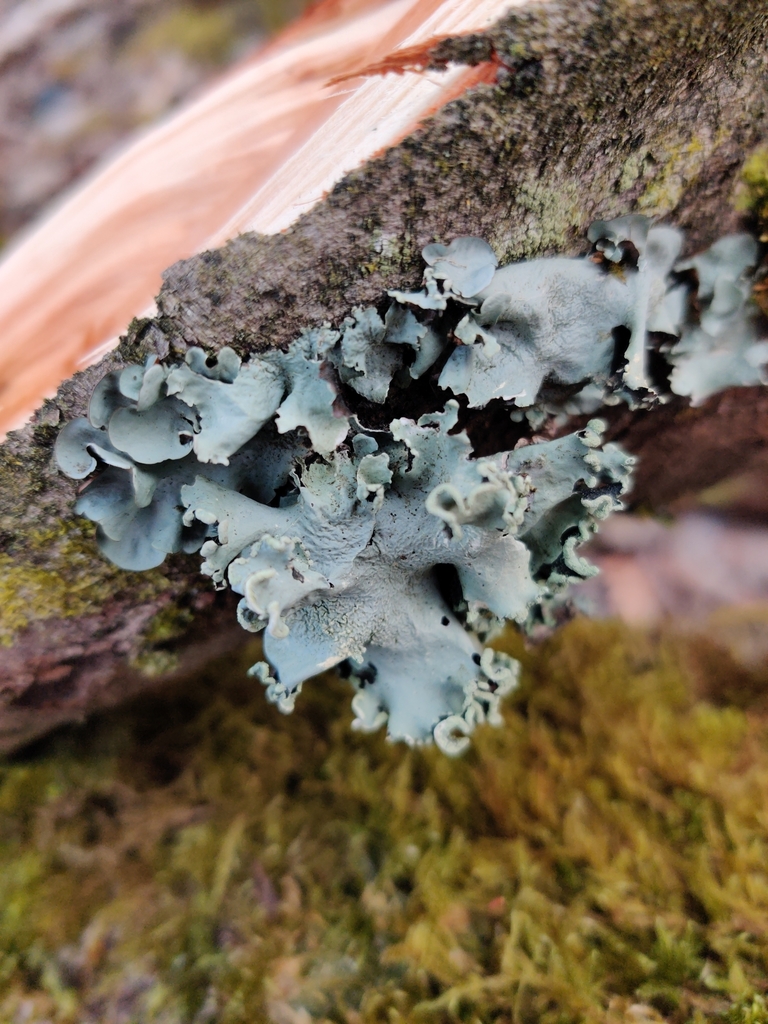
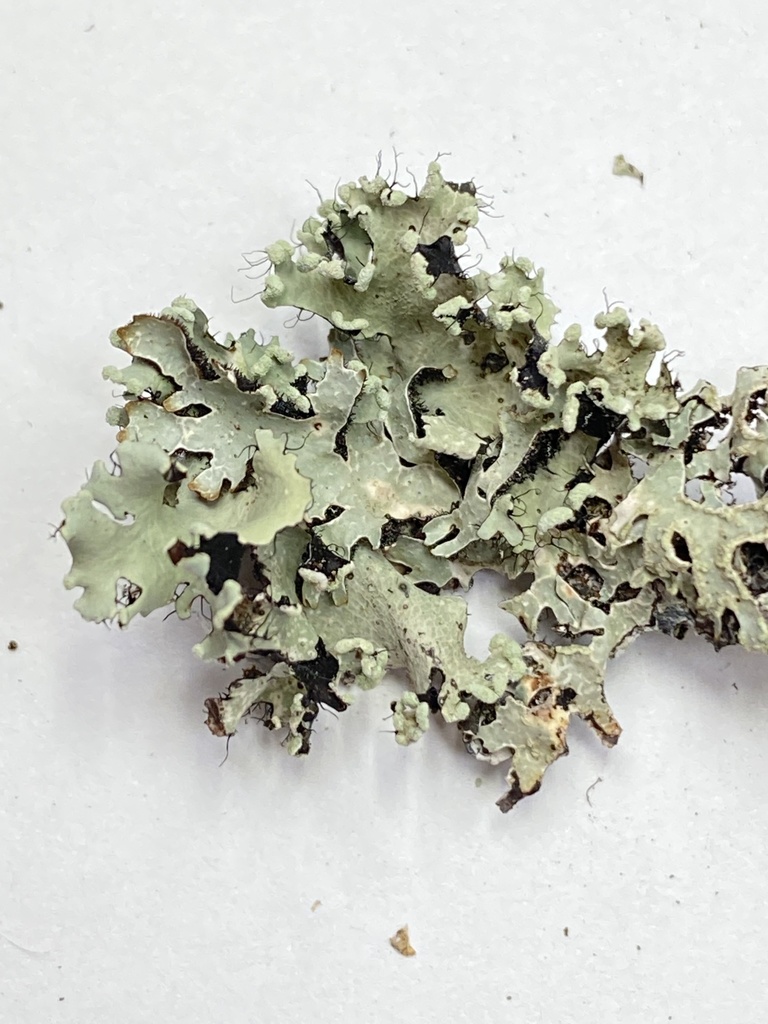
Bluish-white to greenish-gray and loosely attached to bark, Parmotrema perlatum has sparse black marginal cilia and linear to oval soralia along its lobe margins. The underside is black at the centre, becoming lighter toward the margins.
Fairly common in humid forests, it is also one of the lichens sold in India as "kalpasi" or "dagad phool" (stone flower), valued for its earthy, musky aroma in meat dishes and biryanis.
Identification
- Large, loosely attached thallus with rounded lobes (about 1.5–10 mm wide).
- Bluish-white to greenish-gray upper surface.
- Sparse black cilia along lobe margins.
- Linear to oval soralia along the lobe margins.
- Underside black centrally, paler toward margins, with a broad bare zone at the edge.
- Spot tests: cortex K+ yellow (atranorin); medulla K+ yellow, P+ orange (stictic acid).
Ecology & Habitat
Prefers humid forests with moderate to good air quality. Often found on the bark of mature trees in partially shaded positions. Mainly a temperate species of oceanic to suboceanic climates, though it also occurs in tropical regions.
Fun Facts
It is one of several lichens sold in India as "kalpasi" or "dagad phool" (stone flower), alongside species such as Parmotrema tinctorum and Everniastrum cirrhatum, and one of the few lichens used as a culinary spice. It adds an earthy, smoky flavour to meat dishes, biryanis, and the famous Chettinad cuisine of Tamil Nadu.
The same species is used in traditional Ayurvedic medicine to treat digestive complaints, coughs, and skin conditions.
It has been found to contain compounds with anti-inflammatory and antimicrobial properties, lending some scientific support to its traditional medicinal uses.
William Hudson named it in 1762 for its pearl-like lobe margins, which is why it is also called the pearl lichen.
Distribution
Widespread; mainly temperate, favouring humid oceanic to suboceanic regions, but also found in the tropics