Overview
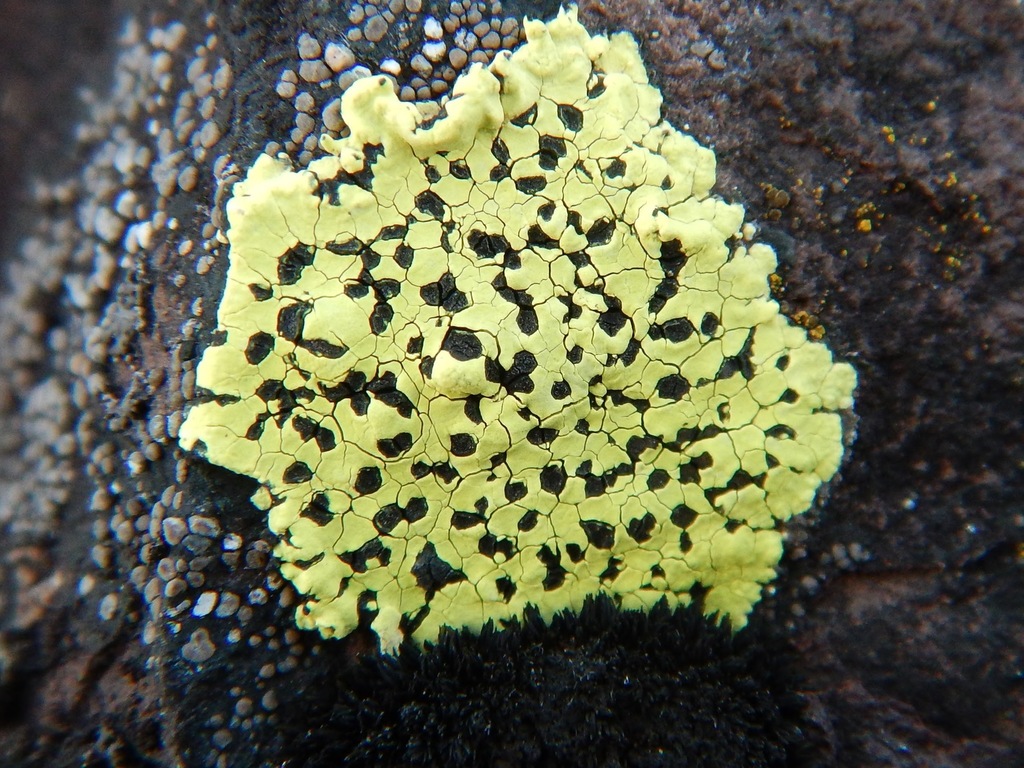
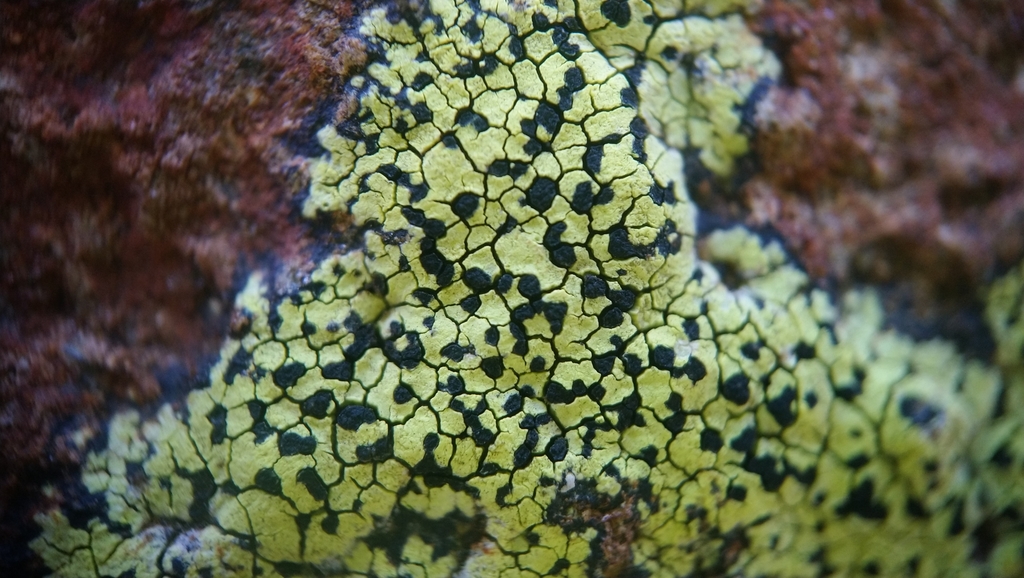
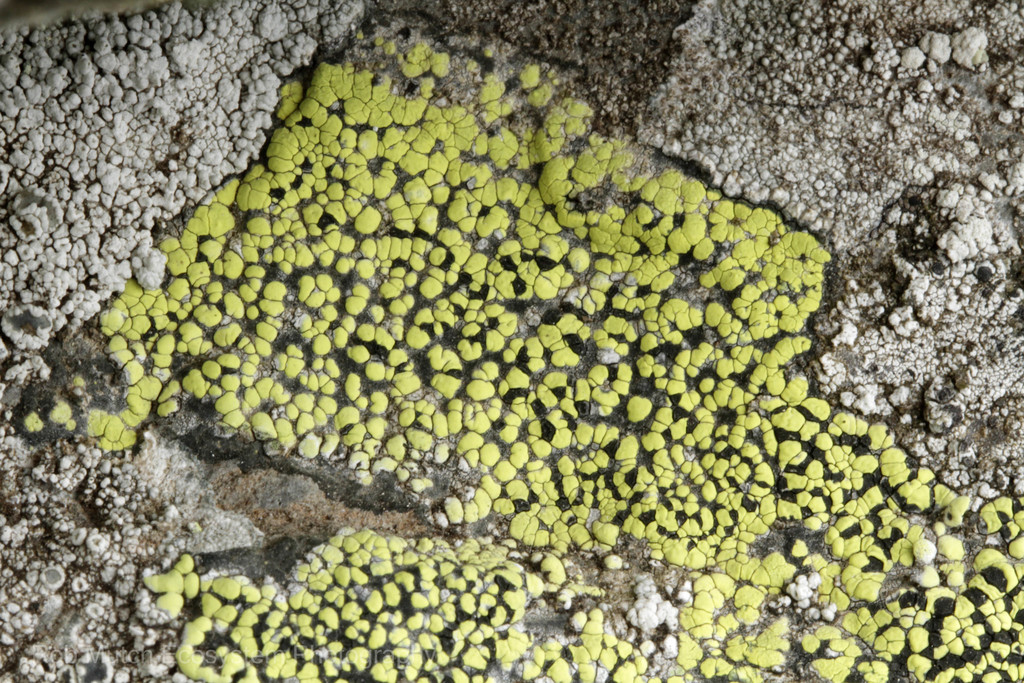
Bright yellow-green areoles bordered by bold black lines, creating a striking pattern that resembles a map or aerial photograph of cultivated fields. Rhizocarpon geographicum is unmistakable.
Found on siliceous rock in alpine and arctic environments, it is incredibly slow-growing, adding as little as 0.5 mm per year.
Individual specimens have been dated to over 8,600 years old, making map lichen among the oldest living organisms on Earth.
Identification
- Bright yellow-green areoles ("islands") separated by bold black lines (the "map" pattern).
- The black lines are the fungal hypothallus, visible between the green areoles.
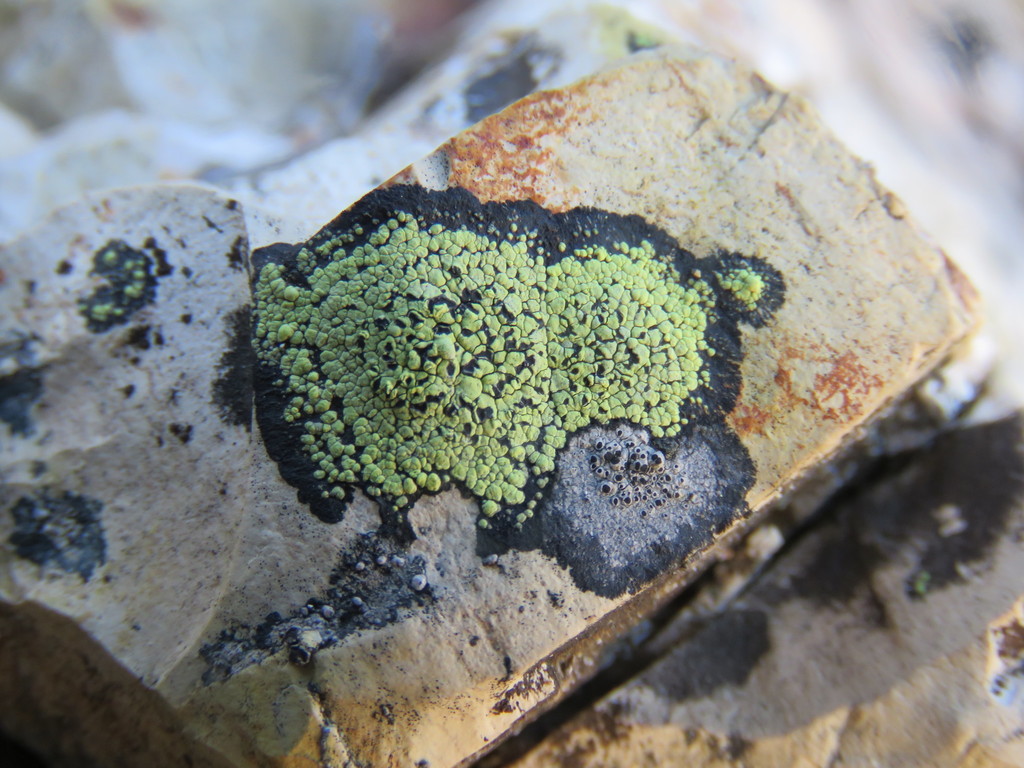
- Crustose: completely fused to rock, cannot be removed without taking rock with it.
- Black apothecia scattered among the areoles.
- Found exclusively on siliceous (acidic) rock. Never on limestone.
Ecology & Habitat
A pioneer species on bare rock surfaces. Its extremely slow and predictable growth rate makes it the cornerstone of lichenometry, a dating technique used by geologists. Produces oxalic acid that slowly dissolves rock, contributing to the early stages of soil formation.
Fun Facts
Individual map lichen specimens have been dated to over 8,600 years old, potentially making them the oldest living organisms on Earth, older than the bristlecone pines.
Geologists use map lichen growth to date rock surfaces through a technique called lichenometry. By measuring the largest thallus diameter on a rock surface and applying known growth rates, they can estimate when the rock was exposed (e.g., by a glacier retreating, a landslide, or a building collapse).
Lichenometry has been used to date Viking ruins, glacial moraines, earthquake-triggered rock falls, and even the age of Rapa Nui (Easter Island) moai platforms.
It grows at just 0.1–0.5 mm per year . A thallus the size of a dinner plate may be thousands of years old.
The bright yellow-green colour comes from rhizocarpic acid, a unique pigment found only in this genus.
Its map-like pattern is so striking that it inspired its scientific name: "geographicum" literally means "of geography" ; it looks like a tiny world map drawn on stone.
Distribution
Circumpolar and alpine; found worldwide in mountainous and arctic regions