Photos
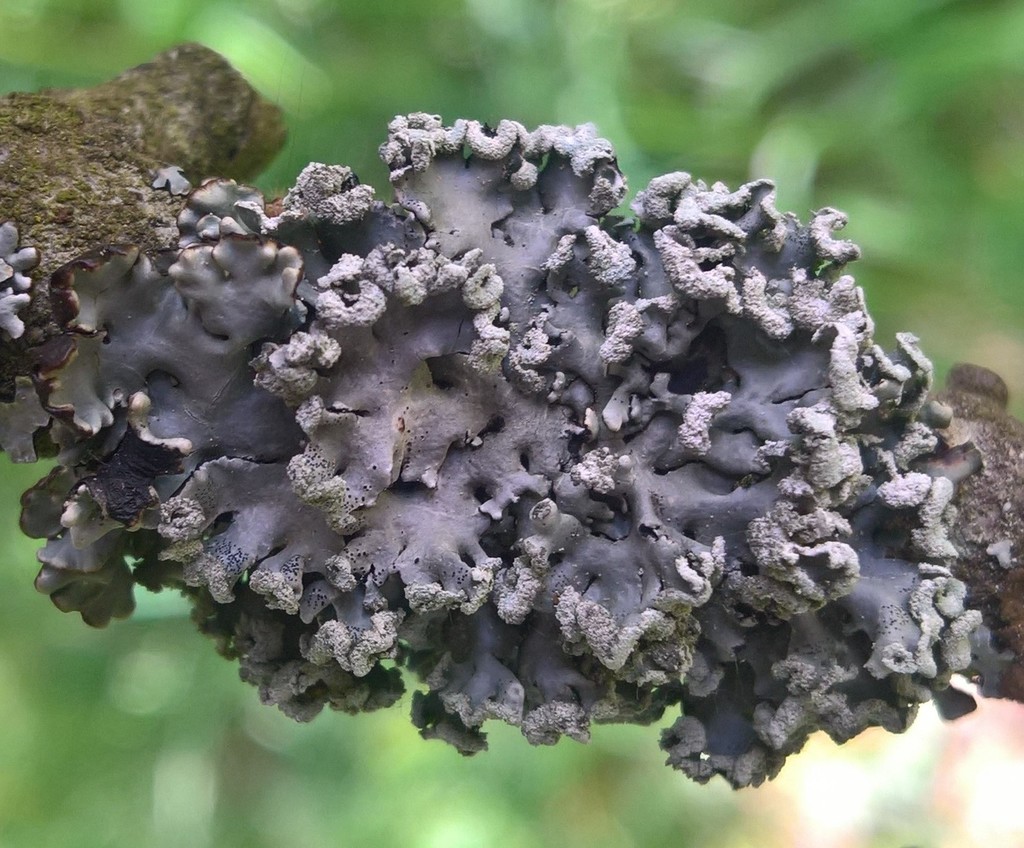
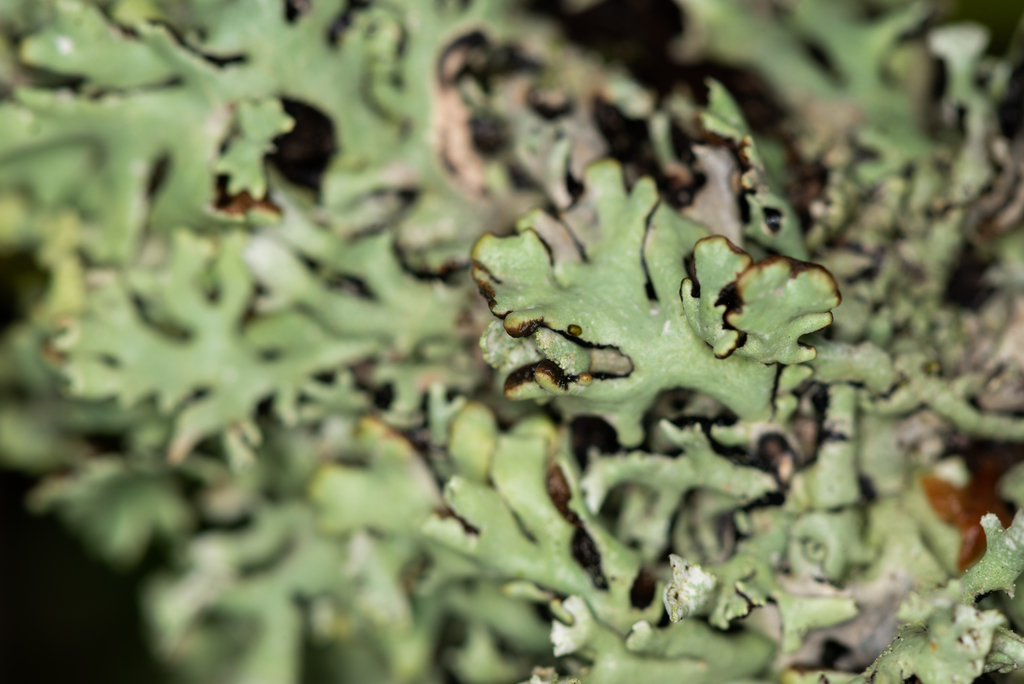
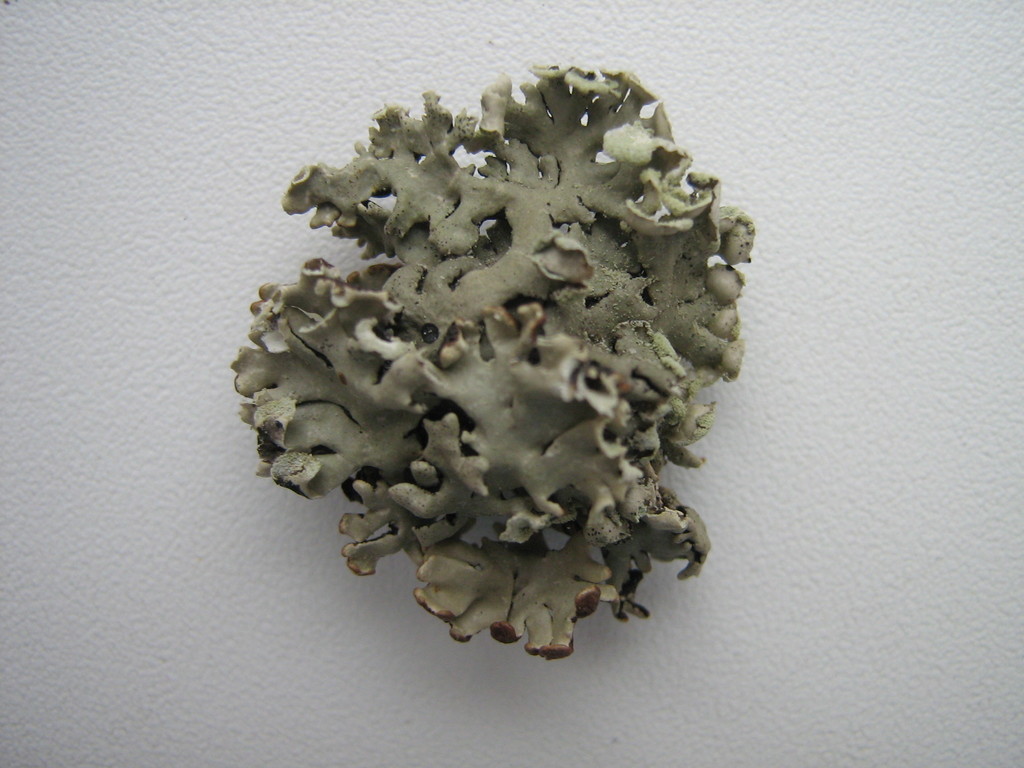
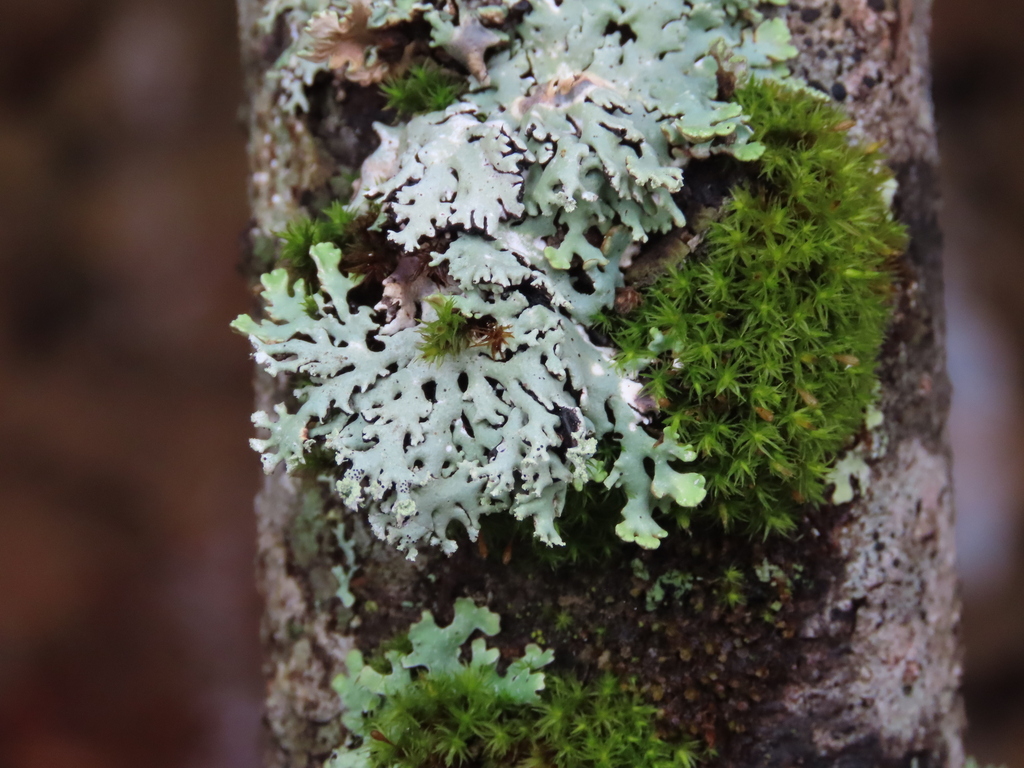
Photos by kai_schablewski, marina_gorbunova, vladimirtravkin, ccantley via iNaturalist (CC licensed)
Overview
Grey to grey-green above with a black, wrinkled underside, Hypogymnia physodes has inflated, hollow lobes. The lobe tips turn up and split open into hood- or lip-shaped soralia with powdery soredia on their underside, one of its key identification features.
Unlike most foliose lichens in its family, it has no rhizines and is only loosely attached to the bark.
Common and widespread in boreal and temperate forests across the Northern Hemisphere, mainly on acid bark and twigs, it is often used in biomonitoring studies of air quality.
Identification
- Grey, blue-grey or greenish-grey upper surface, often slightly shiny, with scattered black pycnidia.
- Lobes hollow and inflated, about 2–3 mm wide.
- Lobe tips turn up and split open, with powdery soredia on their underside (lip-shaped soralia). In H. tubulosa the soralia sit on top of the lobe tips.
- NO rhizines: the underside is black and wrinkled, browner towards the edges.
- Spot tests: medulla KC+ orange-red and P+ orange-red (physodic acids); cortex K+ yellow (atranorin).
- Beginners often confuse it with Parmelia sulcata, which has hammered-looking, often angular lobes and plenty of rhizines.
Ecology & Habitat
Common and widespread in boreal and temperate forests, on acid bark, twigs, fallen wood and heather stems, and rarely on rock. It is moderately sensitive to sulphur dioxide and heavy metals and is often used in bioindicator and biomonitoring studies.
Fun Facts
Its hollow, inflated lobes are shared with H. tubulosa and most other Hypogymnia. Look-alikes in Menegazzia can be told apart by the perforations in their upper surface.
It lacks rhizines (root-like attachment structures), which most of its relatives in the Parmeliaceae have, so it sits loosely on the bark.
It often grows with Parmelia sulcata, and the two sometimes overgrow each other.
In Britain it is also called Dark Crottle; in North America it is the Hooded Tube Lichen.
Distribution
Common and widespread in boreal and temperate forests of the Northern Hemisphere; throughout Britain and Ireland