Overview
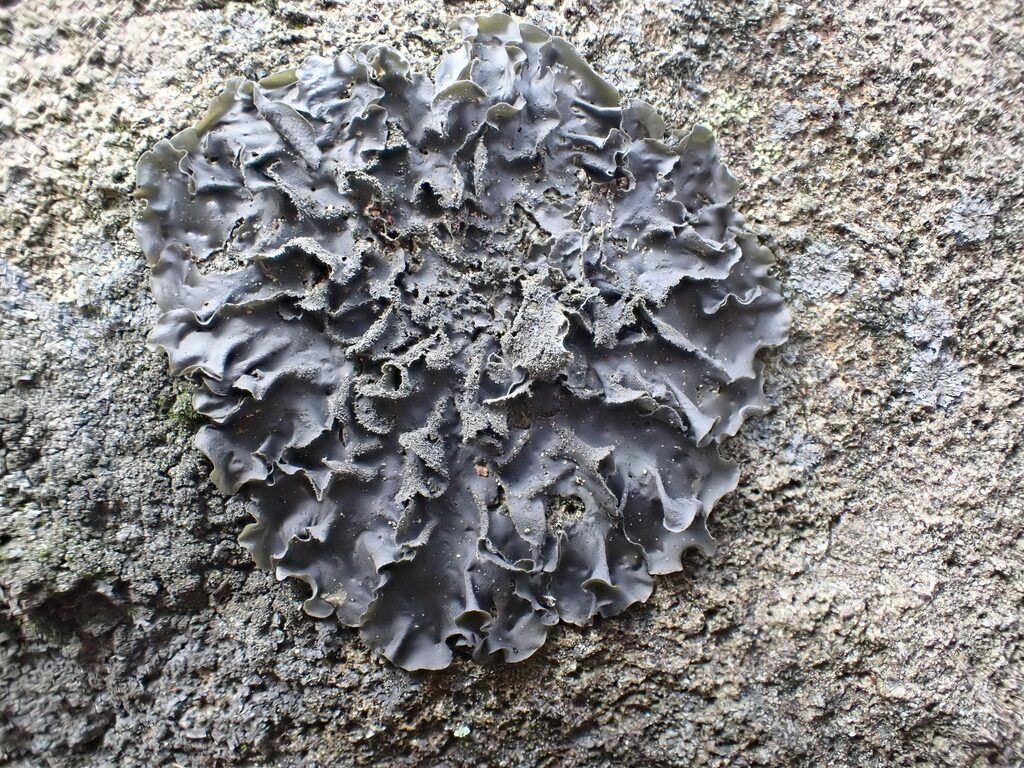
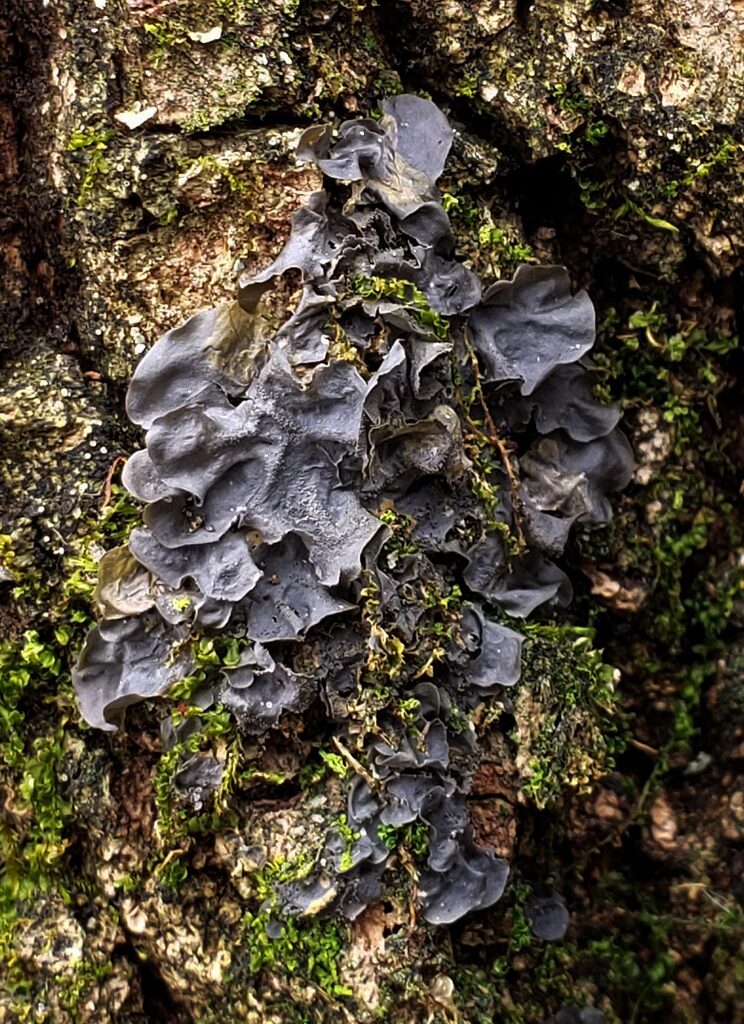
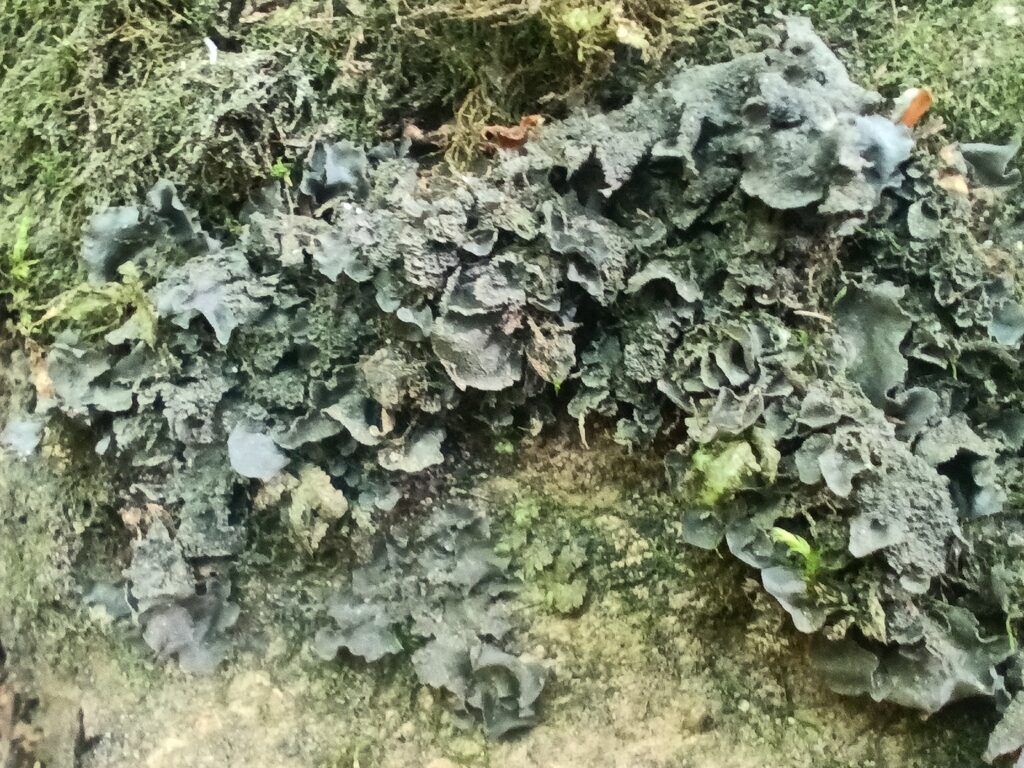
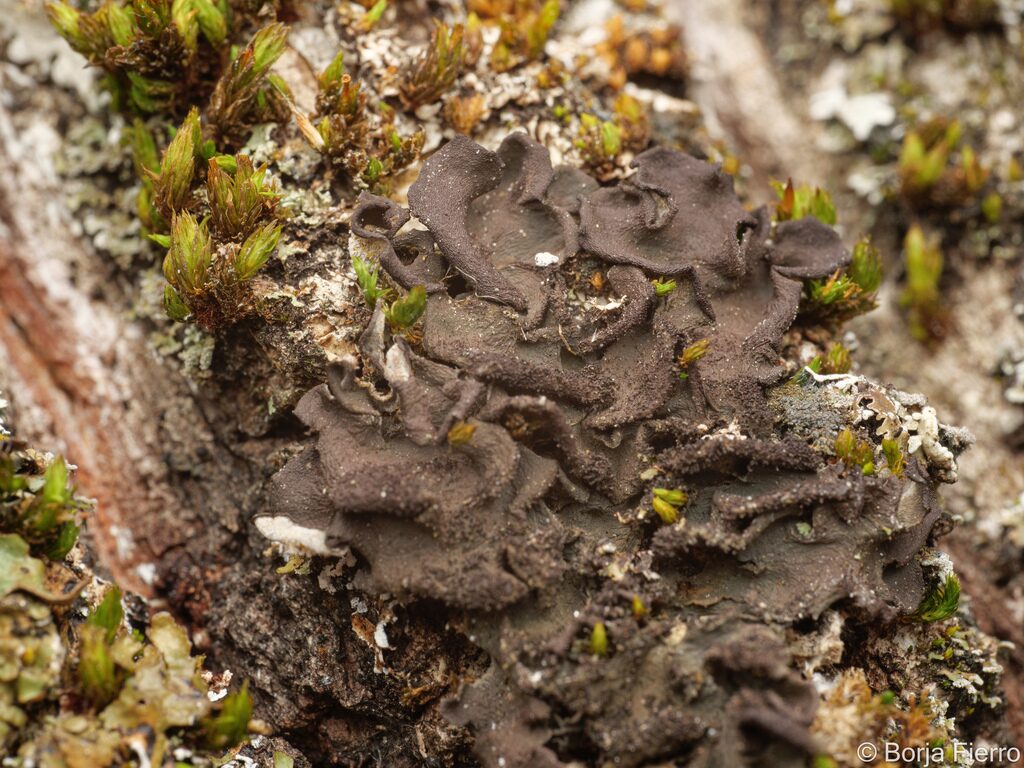
Blue-grey to olive-brown or blackish, Leptogium species are gelatinous leafy lichens whose partner is the cyanobacterium Nostoc, which fixes nitrogen. Their upper surface is smooth to wrinkled or ridged and often glossy, and like other jelly lichens they turn gelatinous when wet.
Most species grow on tree bark or soil, often among mosses, and some on rock in humid places. Their change with moisture makes them worth a look after rain.
A 2014 molecular revision (Otálora and colleagues) split the genus: many of the smaller species once placed in Leptogium now belong to Scytinium, such as S. palmatum and S. lichenoides. Leptogium in the strict sense keeps the mainly bark-dwelling species with larger, broad-lobed thalli. The photos on this page show two of these: L. cyanescens and L. saturninum.
Identification
- Blue-grey to olive-brown or blackish; gelatinous when wet.
- Has a thin cortex on both surfaces (unlike Collema, which lacks a cortex entirely).
- Lobes leaf-like; upper surface smooth to wrinkled or ridged, often glossy.
- Isidia often present; apothecia rare in most species, common in others.
- The cortex is only one cell thick, so check for it under a microscope (in a cross-section or squash) to separate Leptogium from Collema; some species are also downy (tomentose) on the upper or lower surface.
Ecology & Habitat
Most species grow on tree bark or soil, often among mosses, and some on rock in humid places. The Nostoc partner fixes nitrogen from the air. Several species are typical of old woodland: in Britain, L. cyanescens grows on mossy trees and rocks in old woods.
Fun Facts
Like other jelly lichens, they need liquid water, from dew or rain, before they can start photosynthesising.
The name "Leptogium" comes from the Greek "leptos" (thin).
Each surface is covered by a cortex just one cell thick, wrapped around a loose core of fungal threads and chains of Nostoc cells.
Leptogium saturninum is rare in Britain, listed as Vulnerable: it survives in central and northern Scotland and is extinct in England.
Distribution
Widespread, mainly in wet tropical and humid temperate regions