Overview
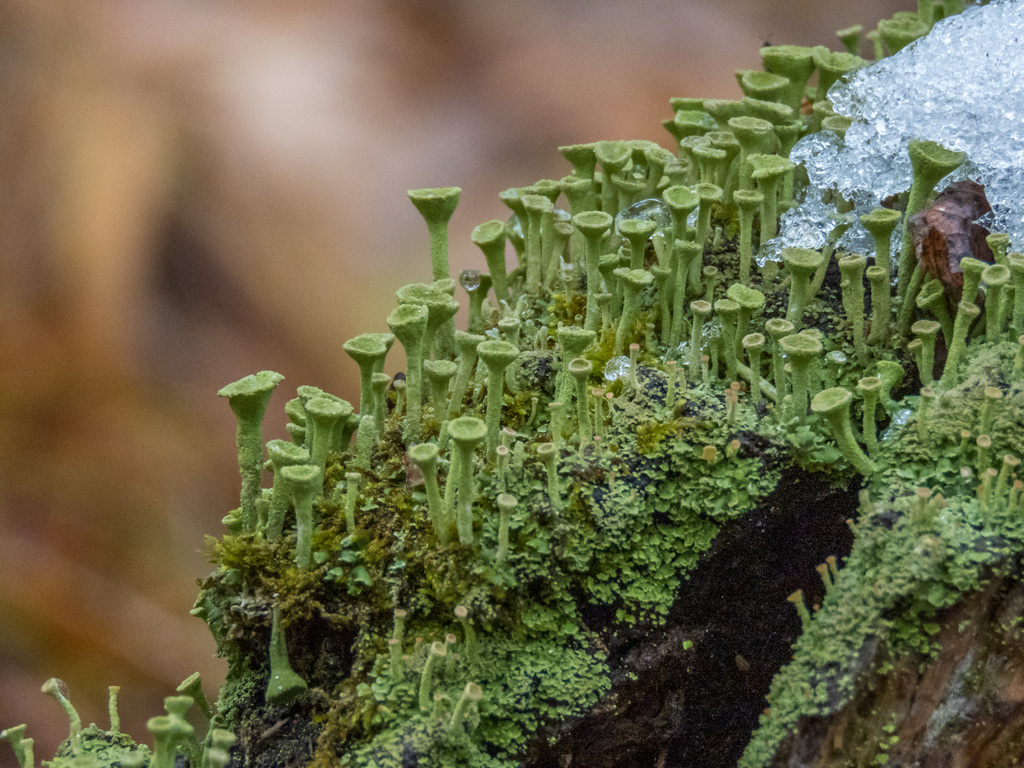
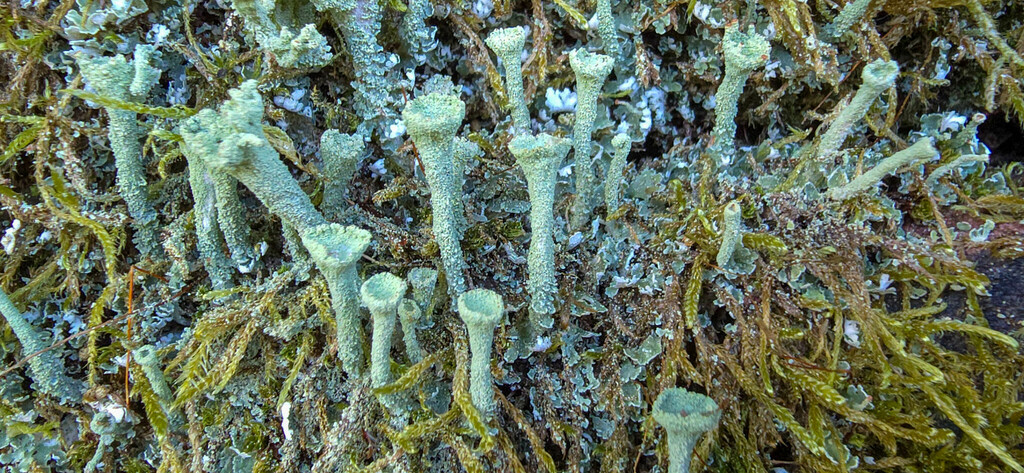
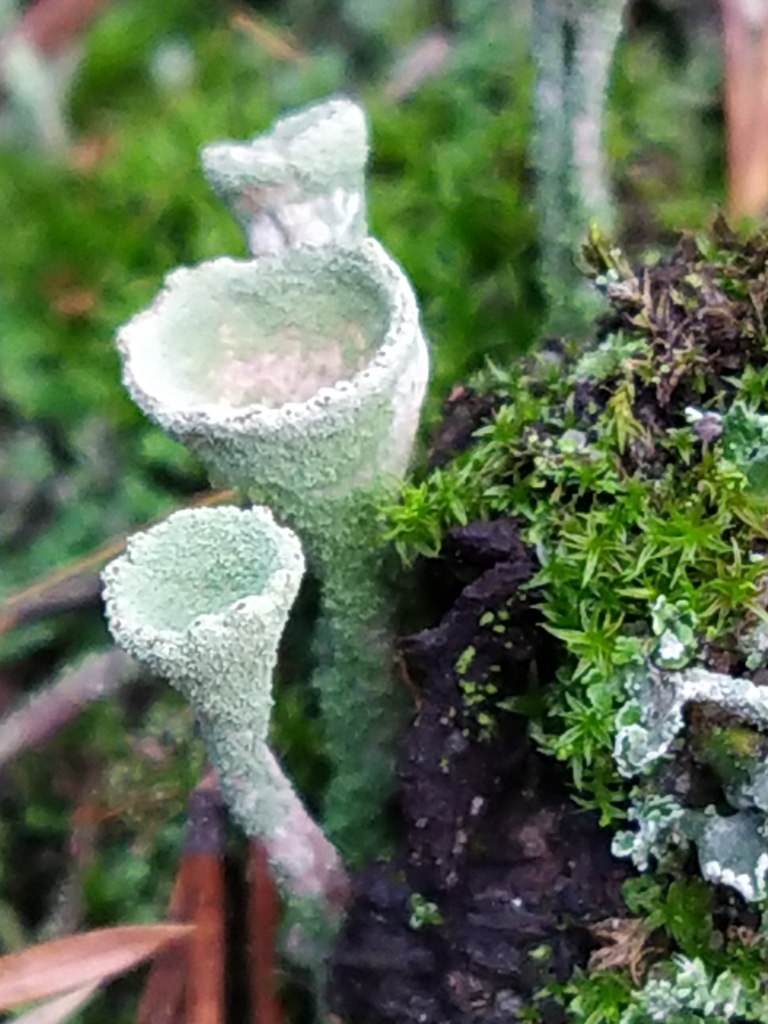
Closely related to the pixie cups, Cladonia fimbriata produces slender, trumpet-shaped podetia that flare into neat, well-defined cups. The podetia are covered in a farinose (mealy) sorediate coating, giving them a powdery, frosted look.
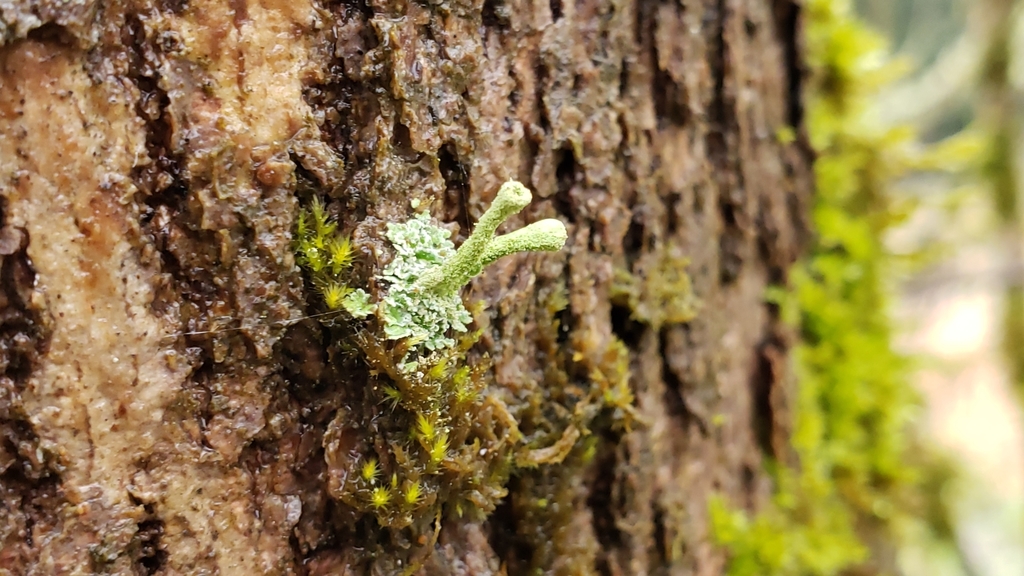
Common on soil, rotting wood, and tree bases, it often grows alongside other Cladonia species, creating miniature landscapes of cups, trumpets, and tiny scarlet-capped soldiers.
Identification
- Slender, trumpet-shaped podetia that flare into neat cups.
- Entirely covered in powdery soredia (farinose coating), looks frosted.
- Cups are more regular and well-defined than C. pyxidata.
- Podetia typically 1–3 cm tall.
- The farinose surface distinguishes it from the scaly C. pyxidata.
Ecology & Habitat
A common species on disturbed soil and decaying wood. Like other cup-bearing Cladonia, uses rain-splash dispersal. Often found in mixed communities with C. pyxidata, C. cristatella, and various mosses.
Fun Facts
When growing alongside C. cristatella (British Soldiers) and C. pyxidata (Pixie Cups), it creates miniature landscapes on rotting logs that look like tiny alien cities or fairytale villages.
The name "fimbriata" means "fringed," referring to the delicate, fringed margins of its cups.
Its powdery, frosted appearance is caused by millions of tiny soredia coating the surface , each one a potential new lichen, combining fungal and algal cells in a single reproductive package.
In Scandinavian folklore, cup-bearing Cladonia species were called "troll cups" and believed to hold magical potions.
Distribution
Cosmopolitan; found worldwide in temperate regions