Photos
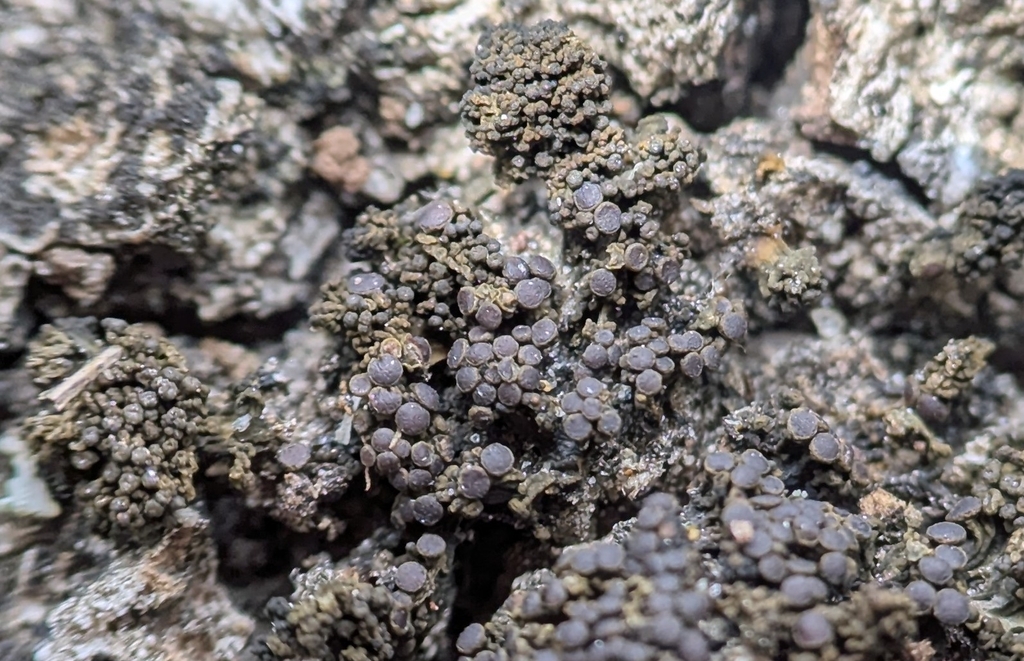
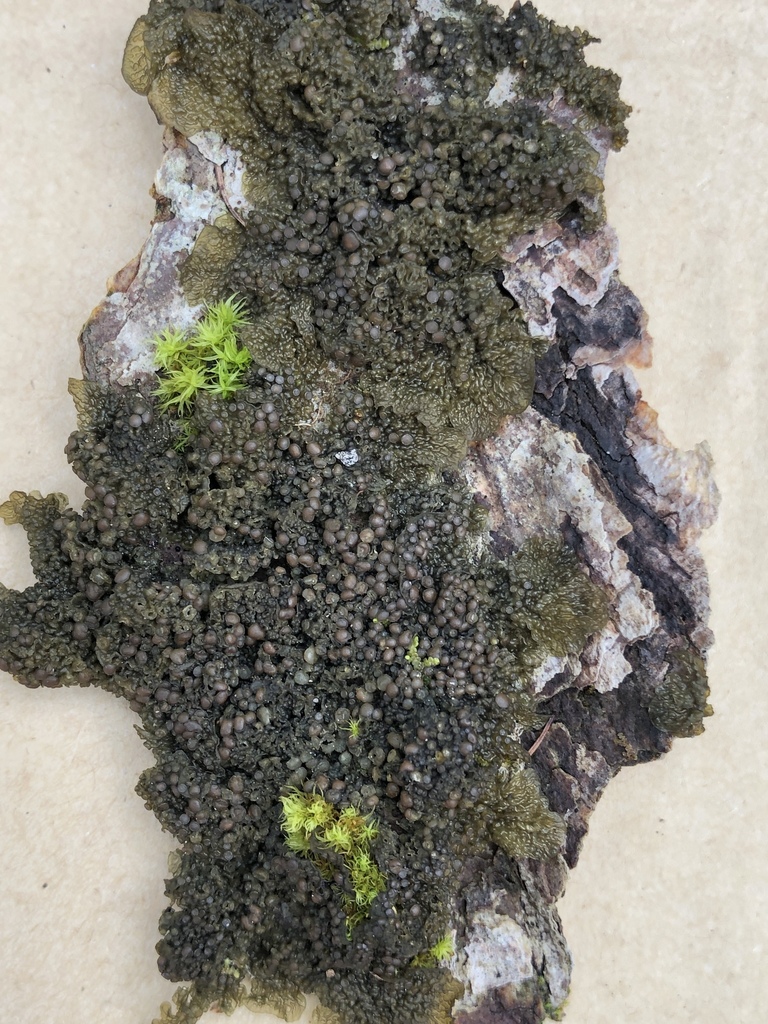
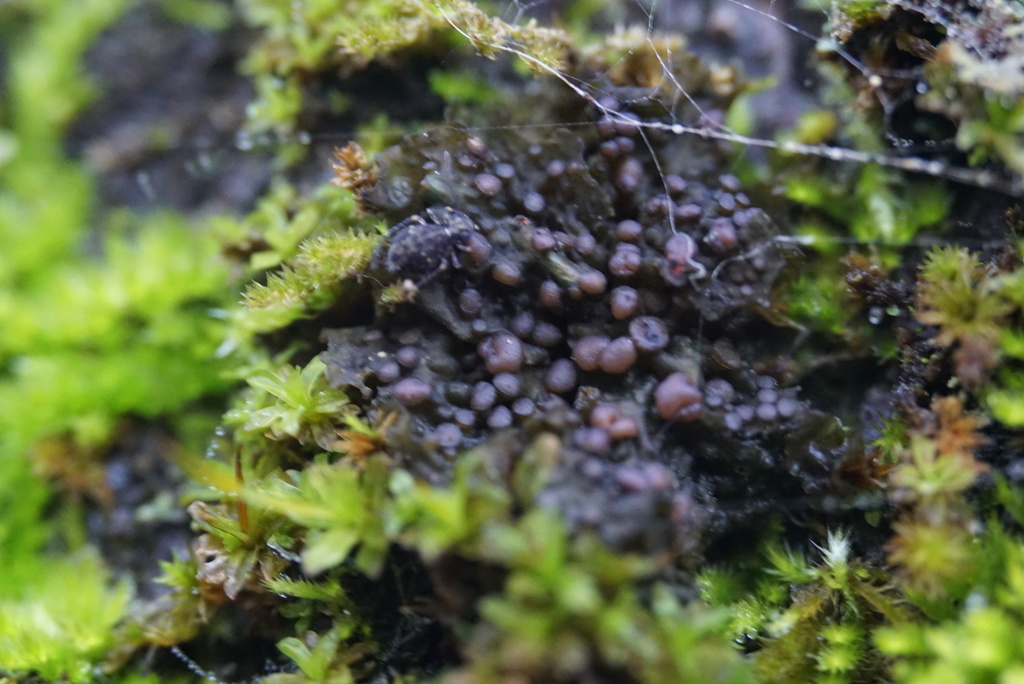
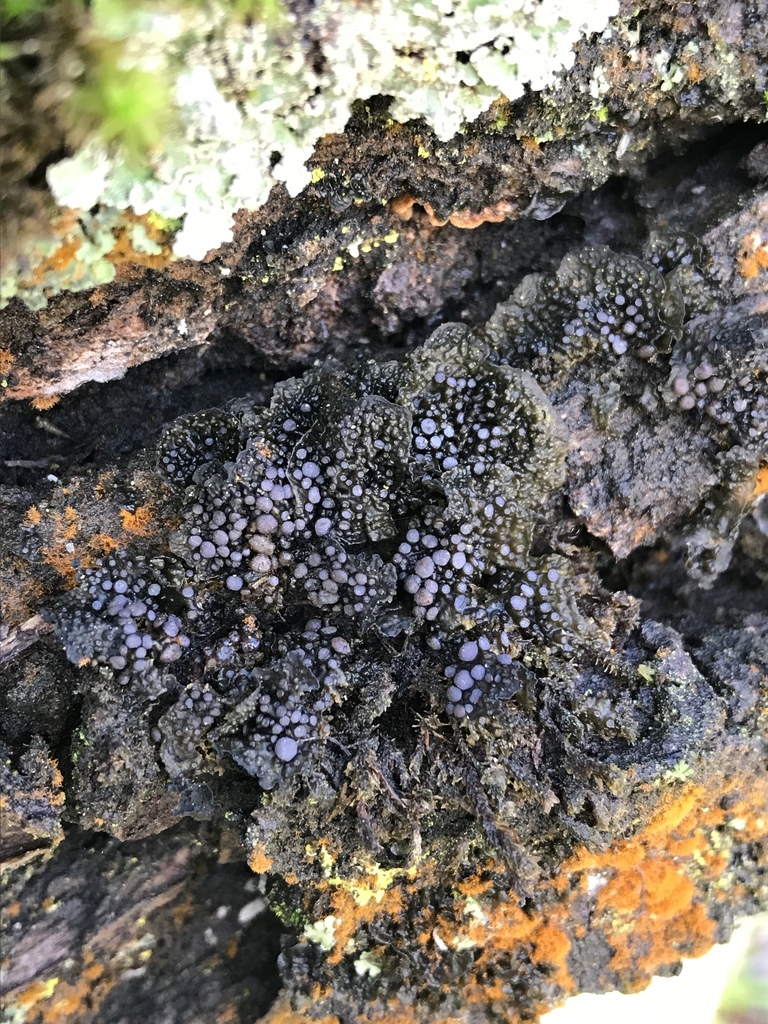
Photos by alinamartin, icbryson-fraxinusenviro, catchang, gyrrlfalcon via iNaturalist (CC licensed)
Overview
Dark olive-green to black, Collema species are jelly lichens with no internal layering at all. The cyanobacterium Nostoc runs in chains through the whole thallus rather than forming a separate layer, and there is no cortex on either surface. In the strict sense, Collema species are thin, membranous leafy lichens with broad, rounded lobes, and unlike some of their former relatives they do not swell much when wet.
Several species exist, including C. nigrescens, C. furfuraceum, C. subflaccidum and C. curtisporum, mostly on bark (C. flaccidum usually grows on damp rock). A 2014 revision (Otálora, Jørgensen and Wedin) moved many jelly lichens of soil, limestone and mortar to separate genera: Enchylium (e.g. E. tenax), Lathagrium (e.g. L. cristatum, L. auriforme) and Blennothallia (B. crispa).
Identification
- Dark olive-green to black; thin and membranous, with no layered internal structure.
- Jelly-like when wet, but the thallus does not swell much; the strongly swelling species are now mostly in Enchylium.
- NO cortex. This distinguishes it from Leptogium, which has a cortex one cell thick (check under a microscope).
- Surface smooth, or pustulate with ridges, with or without isidia depending on species; underside smooth.
- Lobes broad and rounded, usually 5–15 mm wide.
Ecology & Habitat
Collema in the strict sense grows on nutrient-rich bark or on siliceous or calcareous rock in humid places. In Britain C. subflaccidum favours old ash trees in moist, shady places and C. furfuraceum grows on horizontal boughs in humid, well-lit sites; in Alberta C. furfuraceum is commonest in mature to old-growth stands. The Nostoc partner fixes nitrogen.
Fun Facts
The name "Collema" comes from the Greek "kolla" (glue). When wet, these lichens feel slippery and jelly-like.
Unlike most lichens, Collema has no internal layers: no cortex, no separate medulla, no algal layer. The fungal hyphae and cyanobacteria are intermixed throughout.
The jelly lichens on old lime mortar used to be called Collema too, but since 2014 they have belonged to other genera: Blennothallia crispa favours old crumbling mortar, and Enchylium tenax and Lathagrium auriforme also grow on it.
The thin, membranous thalli of C. furfuraceum and C. nigrescens have been likened to a bat's wing.
Distribution
Widespread; about 40 species worldwide in the genus's strict sense. In Britain and Ireland mainly in the north and west