Overview
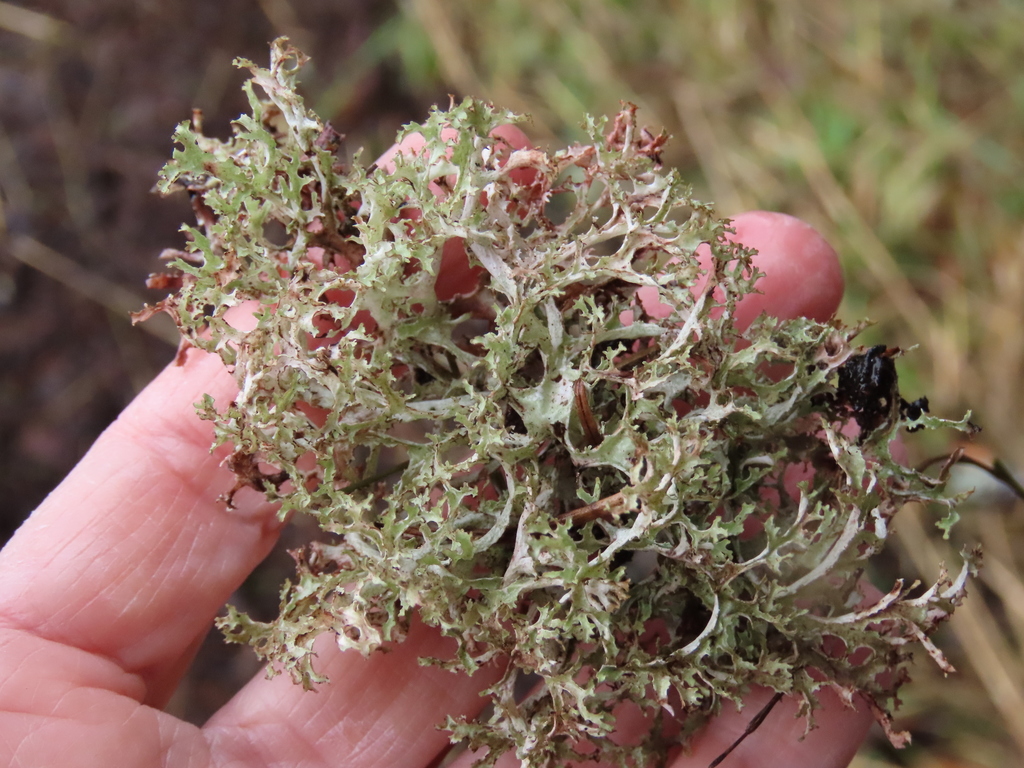
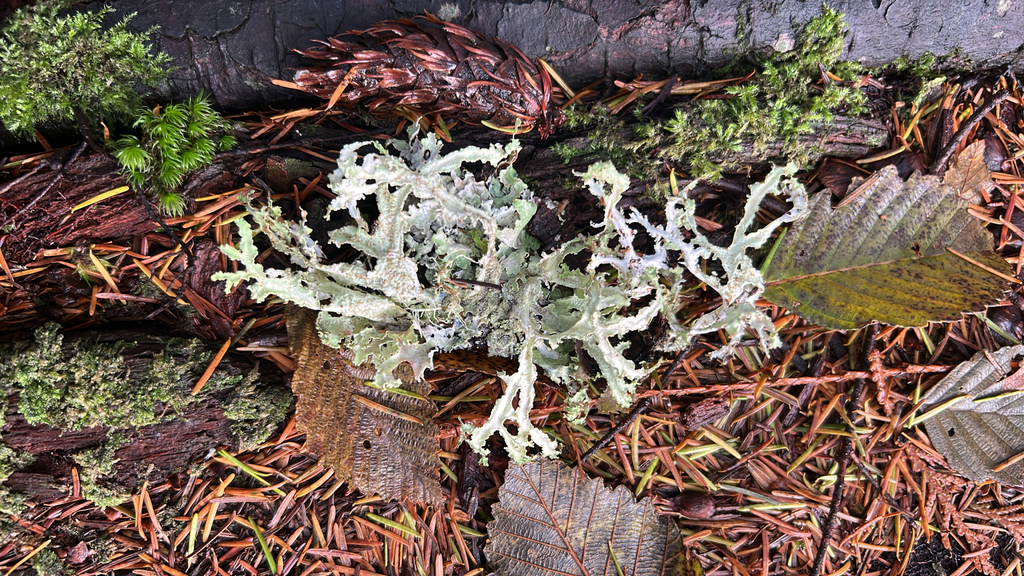
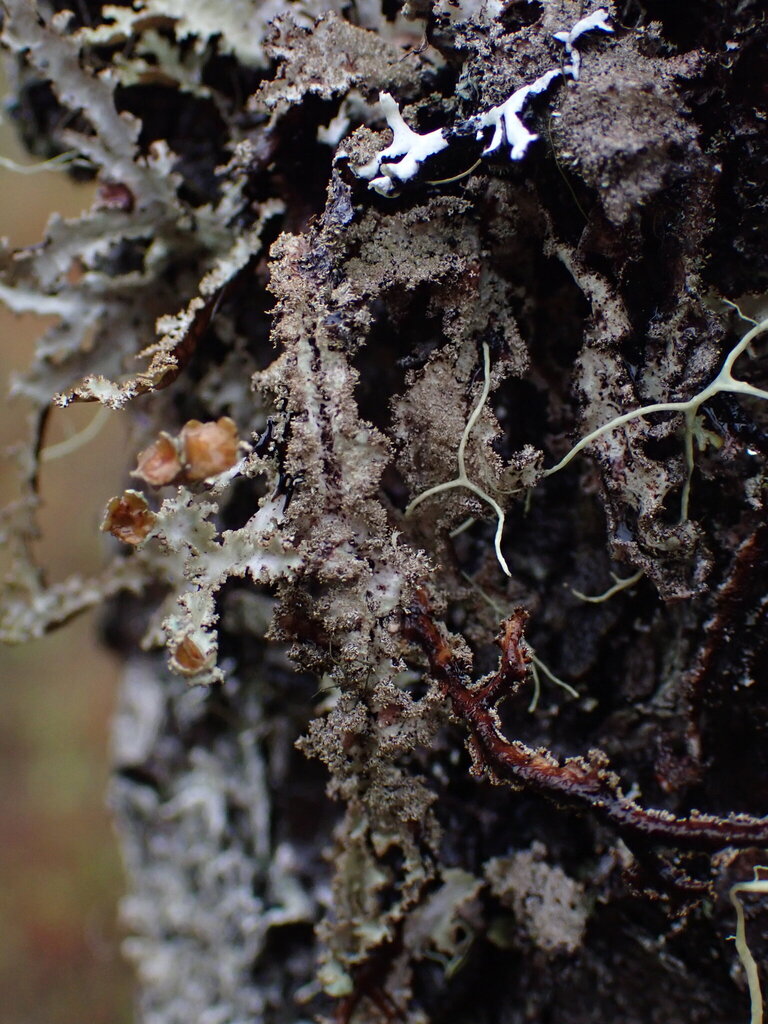
Similar to P. glauca but with narrow, linear lobes whose edges are densely fringed with delicate, coral-like isidia. The upper surface is whitish or pale, and the pale underside is mottled with sharply defined black patches.
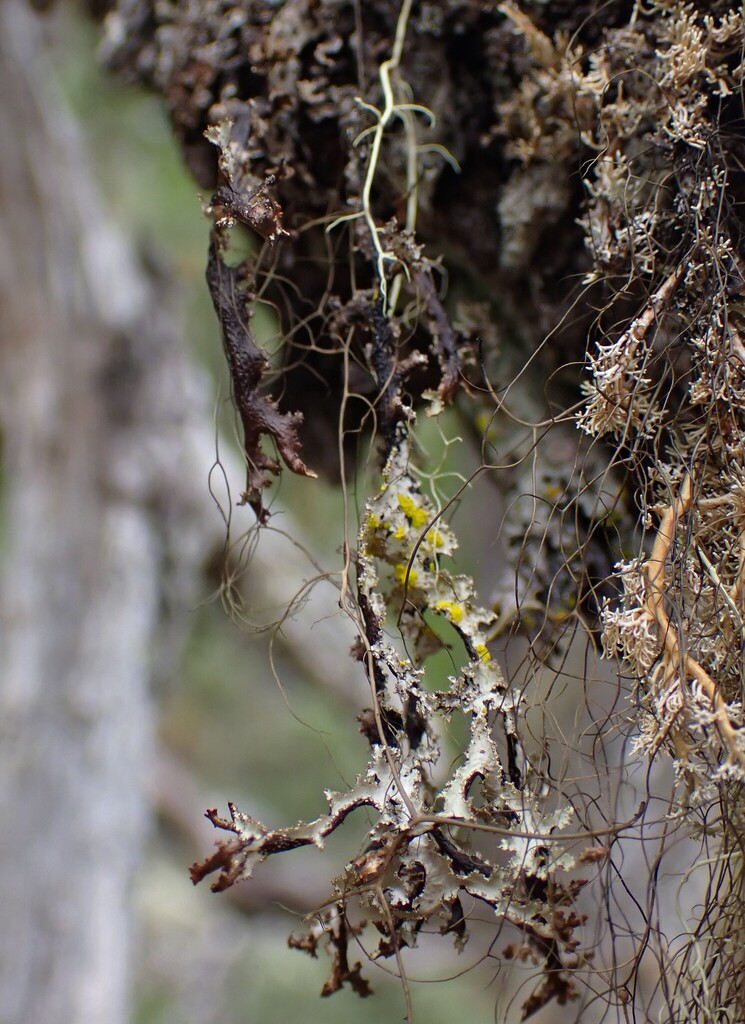
It grows on the bark and twigs of conifers and shrubs in a narrow band along the Pacific coast, from southern Alaska to central California. William and Chicita Culberson, who monographed the genus, called it "one of the most beautiful and intricately formed species in the genus".
Identification
- Narrow, linear lobes (0.5–4 mm wide), much narrower than the broad lobes of P. glauca (up to 1.5 cm).
- Margins densely fringed with delicate, simple to coral-like isidia; isidia only rarely on the upper surface.
- Underside white or pale with discrete, sharply delimited jet-black or dark brown patches; rhizines few, only at points of attachment.
- Cortex with atranorin; medulla all spot tests negative (caperatic acid).
- Best distinguished from P. glauca by its narrow, linear lobes with delicate marginal isidia and its patchy black-and-white underside. The soredia and isidia of P. glauca are also mostly marginal, so the margins alone will not separate them.
Ecology & Habitat
Endemic to the Pacific coast of North America. The Culbersons noted that its range is almost identical to the coastal range of western hemlock (Tsuga heterophylla). Recorded hosts range from Douglas-fir and hemlock twigs in Washington to manzanita (Arctostaphylos) shrubs in the Oregon Dunes.
Fun Facts
Its name honours Albert W.C.T. Herre (1868–1962), an American lichenologist better known as an ichthyologist. Herre had named it Cetraria tuckermanii in 1906, but that name was already in use, and in 1954 Henry Imshaug renamed it C. herrei.
DNA studies suggest that P. herrei and its close relative P. stenophylla may have split only recently, or may even be forms of one species.
Distribution
Western North America, from southern Alaska to central California, mainly near the coast