Updated October 2026: corrected which layer gives the K+ yellow reaction.
Overview
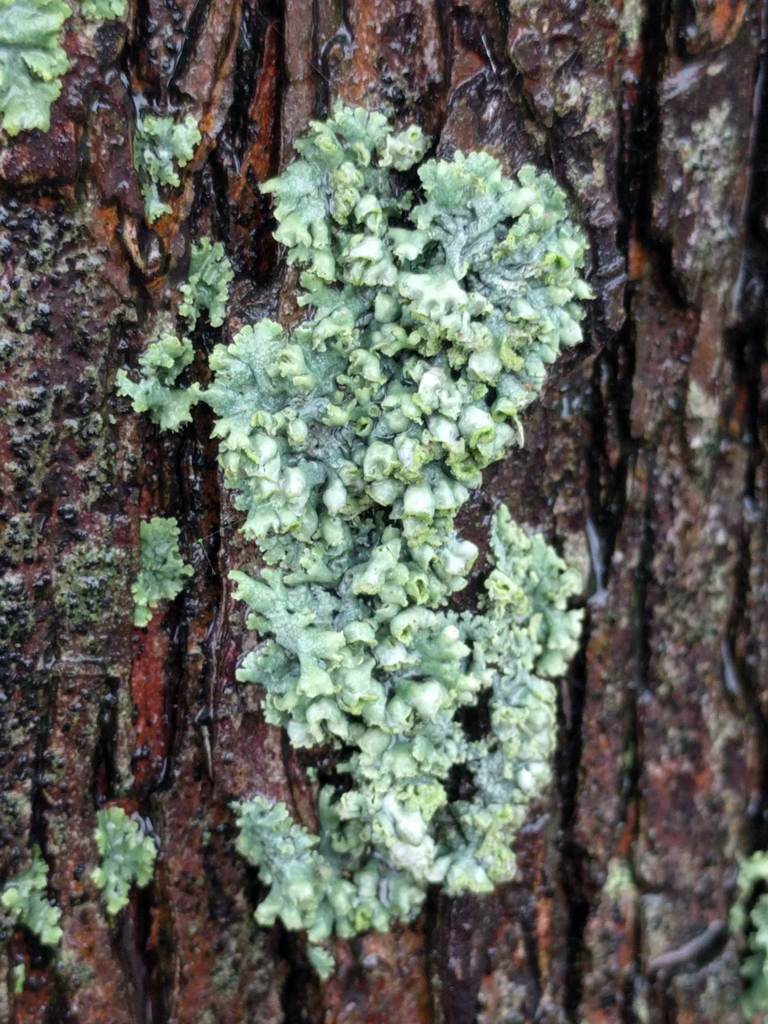
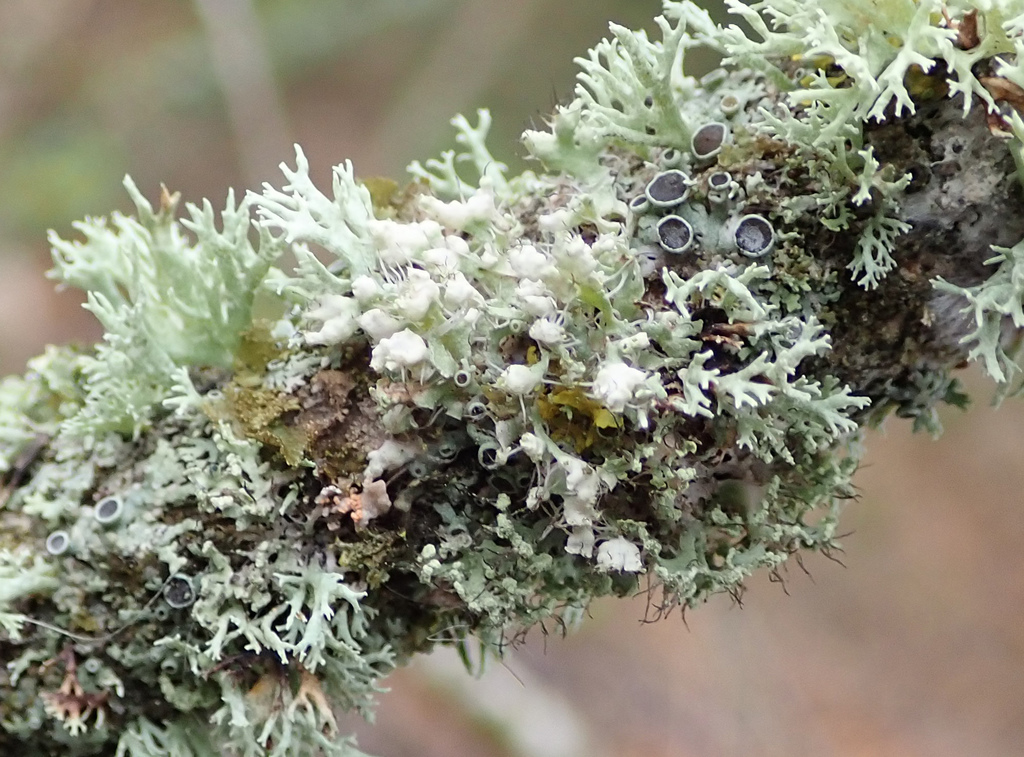
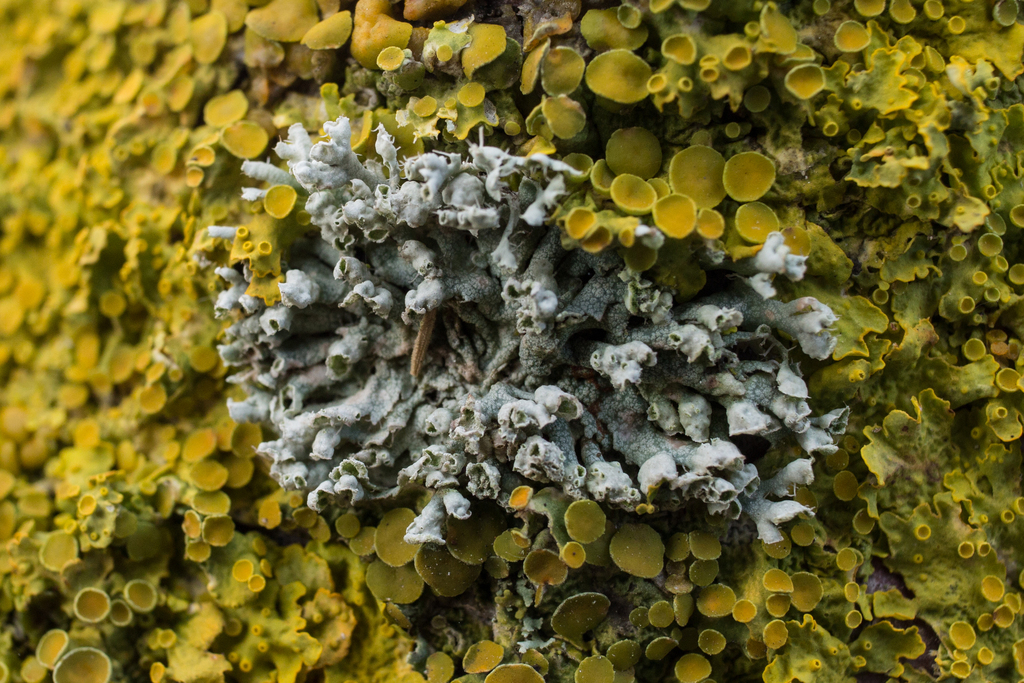
Gray above and distinctively white below, Physcia species form small, neat rosettes on bark. They often bear soredia or isidia at the lobe tips and are among the first lichens many beginners learn to recognize.
Nitrogen-tolerant and even nitrogen-loving, they thrive in nutrient-enriched environments where more sensitive species have vanished, making them useful markers of agricultural runoff and urban nitrogen deposition.
Identification
- Small, neat rosettes typically 1–5 cm across.
- Gray upper surface, distinctively WHITE lower surface (many foliose lichens, such as Parmelia, are black below, though some others, such as Punctelia, Xanthoria and Peltigera, are pale too).
- Narrow lobes (0.5–2 mm wide) arranged in a radial pattern.
- Common species include P. adscendens (hooded tips with soredia), P. tenella (soredia at tips), and P. stellaris (no soredia, abundant apothecia).
- Cortex K+ yellow (atranorin) separates Physcia from the similar but K− Phaeophyscia.
Ecology & Habitat
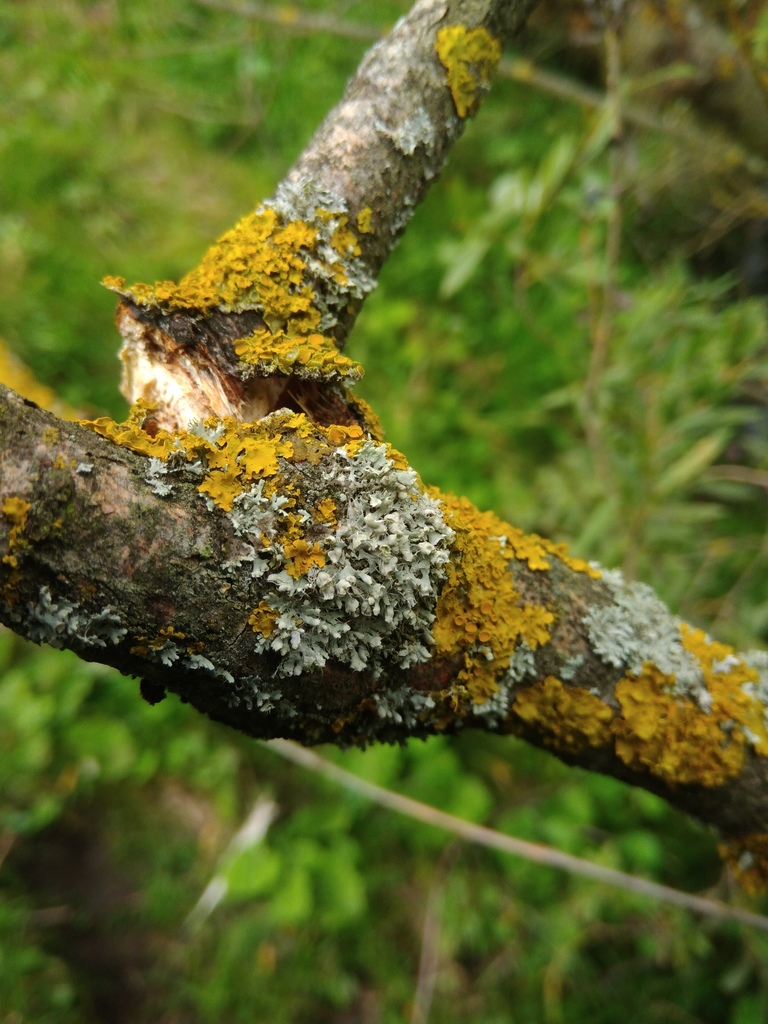
One of the more pollution-tolerant lichen genera, persisting on urban trees alongside Xanthoria, Phaeophyscia and Parmelia sulcata. Its abundance relative to other lichens is used as an indicator of nitrogen enrichment.
Fun Facts
The white underside, combined with the grey top and narrow lobes, makes it one of the easier genera for beginners to identify.
The genus name comes from the Greek physkē or physkion, a sausage or bladder. It was coined for the inflated Lichen physodes (now Hypogymnia physodes), so it is somewhat of a misnomer for today's Physcia.
Distribution
Cosmopolitan; found worldwide in temperate and subtropical regions