Photos
Photos by tanner-lichens-shrooms, cchapman-lam, mjpapay, lproulx via iNaturalist (CC licensed)
Overview
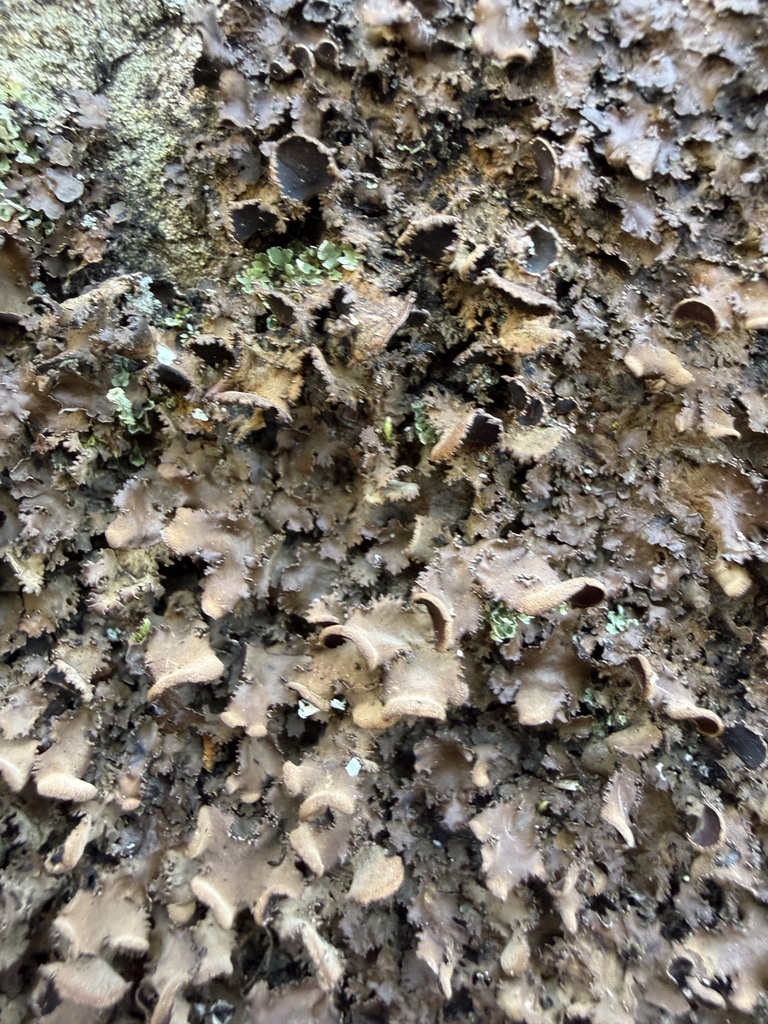
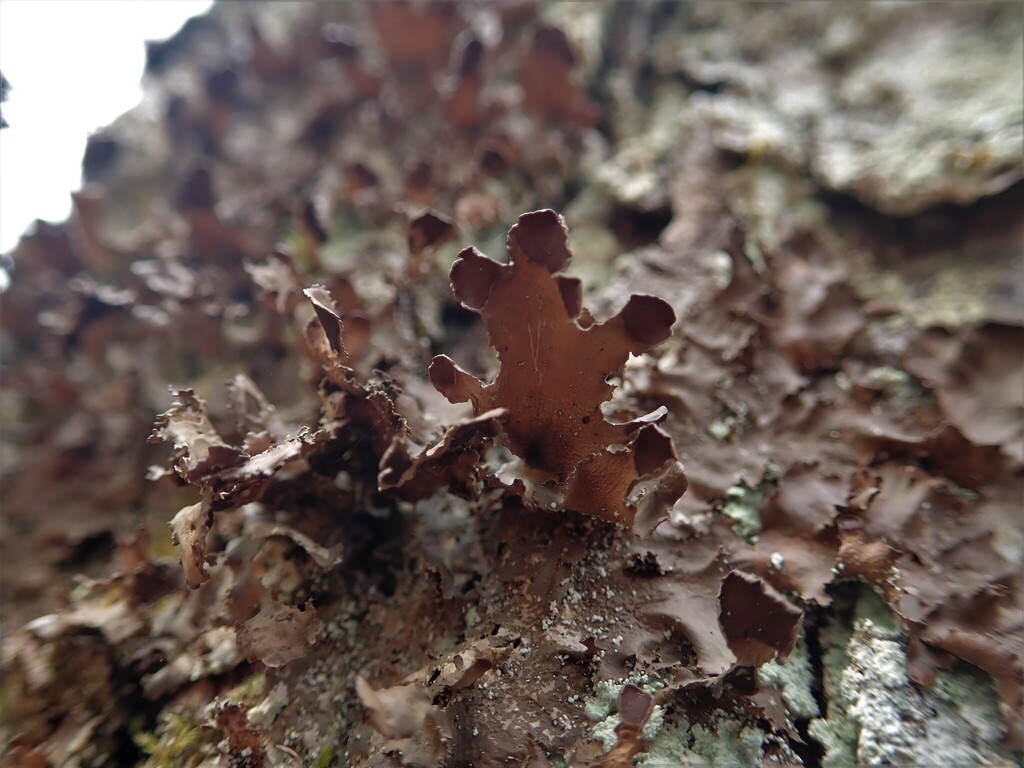
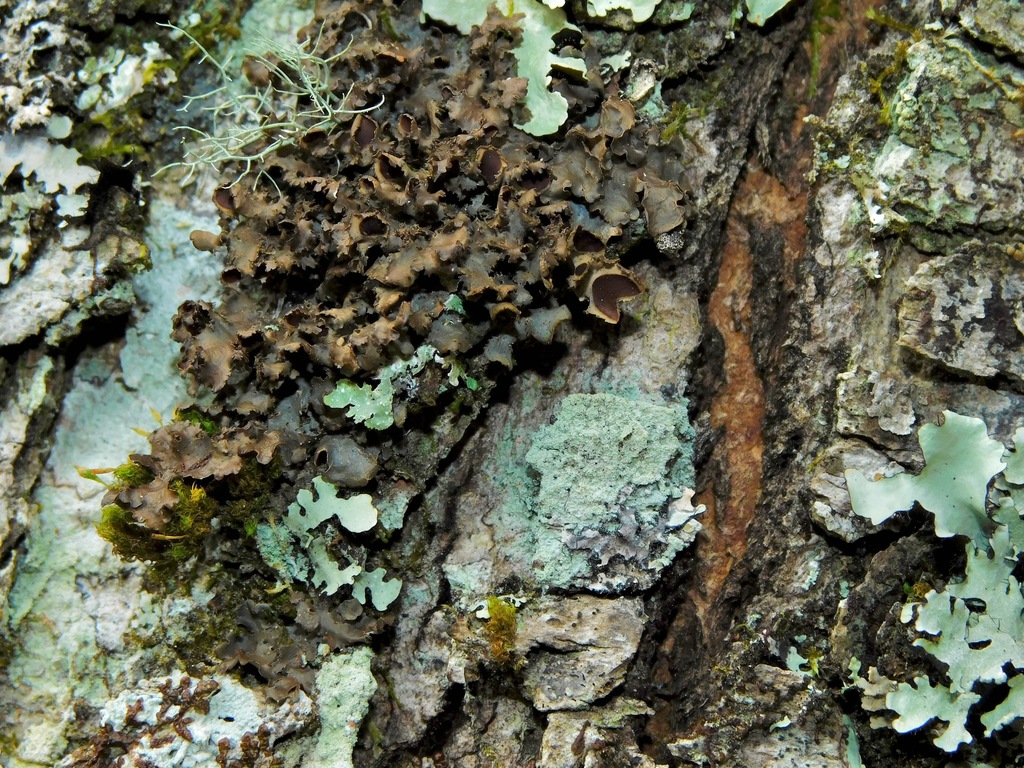
Brown to greyish-brown, Nephroma helveticum is a small leafy lichen, usually 1–5 cm across, whose lobe margins are toothed and fringed with small lobules. Its most unusual feature is the placement of its reddish-brown apothecia: they form on the underside of the lobe tips and come to face upward as the tips curl back.
Its photobiont is the cyanobacterium Nostoc. Found on the bark of shrubs and hardwoods, often over moss, and on mossy rock, it is a lichen of moist, shady sites. What was called N. helveticum is now treated as a species complex: molecular work has shown that some of this material belongs to a separate species, N. tropicum, which looks the same and is told apart by its chemistry.
Identification
- Brown, greyish-brown or pale grey upper surface, matt or glossy, often wrinkled.
- Lobe margins toothed and lobulate, with small flattened lobules (phyllidia) mostly along the edges.
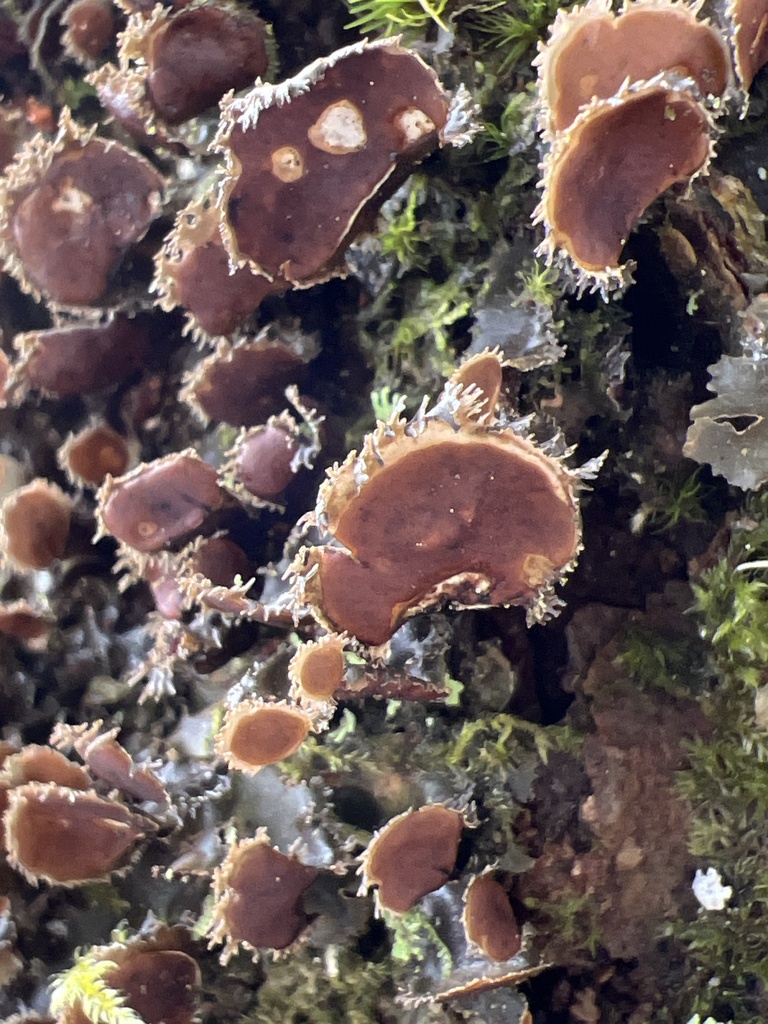
- Apothecia on the UNDERSIDE of the lobe tips, a hallmark of the genus; the fertile lobe tips curl back to expose them.
- Apothecia common, up to 8 mm across, rounded to kidney-shaped, with a reddish-brown disc and a thin, toothed rim.
- Underside dark brown to black and densely woolly (tomentose), without warts. N. resupinatum has small warts (papillae) on its underside and usually lacks marginal lobules.
Ecology & Habitat
A cyanolichen of moist, shady sites, growing on the bark of shrubs and hardwoods, often over moss, and on mossy rock. In Europe, where it is extremely rare, it is restricted to undisturbed, humid old-growth forest. Several Nephroma species are restricted to old-growth forest and are used as indicators in forest management.
Fun Facts
The genus name Nephroma comes from the Greek "nephros" (kidney), and the common name "kidney lichens" refers to the kidney-shaped apothecia. They form on the underside of the lobe tips, which curl back to show them.
The species name "helveticum" (Swiss) refers to its type locality, Switzerland; Acharius described it in 1810.
It is classed as critically endangered in Norway and as data deficient in Sweden.
Distribution
A species complex with a cosmopolitan distribution: widespread in North America (Pacific coast to the Great Lakes region), extremely rare in Europe, and recorded from Australia and New Zealand