Overview
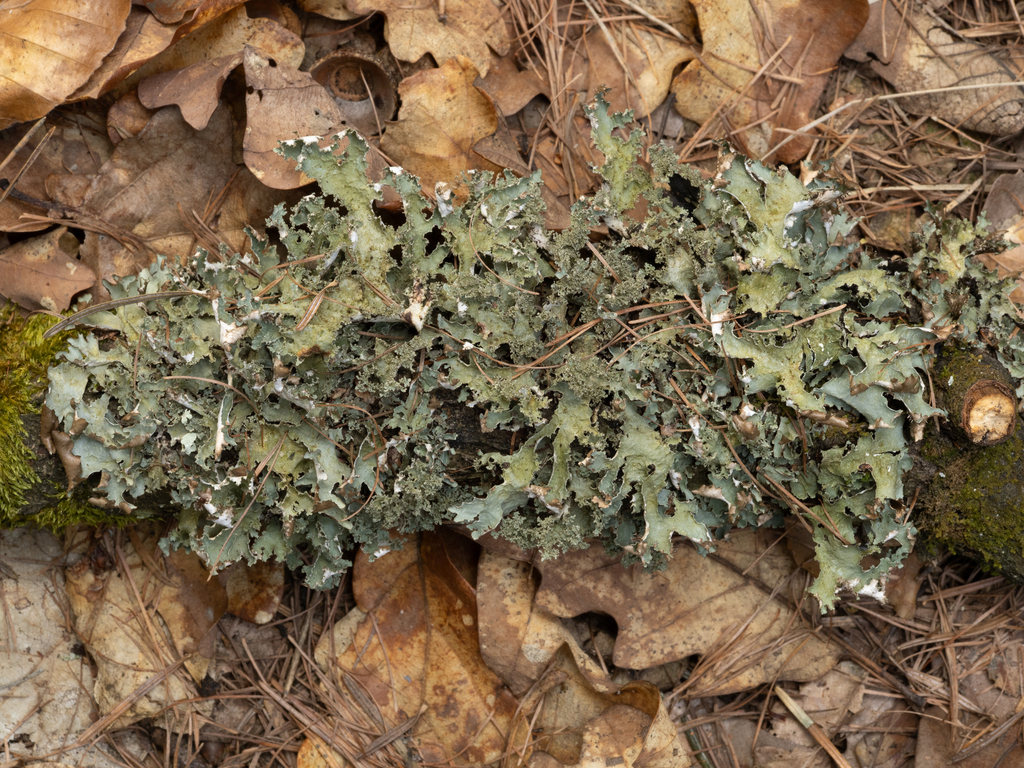
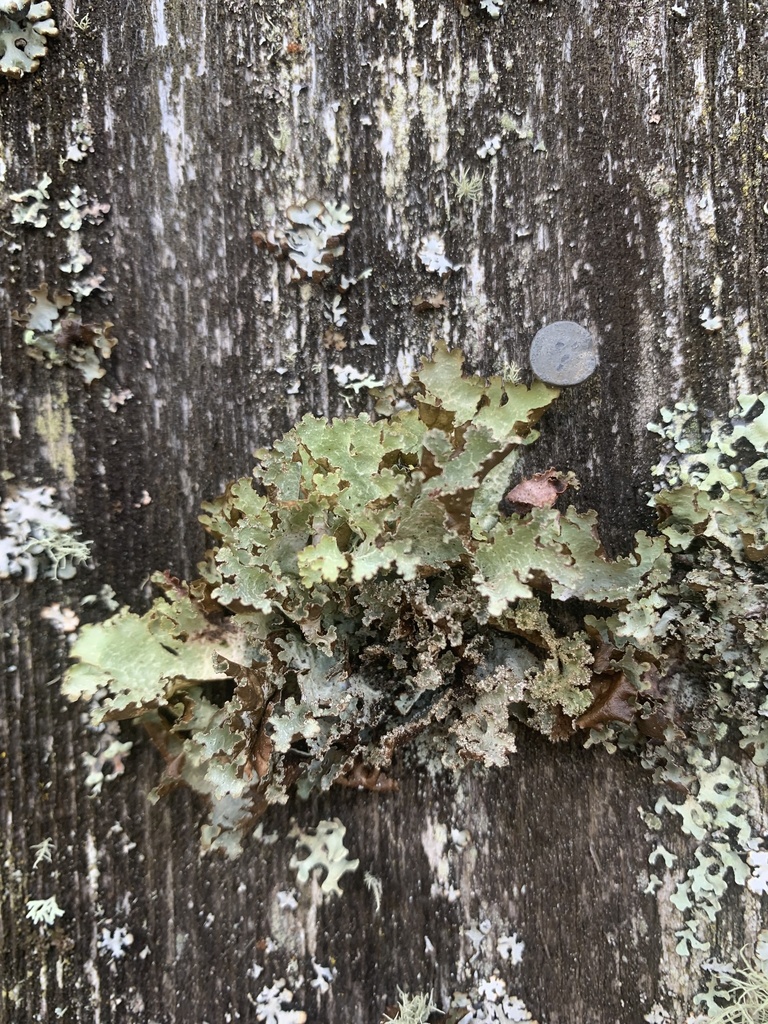
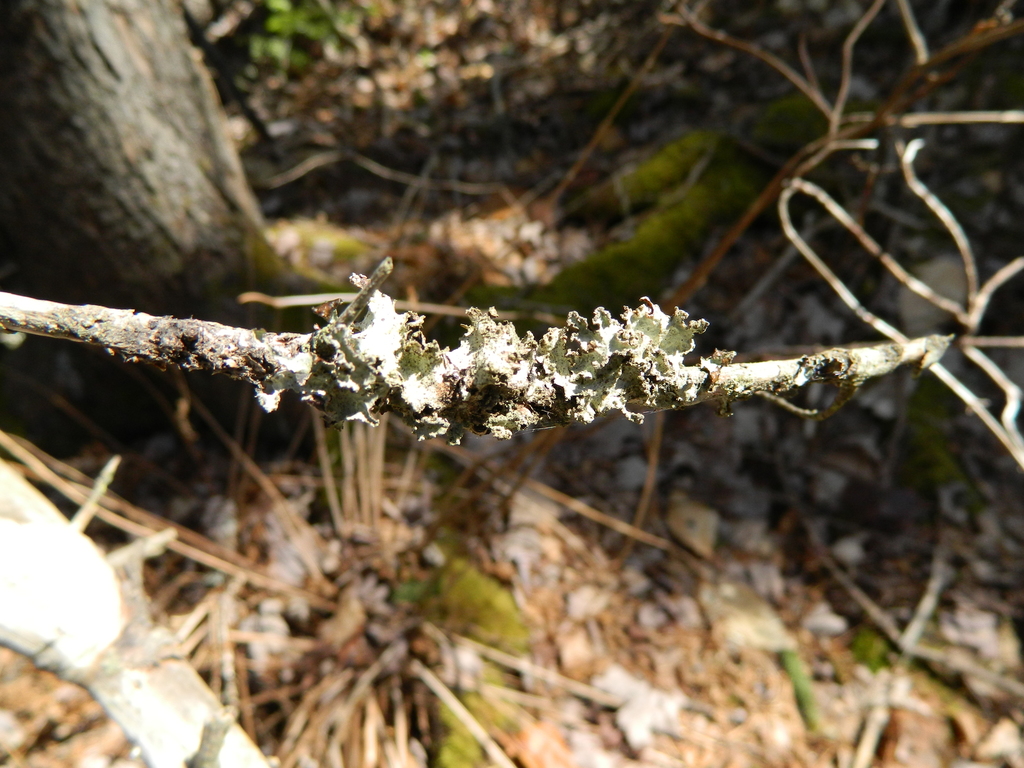
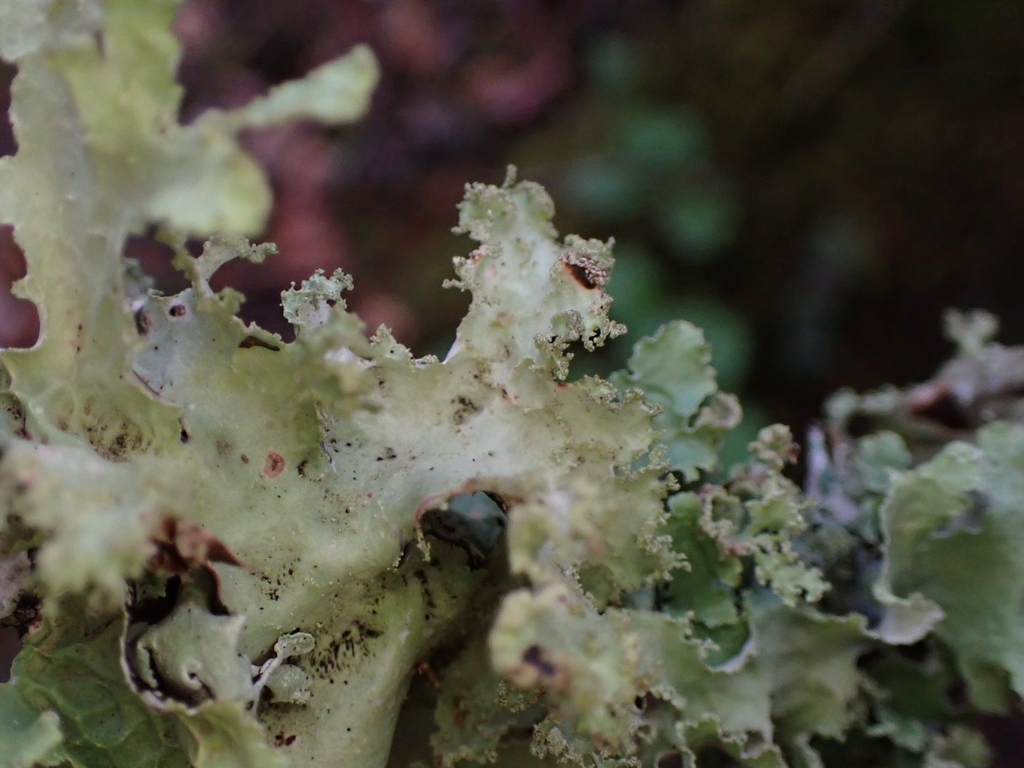
Pale to dull grey, often tinged brown in exposed sites, with a messy, ragged look, Platismatia glauca has broad, wavy, irregularly indented lobes. Unlike Parmelia, its upper surface has no network of white pseudocyphellae. The margins usually carry isidia, soredia, or both, and the underside is black (brown or white in shade).
Common on bark and twigs, it is also brought down by storms like other canopy lichens, though pieces do not last long on the forest floor. Its ragged, somewhat dishevelled look makes it easy to recognise once you know what to look for.
Identification
- Pale to dull grey, often brownish in exposed sites; the colour hardly changes when wet.
- Lobes broad (up to 1.5 cm), wavy and irregularly indented, with ascending margins.
- Margins usually bear isidia (simple to coral-like), granular soredia, or both. These are mainly marginal but can be scattered on the upper surface.
- Underside black, but brown or white in shaded specimens, especially towards the margin; rhizines few to many.
- No pseudocyphellae. Cortex K+ yellow (atranorin); medulla all spot tests negative (caperatic acid).
- Apothecia very rare.
Ecology & Habitat
A species of acidic, leached habitats, very common in the uplands of Britain and Ireland but declining sharply where ammonia pollution is high. In the Netherlands, where ammonia has de-acidified tree bark, it is now almost extinct as an epiphyte. In Pacific Northwest rainforests, pieces that fall to the forest floor lose half their mass within a few months.
Fun Facts
The "varied" in its English name is well earned. In their 1968 monograph of the genus, William and Chicita Culberson found no other species with a broader range of forms, and wrote that if only the extremes were seen, "it would be unbelievable that all the forms constituted a single species".
In a western Oregon rainforest, free-lying P. glauca litter lost half its mass in about 3.5 months, against about 24 months for pieces protected in mesh bags. The difference points to animals larger than the mesh eating it.
DNA work has found two major lineages within the species in Britain and Ireland, but they could not be matched to any visible, chemical or ecological differences, so they have not been named as separate species.
Distribution
Widespread in Europe and North America (including southern Greenland and coastal Alaska), with outposts in central Asia, Patagonia, the Canary Islands, the Azores and the high mountains of Kenya and Tanzania
Sources
- British Lichen Society: Platismatia glauca species account
- Culberson & Culberson (1968) The lichen genera Cetrelia and Platismatia, Contrib. U.S. Natl Herb. 34
- McCune & Daly (1994) Consumption and decomposition of lichen litter in a temperate coniferous rainforest, Lichenologist 26
- van Herk et al. (2026) Monitoring the effects of ammonia air pollution with epiphytic lichens in the Netherlands, Plant and Fungal Systematics 71
- Sharnoff Photos: Platismatia glauca