Overview
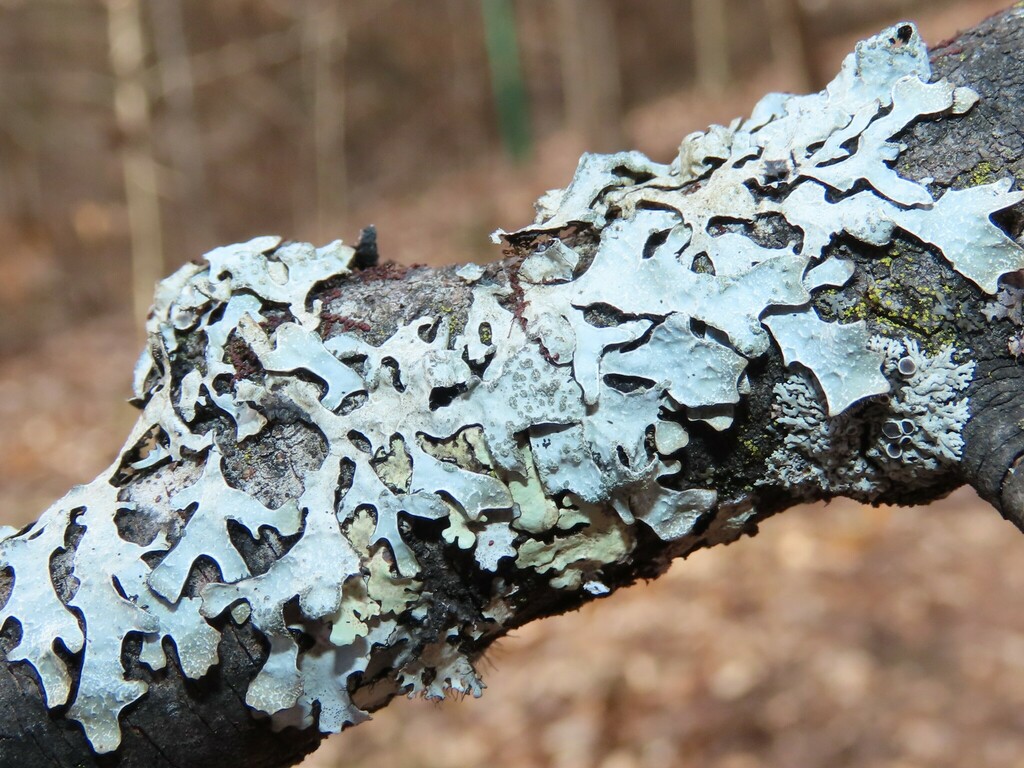
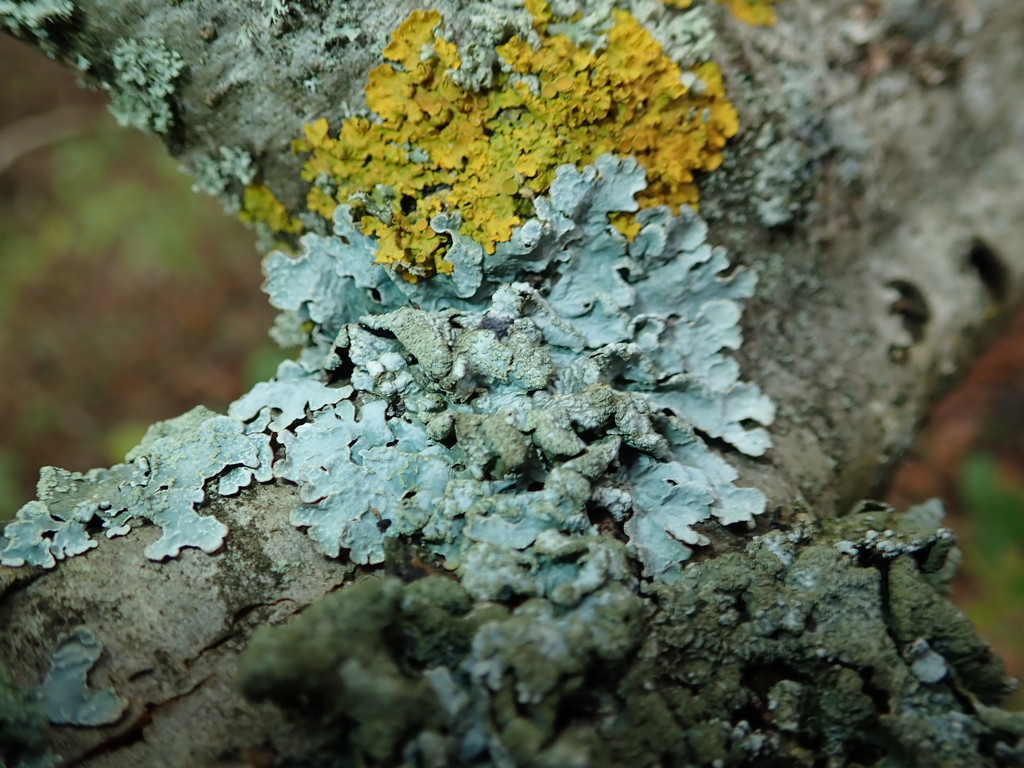
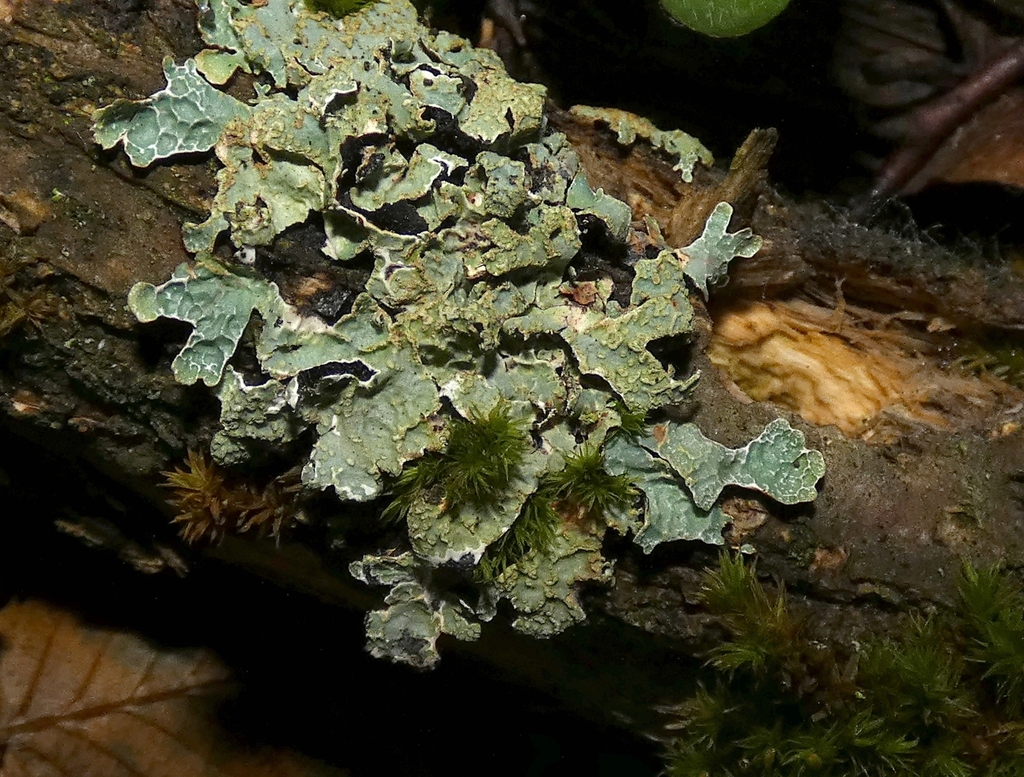
Bluish-grey to brownish-grey above and black below, Parmelia sulcata is one of the commonest leafy lichens in temperate Europe and one of the most abundant in Alberta, Canada. Its upper surface is marked by a network of white ridges and cracks (pseudocyphellae) that develop into powdery soralia, giving the "hammered" appearance that inspires its common name.
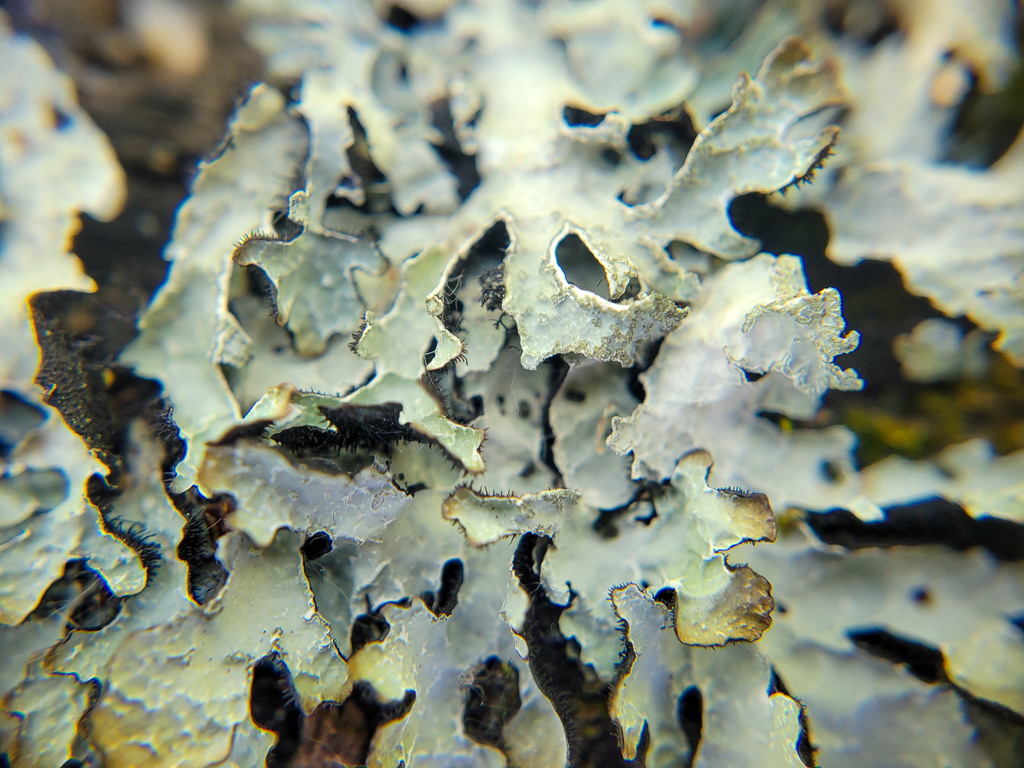
Abundant brush-like (squarrose) rhizines on the black underside hold its narrow lobes close to the bark. It grows on a wide variety of trees and shrubs and on dead wood, and more rarely on rock.
Its abundance makes it a workhorse of biomonitoring: transplanted thalli have been used to track metals and other pollutants in city air.
Identification
- Look for the network of white pseudocyphellae forming a "hammered", net-like pattern on the bluish-grey upper surface.
- Soredia develop from the pseudocyphellae, especially along ridges and lobe margins, giving them a powdery, mealy appearance.
- The underside is black with abundant squarrose (brush-like) rhizines, often simple near the margins.
- Lobes are typically 2–5 mm wide. Single thalli are usually up to about 6 cm across, but colonies can grow larger than a dinner plate.
- Apothecia are rare.
- Cortex K+ yellow (atranorin); medulla K+ yellow turning deep red, P+ orange (salazinic acid).
Ecology & Habitat
In the OPAL nitrogen survey it sits in the intermediate group, with no strong preference between nitrogen-enriched and clean bark. On tree trunks it is most abundant higher up, where there is more light. It is sensitive to sulphur dioxide and has reappeared in areas where SO2 levels have fallen.
Fun Facts
Bags of transplanted Parmelia sulcata have been hung in the streets of Naples and London to measure airborne metals such as lead and cadmium. Metal uptake rose from rural to urban sites in both cities.
The white cracks of the "hammered" pattern (pseudocyphellae) are breaks in the cortex and are thought to aid gas exchange.
Despite being so common, it hides a twin: DNA work on specimens from four continents split off P. encryptata in 2011, a cryptic species that cannot be told apart by eye.
The epithet sulcata means furrowed or grooved.
Distribution
Widespread: one of the commonest lichens of temperate Europe and abundant across North America; also recorded in Asia, the mountains of East Africa and South America
Sources
- Lichens of Alberta: Parmelia sulcata
- Molina et al. (2011) Parmelia sulcata, a sympatric monophyletic species complex, Lichenologist 43
- Vingiani et al. (2015) Active biomonitoring of heavy metals and PAHs with mosses and lichens: Naples and London
- British Lichens: OPAL nitrogen groups (sensitive, intermediate, nitrogen-loving)
- Wikipedia: Parmelia sulcata